
Finnish pension fund counters low rates

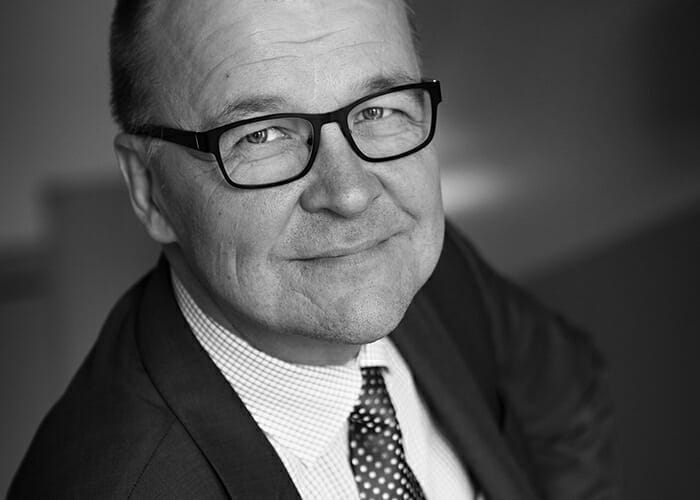
Timo Viherkenttä

Finland’s €18.5 billion ($20 billion) State Pension Fund (VER) will slightly increase its allocation to hedge funds, in a strategy designed to counter the continued challenges low interest rates create for its sizeable fixed-income holdings.

“We have to be careful increasing our allocation to hedge funds, given interest rates are low and hedge fund returns after fees are hard to find,” explains Timo Viherkenttä, chief executive of the Helsinki-based buffer fund. “On the other hand, low interest rates have made hedge funds a competitive alternative to fixed income.

The two allocations can compete with each other in the portfolio because they are both low-volatility asset classes; we don’t expect high returns but we expect roughly zero from fixed income, so hedge funds have a place in the process,” he says.

The fund has a 3 per cent allocation to hedge funds that, together with risk premia strategies, will grow to closer to 6 per cent.

VER is tasked with meeting Finland’s future pension liabilities, which are set to peak in 2030, when state pension expenditure is expected to be nearly double current levels.

The fund’s appetite for more diversified and uncorrelated returns chimes with Viherkenttä’s view on the current, unpredictable, market.

Sponsored Content

“Right now, we are in a peculiar situation and it’s very unsettled,” he says. “In recent years, investors have looked at central banks for guidance. Now, politics has taken more of centre stage, with Brexit, then the US [election], and now European elections. The traditional real economy is in the back seat. Take, for example, the rise in the equity market after the US election. Optimists pointed to the rise, but there is a lot of wishful thinking because it is just not clear what policy will be.”

Finland’s ministry of finance rules that VER must devote a minimum of 35 per cent to fixed income, in an allocation the fund divides between liquid and other fixed-income investments. VER’s current allocation exceeds this baseline, with just under half the portfolio in the asset class.

Although it has performed well recently, low interest rates and “unpromising pricing levels” don’t bode as well going forward. Five-year average returns on liquid fixed income languish at 3.2 per cent in an allocation comprising government bonds (22.6 per cent) corporate bonds (25.6 per cent) emerging market debt (21 per cent) and money markets (30.8 per cent). The return-seeking allocation includes corporate bonds and emerging market debt, plus illiquid private credit funds.

Viherkenttä is more optimistic about emerging market returns.

“We have a sizeable allocation to emerging markets. It’s well known that this market came down quite a bit after the US election. The pricing there now is better than a few weeks ago. There may be a bit of beef here.”

While most of the private credit portfolio is weighted to low-risk strategies like senior and real-estate debt, it also includes a higher level of risk, such as distressed credit funds.

The remainder of the portfolio lies in listed equities (now about 40 per cent), a new allocation to position management and diversified investments begun a year ago, and alternatives.

Currency hedging and derivative trading, as well as absolute return funds, fall under the position management and diversified umbrella. Alternative investments include property, private equity, infrastructure and private credit allocations.

“We will increase our allocation to illiquids in search of more diversity,” Viherkenttä notes. “Pricing in illiquids is high; many others also have this ‘great idea’.”

The increased allocation to illiquid strategies will focus on infrastructure and real-estate assets for inflation protection. A “sizeable” percentage of investment in these types of assets, along with private equity, tends to have a Finnish bias. All of VER’s real-estate investments are made through funds or indirectly.

Viherkenttä leads an in-house team of 14 and uses more than 100 managers. The fund’s fixed-income allocation is almost entirely actively managed, while half the equity allocation is in passive strategies.

“In some markets, like large-cap US, it is very difficult to find excessive returns,” he says.

Although passive solutions are more developed and competitive in equities than in fixed income, he says the line between active and passive is evolving.

“Take smart beta,” he says. “This may be index and passive, but the basic choice in this strategy is an active concept.”

He explains that fixed income is evolving to make more passive options available to investors.

“In any major fixed-income market, you will find ETF solutions,” he says. “Whether you want to invest in emerging markets or emerging market local currency, or credit, or US high yield, you would find such products, to invest in a passive way. It’s long been the case in equities and it is increasingly so in fixed income, too. There are more specialised solutions – like factor-based strategies – in equities, but they are on their way in fixed income, too.”

Viherkenttä’s career spans academia and law and includes eight years at local authority pension provider Keva as deputy chief executive. Prior to this, he spent four years as budget director at the ministry of finance, and also as permanent under-secretary responsible for tax policy.

“My legal background helps in many ways in this job across administration and legal matters but I identify most with economics,” he concludes.

Leave a Comment

Long term lens shields Colorado from private credit jitters

Long term lens shields Colorado from private credit jitters

As concerns in private credit mount, Colorado PERA CIO and COO Amy McGarrity says the pension fund isn’t seeing any strains in its growing allocation to the asset class, arguing that long-term investors are shielded from the risks because they can lock up their capital to weather market cycles.

Sort content by

Hawaii expands CRO strategy

The new CIO at the Hawaii state pension fund is looking for additional sources of uncorrelated return, including hedge funds, and will look to add new managers to the lineup. Sarah Rundell talks to Elizabeth Burton.

Ignore diversification: BCI’s Dunatov

Stefan Dunatov, head of investment strategy and risk at Canada’s $170 billion British Columbia Investment Management, says long term investors should forget about diversification at the strategic level and instead focus on buying growth beta assets.

Prince says diversify east and west

Bob Prince, co-chief investment officer of Bridgewater, says that institutional investors should consider diversification in the context of different economic exposures which could manifest in splitting portfolio allocations to the east and west. He advocates looking at diversification through the lens of macroeconomic conditions and cashflows related to the differences in economic regimes around the world.

Future Fund adds risk and liquidity

The Future Fund is adding risk to its portfolio, and focusing on liquidity, as part of a part of an ongoing strategy to free up more capital in the portfolio in the event of a drawdown. It is in the midst of selling off a “large slice” of private equity assets on the secondary market and has bought listed equities in emerging markets in the past year.

Alaska focuses on risk, cautious outlook

A year ago, the Alaska Permanent Fund appointed its first chief risk and compliance officer, Sebastian Vadakumcherry. With current investment conditions, and a move to a more conservative outlook, the relationship between Vadakumcherry and CIO, Marcus Frampton is proving its worth. We look at the fund’s approach to risk, its outlook for capital markets, and how data will give it an edge.

Washington State’s secret sauce

A big contributor to the long-term top decile performance of the Washington State Investment Board has been its high allocation to private markets. But it is not just the high allocation that sets the fund apart from its peers, it’s also the nature of the relationships with its GPs. Amanda White speaks to retiring CIO Gary Bruebaker about the fund's secret sauce.

Previous



