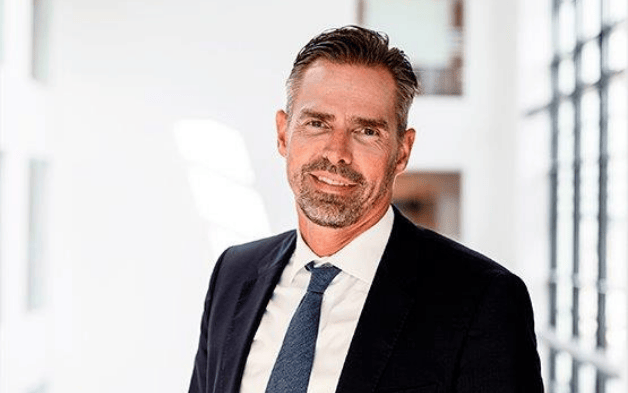

Denmark’s PFA: Passive with a caveat and why an AI reset lies ahead

PFA, Denmark’s largest pension provider, is switching more of its portfolio into equities. The strategy is a direct reflection of the increasing comfort with risk of the beneficiaries in its defined contribution offering, which accounts for around two thirds of the $100 billion portfolio.

“We can see that more of our clients have moved from the middle of the road to running more risk,” CIO Kasper Lorenzen tells Top1000funds.com, explaining that beneficiaries tap into life cycle products based on two underlying feeder funds titled towards either equity or more stable, income-based returns.

“Danes have got used to having more equities in their pension fund and become more familiar with the volatility and drawdowns that come with equity. Our balance between equity and fixed income is changing because people are ready for it, especially younger people.”

In a reflection of the shifting dynamics amongst beneficiaries, Lorenzen has spent most of this year developing PFA’s market-based pension product, PFA Plus.

He believes the growing appetite for equity investment is a consequence of savers’ better understanding of  DC and the way it works during the last 18 years. He observes that people are more involved in investment, especially since COVID, although he is also mindful that enthusiasm for equities might also have something to do with markets performing well.

“We have to be careful about this,” he says.

Sponsored Content

Passive with a caveat

PFA hunts for returns through three value drivers. First of which comes traditional asset management centred around choosing the right securities across equity and fixed income risk.

However, recent analysis revealed the team has a strong track record managing fixed income risk and security selection but found that active fundamental stock picking was more difficult.

“We were less successful at this element,” says Lorenzen. “We looked back and realised that active fixed income rather than equity was the real value driver.”

The second value driver is private markets where PFA has gradually substituted traditional asset classes for private market exposure like swapping fixed income for real estate over the last decade.

A third element involves risk management, turning the conversation to Lorenzen’s belief that the word passive no longer reflects the complexity and decision making behind index investment.

Yes, the the DKK 220 billion ($32 billion) equity allocation has a passive backbone and PFA is no longer deciding to own one company over another.

But the team must still decide which index to use, mindful of too much emerging market exposure all the while ensuring a home bias in Danish equities for example; run top/down overlays, lever up or down, add geographical sector tilts (they run underweights when it comes to China mostly due to risk/return rather than ESG or  sustainability) and layer on derivative positions.

Elsewhere the team has to integrate net zero targets, voting and concentration limits on some of the largest exposures in the book which requires a degree of research.

This raft of tweaking and adjustments can mean the investor may not actually invest in 20 per cent of the index, picking up a tracking error the team also has to decide they are comfortable with.

“This kind of risk management has been the key value driver for us for the past five years,” says Lorenzen. “Let’s call it passive but we refuse to say we are passive. We run overlays; we are active in derivatives and active in private. We are passive with a caveat.”

A new liquid markets team

Lorenzen’s investment strategy has been accompanied by an overhaul of the investment office. The old asset management division has gone, replaced instead with a smaller investment division wholly focused on managing the assets of the pension fund rather than selling additional funds to other investors.

“PFA Asset Management used to run 8-10 equity processes overseen by portfolio managers. The team now run 1-2 processes,” he says.

The headcount has been reduced from 150 to around 100 of which 35 sit in the front office overseeing liquid and private markets.

“It makes things easier; we are much more focused. Being competitive in Denmark’s pension market is enough of a challenge. Being consistent and good at this is what matters to us.”

Lorenzen has also created a liquid markets team (something he also did while chief investment officer at ATP) encompassing FX, credit and equity so that instead of specific asset class teams, decision making is now top down. It meant some of PFA’s traditional equity investors were let go so that the team could be strengthened with global macro, top down skills.

“Let’s face it, even for specific equities it’s still about Fed rate cycles, growth and discounting of long dated cash flows,”

Key risks ahead

The larger allocation to equity will open the door to additional risk that is already front of mind. Namely, concentration risk in the equity book where the US accounts for around 70 per cent of the market cap and big tech, particularly companies involved in AI, dominate.

“We have sizeable exposure to specific names and exposures that are much bigger compared to other, very large private market exposures,” he says.

Managing this risk is another example of the active decision making that now accompanies passive investment. It calls into question beliefs in the benchmark; investors must decide if they can justify the valuations and concentration or if they would do better to run overlays or change the benchmark to bring the portfolio around a different anchor.

PFA isn’t approaching the problem with these strategies yet.

“To be honest, right now we are comfortable with it and we buy into this idea of the winner takes all in AI,” Lorenzen says. “Companies have put themselves in a good position and grown and taken advantage of their position in AI.”

Still, he recognises that at some point there will be a reset focused on the main beneficiaries of AI. It will move from companies building the hardware to those building the software and applying software in their processes.

“We saw this at the beginning of the century around the dot.com boom when the profits moved from the likes of Intel and hardware producers to other institutions that captured that productivity boost. That is something we are aware of here too.”

PFA’s larger equity exposure will also open the door to more climate risk where he says investors deploying capital to the transition face increased uncertainties around the technology and governments’ ability to build the infrastructure around which market forces will be able to respond.

Until this happens, he believes private investors are going to be reluctant to deploy more, particularly after repricing in more traditional asset classes.

“We are still involved, some of our investments have done fine, in others we’ve learnt lessons, Northvolt being one of them.”

Positively, he concludes that government financing of the transtion could spark new interest in traditional real assets like inflation linked bonds which could offer a reasonable return.

Asset Owner:PFA Pension

Leave a Comment

How CPP is evolving risk management for a faster, more interconnected world

How CPP is evolving risk management for a faster, more interconnected world

In an environment where multiple risks are emerging and their effects are compounding on the portfolio, CPP Investments' chief risk officer Priti Singh says the $572 billion fund is rethinking risk management from the ground up, shifting from reaction to preparation and embedding risk thinking earlier in investment decisions. She speaks to Amanda White about the fund's risk approach.

Sort content by

Why Norges Bank leads the world in transparency

Norges Bank has taken the top spot again in the Global Pension Transparency Benchmark. But perhaps even more extraordinary than the consistency and continuous improvement, this year the fund was awarded a perfect score of 100. Amanda White spoke to CEO Nicolai Tangen on how the fund improved transparency.

Canada’s HOOPP: Is China even investable for long term investors?

Geopolitical risk could make China un-investable for long term investors says Jeff Wendling outgoing president and chief executive of HOOPP as he reflects on a 30-year career.

Stewardship: BCI plays the long game

BCI's global head of ESG, Jennifer Coulson, explains why there is no magic bullet for engagement, making it critical for investors to take a multi-faceted approach and reinforce the same outcomes with both corporates and policymakers.

Low risk start for Ireland’s new sovereign funds, but more to come

Long-term strategies for Ireland’s new SWFs, expected to grow to €100 billion by 2035, will be designed and allocated in the next nine months including the appointment of an investment committee and custodian. For now it will invest in low-risk allocations to high credit quality Euro-area sovereign and quasi-sovereign bonds.

How an iterative strategy shapes success at Baylor university endowment

David Morehead, chief investment officer of Baylor University endowment in Texas explains why he's concerned about too much diversification and why the rewards of interest rate cuts will be most keenly felt in small cap equities.

PUBLICA builds alternatives through partnerships

In the latest development of its private market portfolio, Swiss pension fund PUBLICA is investing in infrastructure equity in a partnership with three other Swiss pension funds and Dutch pension investor APG.

Previous



