
Coal pension burns for cash flow

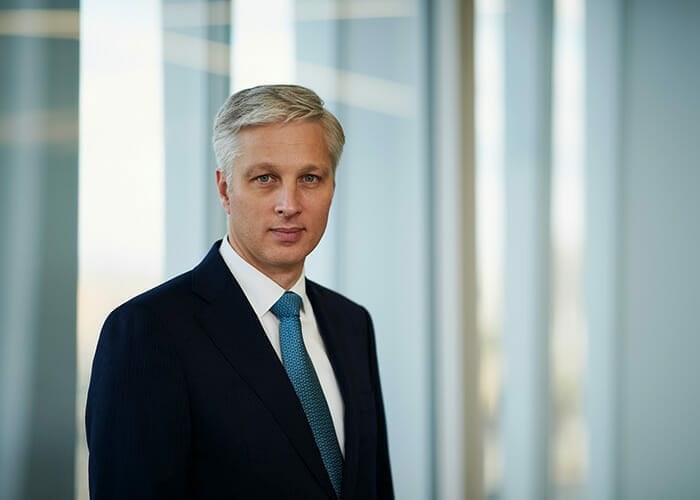
Stefan Dunatov, Chief Investment Officer at Coal Pension Trustees Services, on 18 October 2016 in London, United Kingdom.

Investment strategy at the United Kingdom’s Coal Pension Trustees Services is characterised by a sizeable equity allocation and a growing portfolio of illiquid investments, including shipping assets, to generate cash flow.

CPT manages the pension pots of the British Coal Staff Superannuation Scheme (BCSSS) and the Mineworkers Pension Scheme (MPS), two defined benefit pension funds with combined assets of £20 billion ($25 billion) that are among the few lasting legacies of the UK’s once-vibrant coal mining industry.

All management is outsourced, and apart from the passive equity allocation, none of the assets are pooled. The two funds are run as separate pension schemes with separate boards of trustees. Nevertheless, they are bound by a shared strategy developed over the past five years by CPT chief investment officer Stefan Dunatov, for whom a primary task is aligning trustee objectives with investment strategy.

“My job is to give impartial advice to the trustees on investment strategy and implementation – including manager search and selection – and ensure the asset allocations are geared towards achieving the two schemes’ objectives,” Dunatov says.

Over the last year, CPT has boosted its exposure to illiquid assets, including private debt, special situations debt, shipping and property, in a growing allocation funded primarily from cash and equity sales. It’s a strategy Dunatov likes for the high cash flows, comparing it to holding long-term bonds. Along with private equity, each scheme now has between one-third and one-half of its assets designated for illiquid investments.

The private-debt allocation, grown from zero when Dunatov arrived to about 10 per cent of assets in both schemes, comprises direct secured loans to businesses based in the UK, Europe and the US. The return-seeking strategy deliberately targets riskier corporate debt, often below investment grade, in mandates outsourced to four managers, including Goldman Sachs, Sankaty Advisors and Apollo Global Management.

Sponsored Content

“We make it quite clear what risk we are prepared to take but we are not involved in actual company calls,” Dunatov explains. “However, we can veto or stop investments anytime we like. In private debt, we do rule out managers that are not prepared to put skin in. The more we have our interests aligned with our managers, the more comfortable we are with the mandate.”

A 6 per cent target allocation to special situations debt is held through limited partnerships via a combination of segregated and pooled funds. Here, the underlying investments are principally loans made to corporations of all sizes in Europe and the US, capitalising on opportunities in niche segments of the debt and credit markets, including distressed debt.

‘Floating property’

Also in the illiquid bucket is a target 1.5 per cent allocation to shipping assets, comprising about 20 tankers that bring “high” income, but are also more of a “deep value buy”. This allocation was also introduced under Dunatov’s watch. He likens it to floating property.

“You own the ship and lease it out. The credit risk is more volatile than for property, but we are compensated for this very well,” he says, declining to comment on the allocation’s latest returns. He does say slow global trade “hasn’t been a problem” for the portfolio, which is poised to gain as commodity prices pick up again. He also likes the fact the allocation fits CPT’s industrial past: one of the ships is even called Sheffield, the northern city that is home to CPT.

CPT’s real-estate investments are directly owned, mature commercial property investments, all in the UK and, again, chosen for their high income. Although the bulk is in offices and shopping centres, “a small slice” is going into residential property.

“Very little” of the portfolio is in London, Dunatov says, where prices have recently come under pressure since Brexit.

“There is nothing distressing about this portfolio; there are no alarm bells ringing,” Dunatov says.

Both BCSSS and MPS share large listed equity allocations, particularly MPS, at 51.1 per cent, versus BCSSS’s 36.7 per cent.

“We forecast our expected return for all asset classes based on various economic scenarios,” Dunatov says. “Our allocation to equity isn’t because of a love of equity. It is because it’s the best way to achieve our aims.”

That’s something CPT has been doing. Both schemes beat their benchmark for the most recent annual reporting period, posting a 2.7 per cent return. The annual return over three years is above 8 per cent.

Fewer, more meaningful, managers

The equity portfolio is divided three ways: between a passive allocation, a quantitative allocation in factor strategies, and a more traditional active allocation. Because all management is outsourced, Dunatov has no stock-level views, although he is increasingly questioning of the extent to which active equity outperforms low-cost beta strategies.

“Active managers are having a hard time, but they are killing themselves by not responding with lower fees to the passive alternatives.”

The number of managers the fund uses has grown with new asset classes and Dunatov says CPT now has about 15-20 “important” relationships, excluding managers in private equity and special situations debt. The fact that he highlights only “important” relationships is indicative of his intention to have fewer, more meaningful manager relationships in the future. He also says asset manager fees are set to fall.

“Asset managers have to show why their margins should be so high in a world of low returns,” he says. “Technology is taking over and I don’t know why this isn’t shown in the fees. Nor should managers charge the same basis point fee for all the money coming in, or across the asset class. A large amount of fat needs to be cut out of the asset-management industry.”

He concludes: “It is not obvious we are out of this low-beta return world, despite the Donald Trump effect. After the financial crisis of 2008, there was a clear theme of support for risk assets. Now, after so many years of strong equity returns, it is about how to consolidate that wealth.

“Given the illiquidity in our portfolio, we also need to understand how best to change this allocation in the future, as and when we need to.”

One response to “Coal pension burns for cash flow”

  1. Is it correct to describe cash flow investments as “illiquid”? This implies they are not as good as investments that are “liquid”. Is that implied judgment prudent for pensions that are investing to generate adequate cash flows, forever, in order to keep their actuarial risk pools properly full and flowing, forever? I understand that liquidity is the raison d’être of securities trading. If you buy something at one price in hopes of selling it at some unknown future point in time to some unknown future buyer for an unknown but hoped-for higher selling price, you certainly do need a liquid market in which to sell. If you invest in enterprise cash flows, directly, in order to generate cash flows sufficient to support good stewardship, indefinitely, how important to that investment is a market-clearing price?

Leave a Comment

Long term lens shields Colorado from private credit jitters

Long term lens shields Colorado from private credit jitters

As concerns in private credit mount, Colorado PERA CIO and COO Amy McGarrity says the pension fund isn’t seeing any strains in its growing allocation to the asset class, arguing that long-term investors are shielded from the risks because they can lock up their capital to weather market cycles.

Sort content by

HOOPP derives benefits to boost funding status

The extensive use of derivatives has been a big contributor to the C$35.7 billion ($37.4 billion) HOOPP reaching fully funded status. Jim Keohane, chief investment officer, explains how the fund manages its assets and liabilities through liability-hedging and return-seeking portfolios and the role derivatives play in dialling risk up, or down. mrec4inarticleinline Sponsored Content scnative1

Embrace three-bucket idiosyncrasy for alpha

The creation of wealth, or alpha, is limited if your strategy is the traditional allocation between asset classes, instead investors need to embrace idiosyncratic risk to achieve wealth generation, which is at odds with modern portfolio theory’s ambition. Chief investment officer of the Institute for Advanced Study, Ashvin Chhabra (pictured), explores this in his latest

CalSTRS overlays its fuzzy buckets

After deciding at the last investment committee meeting to employ a new way of evaluating portfolio risk which overlays risk across asset classes, rather than replacing asset classes with risk categories, CalSTRS now just has to work out how to do it. Amanda White spoke with chief investment officer Chris Ailman about the fund’s journey

Boon for managers as Korean NPS to outsource billions

The National Pension Service of Korea will outsource 26 trillion Korean won – the equivalent of $23 billion – to external funds managers this year as it moves towards its 2015 strategic asset allocation which will see a dramatic increase in equities and alternatives.mrec4inarticleinline Sponsored Content scnative1 scnative2 scnative3

Behind CalPERS’ alternative asset allocation decision

A desire to hedge the portfolio against extreme market risks and rising inflation, has resulted in the $220 billion CalPERS departing from its traditional asset allocation after a year-long review, and introducing the allocation of assets according to five broad groups.mrec4inarticleinline Sponsored Content scnative1 scnative2 scnative3

Previous



