
Coal pension burns for cash flow

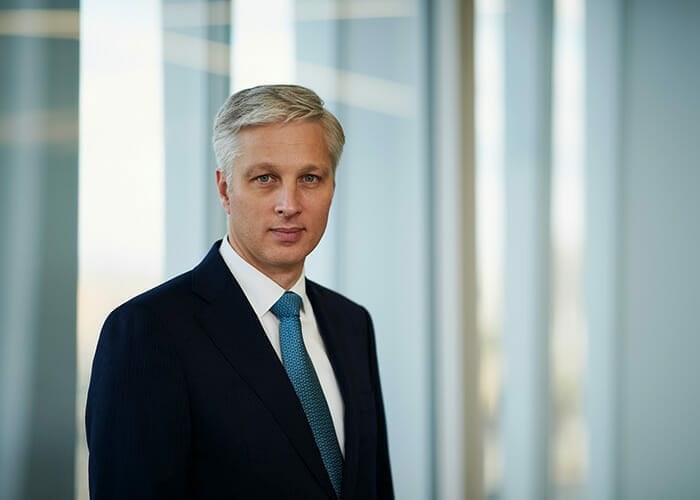
Stefan Dunatov, Chief Investment Officer at Coal Pension Trustees Services, on 18 October 2016 in London, United Kingdom.

Investment strategy at the United Kingdom’s Coal
Continue Reading

A Top1000funds.com subscription unlocks the full article

Join the global institutional investment platform read by the world's largest asset owners, fund managers and consultants.

New here

Create an account

Complimentary to register. We'll verify your details and grant access to the archive, our newsletters and the Asset Owner Directory (enhanced features coming soon).
Register now
Already a member

Sign in

Already activated your account? Sign in to continue reading and access your saved articles, preferences and member-only content.

One response to “Coal pension burns for cash flow”

  1. Is it correct to describe cash flow investments as “illiquid”? This implies they are not as good as investments that are “liquid”. Is that implied judgment prudent for pensions that are investing to generate adequate cash flows, forever, in order to keep their actuarial risk pools properly full and flowing, forever? I understand that liquidity is the raison d’être of securities trading. If you buy something at one price in hopes of selling it at some unknown future point in time to some unknown future buyer for an unknown but hoped-for higher selling price, you certainly do need a liquid market in which to sell. If you invest in enterprise cash flows, directly, in order to generate cash flows sufficient to support good stewardship, indefinitely, how important to that investment is a market-clearing price?

Leave a Comment

Ohio STRS warns of higher US recession risk; prioritises liquidity

Ohio STRS warns of higher US recession risk; prioritises liquidity

The State Teachers Retirement System of Ohio has warned of a “material” increase in US recession risk compared to last year as the fund braces for a wider, “negatively skewed” distribution of outcomes in the next 12 months. It came as the mature plan, which is 81 per cent funded, is tilting to fixed income and new asset classes like liquid alternatives over equities.

Sort content by

Is portfolio construction up to the task

The best way to integrate different scenarios into portfolio construction is front of mind for investors right now. But as David Bell explores adapting academic practices into the more complex real world is full of challenges. There are some important learnings in examining different techniques though.

UPS: Risk assets and virtual happy hours

The $50 billion pension fund for employees of United Parcel Service, which has a preference for managed account relationships with its managers, is poised to increase its allocation to risk assets.

The importance of resilience

Already OPTrust’s portfolio can best be described as resilient. But CIO James Davis, who started his career in October 1987, expects global macro economic changes from this crisis that we have never seen before and he wants to position the portfolio for whatever is around the corner.

What past market crashes teach us

Looking back at the portfolios of large institutional investors during and after the dot.com crash and the GFC, CEM Benchmarking, reveals commonality in the portfolios that thrived. For both events the top quartile returns were more than 2 per cent higher than the bottom quartile. Analysing the asset allocation and behaviour of investors showed two clear themes: top quartile performers had more defensive allocations pre-crash; and rebalancing is a tailwind for performance.

The importance of governance in a crisis

From December to mid-March of this year New Zealand Super lost 20 per cent of its assets. It’s the second time in less than 18 months the fund has experienced a significant drop in assets but in an example of how good governance and process can allow for counter cyclical behaviour the fund is now buying equities.

Wisconsin leans into opportunities

In the space of three months the State of Wisconsin Investment Board has moved its portfolio from “defensive” to “offensive” as it “leans into the opportunities” presented by the coronavirus crisis. CIO and executive director David Villa, and deputy, Rochelle Klaskin spoke to Amanda White about the portfolio and how the large internal team is managing remotely.

Previous



