
Coal pension burns for cash flow

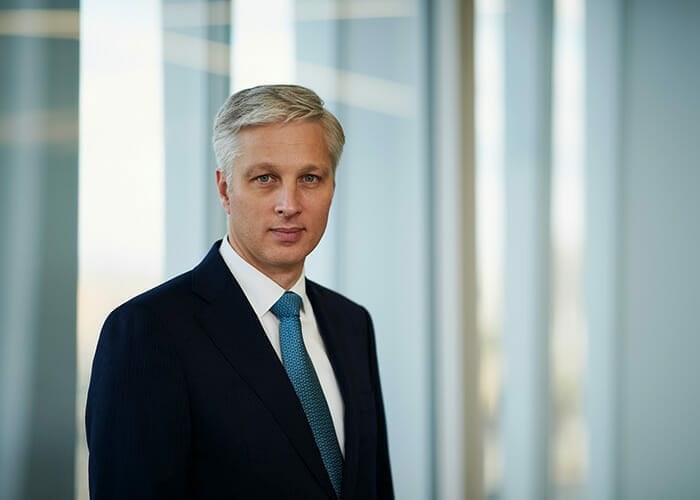
Stefan Dunatov, Chief Investment Officer at Coal Pension Trustees Services, on 18 October 2016 in London, United Kingdom.

Investment strategy at the United Kingdom’s Coal
Continue Reading

A Top1000funds.com subscription unlocks the full article

Join the global institutional investment platform read by the world's largest asset owners, fund managers and consultants.

New here

Create an account

Complimentary to register. We'll verify your details and grant access to the archive, our newsletters and the Asset Owner Directory (enhanced features coming soon).
Register now
Already a member

Sign in

Already activated your account? Sign in to continue reading and access your saved articles, preferences and member-only content.

One response to “Coal pension burns for cash flow”

  1. Is it correct to describe cash flow investments as “illiquid”? This implies they are not as good as investments that are “liquid”. Is that implied judgment prudent for pensions that are investing to generate adequate cash flows, forever, in order to keep their actuarial risk pools properly full and flowing, forever? I understand that liquidity is the raison d’être of securities trading. If you buy something at one price in hopes of selling it at some unknown future point in time to some unknown future buyer for an unknown but hoped-for higher selling price, you certainly do need a liquid market in which to sell. If you invest in enterprise cash flows, directly, in order to generate cash flows sufficient to support good stewardship, indefinitely, how important to that investment is a market-clearing price?

Leave a Comment

Ohio STRS warns of higher US recession risk; prioritises liquidity

Ohio STRS warns of higher US recession risk; prioritises liquidity

The State Teachers Retirement System of Ohio has warned of a “material” increase in US recession risk compared to last year as the fund braces for a wider, “negatively skewed” distribution of outcomes in the next 12 months. It came as the mature plan, which is 81 per cent funded, is tilting to fixed income and new asset classes like liquid alternatives over equities.

Sort content by

NZ Super debates currency risk

NZ Super's recent five-year reference portfolio review saw much debate over currency risk, with the discussion elevating to the board - an unusual situation for the fund whose internal IC usually makes recommendations to the board.

Students show how to integrate impact

As impact investing gains momentum, the winning entries of a McGill University international investment challenge have shown the pension industry a thing or two about how to holistically tackle a triple mandate that includes impact.

Scenario analysis tool predicts U-shape

A U-shaped recovery is the most likely economic outcome in the US for the next two years, but stagflation has a higher than anticipated chance of occurring according to a new paper about scenario analysis co-authored by State Street and GIC researchers. The study revolutionises scenario analysis by reorienting it towards a path.

Florida: Opportunities in a crisis

The Florida State Board of Administration has made some strategic moves to take advantage of opportunities in the dislocation, including in private equity, distressed debt and active listed equities.. But CIO, Ash Williams, is concerned about the underlying real economy.

Canadians more complex than first glance

The Canadian model, revered world over for its supreme pension management, is not low cost despite that being one of its oft-described traits. New research by CEM Benchmarking and McGill University shows that these funds are cost efficient, rather than being low cost. Their aim is to be high net performers, not low cost.

IMCO uses nimbleness to advantage

Meticulous planning for the next market crash, and an eye on liquidity, meant IMCO was well positioned to invest, particularly in credit, when the opportunity arose. The fund continues to use its agility to its advantage and is now looking for opportunities in private markets.

Previous



