
CDPQ’s real estate arm Ivanhoé Cambridge talks agility and evolution

In the last few years, Ivanhoé Cambridge, the $70 billion real estate subsidiary of $283 billion Caisse de Depot et Placement du Quebec (CDPQ) has turned its portfolio on its head. Five years ago, two thirds of the allocation was invested in return-dragging office and retail assets. Now, in a complete reversal, two thirds is invested in logistics and residential real estate alongside a growing allocation to alternative life sciences facilities and office and retail assets are in the minority.

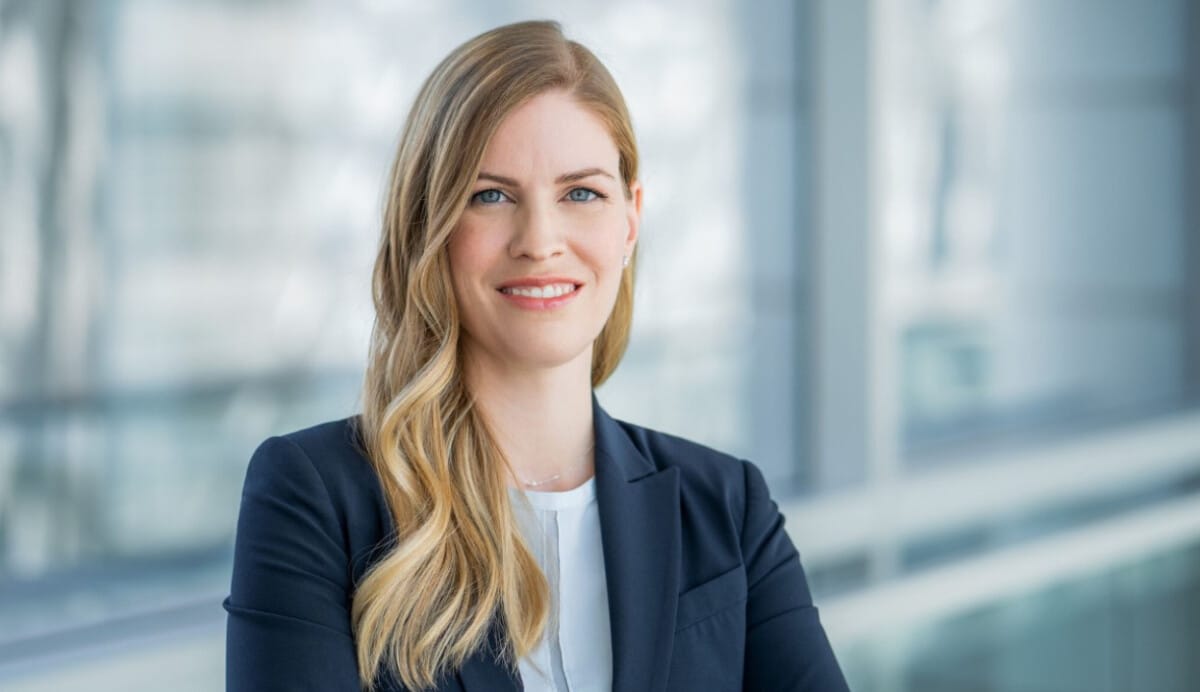
“Over the last few years, we have pivoted the portfolio to make sure we are aligned with longer term trends,” says Michèle Hubert, chief operating officer at Ivanhoé Cambridge in an interview with Top1000funds.com.

The intensive churn of transactions as assets with less potential or that had reached maturity were sold and money redeployed to growth areas required a keen investment focus and adrenaline-fuelled, long hours to get the volume of deals over the finish line.

In 2022, the team executed more than 70 transactions totalling over $15 billion investing either directly, with strategic partners or via real estate funds.

New priorities

The process highlighted new investment priorities that are now central to strategy.

For example, Ivanhoé Cambridge increasingly seeks property assets that can adapt and evolve, able to change in use alongside changing demand and changes in society. Like the potential conversion of office assets into residential – or malls (which have a 11 per cent weight in the portfolio today compared to 22 per cent in January 2020) doubling up as logistic centres or places to work as well as shop. Similarly, assets should be able to adapt to incorporate new social impacts like the rehabilitation or public spaces, she says.

Sponsored Content

“Many assets are not designed to allow this conversion, but I’d like to see a new way in how we plan developments to incorporate a mix of uses that could evolve, opening the door to flexibility,” she says.

“The way we use real estate in a post pandemic world is changing. We must make sure we position the portfolio to not just play on current trends but align with future needs of people and communities.”

Risk spotlight

Alongside the physical churn in the portfolio, Hubert highlights another profound change now always influencing decision making.

“Geopolitical and ESG risk have come to the fore, shining the spotlight on the risk team,” she says.

From the fallout of Russia cutting off gas to Europe to de-globalization trends or an asset’s physical vulnerability to climate change and climate regulation, geopolitical and climate risk are now integral to how the investor assesses opportunities.

She says her approach to risk has become increasingly prescriptive, evolving in a forward-looking approach. New tools include Ivanhoé Cambridge’s bespoke risk premium model, that has sharpened how the team rate risk and opportunity, judging and challenging the expected return against external risk models and assumptions.

Rather than have a centralised risk team sitting in the Montreal headquarters, risk teams are present in all key markets, working alongside local investment teams. The risk function is also connected to other teams in the organization – notably the sustainable investment team.

“They have become an integral part of how we manage risk,” she says.

Climate risk

Integrating climate risk (Ivanhoé Cambridge targets a carbon neutral portfolio by 2040) is well underway.

As of December 2021, low carbon buildings account for around $17 billion of the portfolio and 56 per cent of the portfolio has green building certification.

New initiatives to cut carbon emissions are regularly rolled out. A current pilot involves trialling energy efficiency technology in the electric motors that drive water pumps, air conditioning and heating in buildings that uses algorithms and intelligent control systems to reduce utility bills.

Still, measuring carbon remains a key challenge, and is difficult to integrate into the valuation process.

“We are convinced integrating ESG in this way will increase the resilience of the portfolio,” she says. “But the industry is still using traditional measures to assess risk and return and doesn’t integrate carbon.”

granualrity of Data is essential

Data is an increasingly crucial component in risk analysis, offering insights on the market and Ivanhoé Cambridge’s own portfolio.

From a property’s energy and water use to occupancy rates and tenant habits, the construction of smart buildings and the rollout of apps to improve life for tenants is giving a new granularity to the information feeding up to the investment team. Occupants can stay connected to their building via exclusive concierge services allowing them to reserve parking spaces remotely, order a meal or enrol in a group class. It amounts to a vast store of strategic information that will go on to shape the spaces of tomorrow.

The challenge, she says, is making sure data is used correctly and linked to decision-making.

“There is a value lying there that we have to harness,” she says. “It involves taking data from external sources and layering it with data from our own portfolio.”

risk drives Governance evolution

Integrating geopolitical and ESG risk into investment decision making has required an evolution in Ivanhoé Cambridge’s governance.

She is responsible for an investment process whereby investment leaders and the risk and sustainability teams present all material issues to committees overseeing strategy and investment decision making. Governance, she says, must be robust and solid, but also able to evolve to align with changing priorities. Governance and investment decision making is always viewed through a ‘one portfolio’ lens rather than regional portfolios and pipelines to better optimize risk-return, she says.

“A one portfolio view is critical to us taking better decisions,” she says.

She is also responsible for ensuring staff spend time on asset management and extract the maximum return from existing assets in the portfolio – particularly in the wake of a pivot that demanded such an intense investment focus

“When you keep an asset, you make a decision not to sell,” she says. “It should be seen as a decision to constantly re-buy and we are trying to make sure our committees and governance also looks at assets we own, dedicating time and space to go through important decisions.”

There are many elements to being a successful real estate investor, she concludes. It involves selecting the right opportunities and being intentional. It requires playing to different horizons and adjusting the execution and tilting strategies to play on different time frames. It also requires a global view, identifying areas that can perform better in particular regions and sourcing investments aligned to cyclical (the inflation proof revenue growth in the logistics portfolio, for example) and structural trends that could play out over the next decade. In short it requires building a portfolio that comes together to generate a superior performance.

“We  strive to have a selection of good deals that together lead to something even more,” she says.

Leave a Comment

How CPP is evolving risk management for a faster, more interconnected world

How CPP is evolving risk management for a faster, more interconnected world

In an environment where multiple risks are emerging and their effects are compounding on the portfolio, CPP Investments' chief risk officer Priti Singh says the $572 billion fund is rethinking risk management from the ground up, shifting from reaction to preparation and embedding risk thinking earlier in investment decisions. She speaks to Amanda White about the fund's risk approach.

Sort content by

Methodist morality delivers mainstream returns

When John Wesley, the 18th century Anglican cleric, preached that business practices should not harm one’s neighbour, he never imagined that his principles would guide the global investment strategy of an $18.4-billion pension fund. Today, the General Board of Pension and Health Benefits of the United Methodist Church, based in Chicago, ranks as one of

UMR: growth from government bonds?

“We have to move faster than our competitors,” says the chief executive of French retirement fund Union Mutualiste Retraite, Charles Vaquier. It is a phrase that you can hear uttered by business leaders at all sectors and levels, but one that institutional investors rarely emphasise. In chatting about its investment strategy, it soon becomes apparent

South Africa’s GEPF to invest globally

In the South African city of Pretoria, 50km outside Johannesburg, the sense of history is pervasive. The city was the capital of the apartheid regime and the site of Nelson Mandela’s presidential inauguration. It’s also home to Africa’s biggest asset manager the R1.17 trillion ($0.12 trillion) Public Investment Corporation, a state-owned body founded in 1911

The Pension Protection Fund: lifeboat in a storm

Crisis in the global economy may be knocking the value of most UK pension funds off course, but it is actually helping swell assets at the £12-billion ($19-billion) Pension Protection Fund (PPF). Established in 2005 along similar lines to America’s giant Pension Benefit Guaranty Corporation, the PPF absorbs the assets of defined-benefit private sector schemes

Illiquid medicine brings rude health to the Wellcome Trust

Sir Henry Wellcome, the early twentieth century pharmaceuticals magnate (pictured below), would be pleased with how well the London-based charitable foundation that bears his name has weathered the global downturn. The Wellcome Trust (WT), which supports medical research in Britain and around the world, reported a total return of 12 per cent for the year

Sustainability sets solid base at Germany’s MetallRente

Germany’s MetallRente has made quick progress since its foundation by trade unions in 2001. It has grown into Germany’s biggest multi-employer pension provider, boasting €3 billion ($3.87 billion) in assets, and counts a mammoth 21,000 companies as customers, from within the metal industry it was set up to serve and beyond. In the past two

Previous



