

CalSTRS is in contract negotiation with a hedge fund consultant, with a view to hiring global macro hedge funds as part of its innovation portfolio, and the next tasks will be reviewing commodities and non-traditional benchmarks, as the innovation and risk unit comes of age.
 In November 2009, investment staff at CalSTRS recommended to the board that around $200 million be allocated to global macro strategies, to be managed by between three and six managers. The allocation would be incubated in the fund’s recently formed innovation portfolio, which has the purpose of improving the total plan’s risk and return profile.
After some concerns regarding hedge funds, particularly about transparency, at the board level, the fund has now decided to hire a consultant to oversee the sub-class.
In addition to being responsible for the innovation portfolio, charged with investment opportunities to improve the risk/return of the total fund not covered by other asset classes, the innovation and risk unit also manages risk at a total fund level.
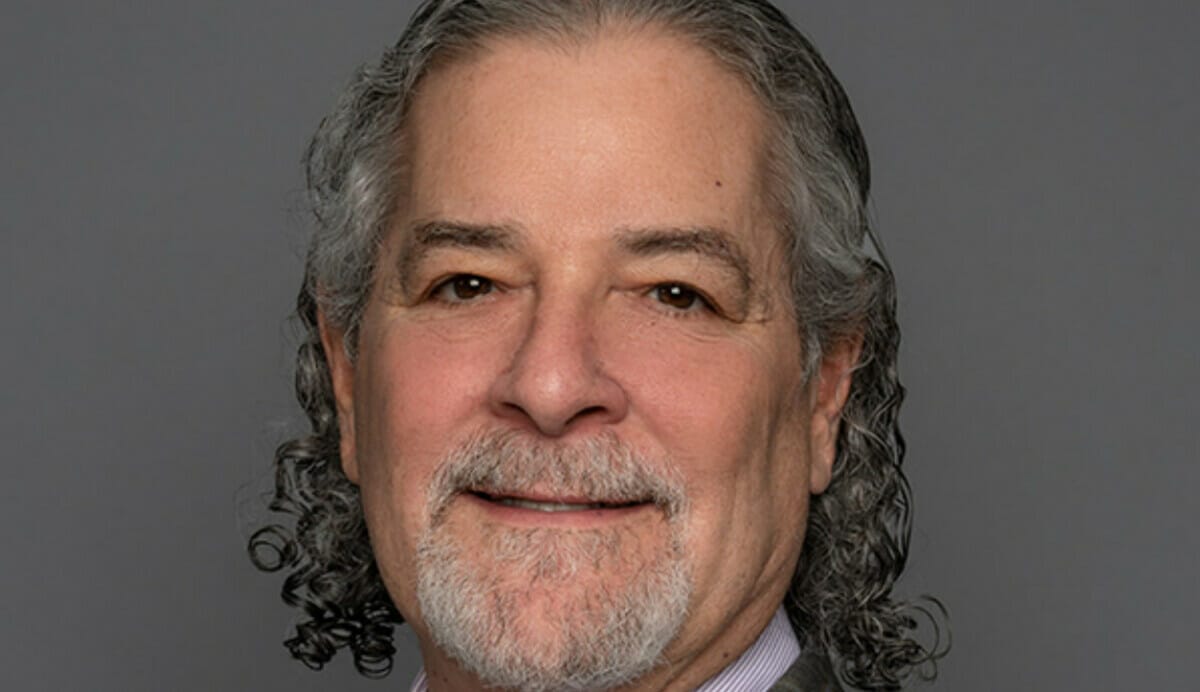
Because it is a brand new unit, the director of the innovation and risk unit, Steven Tong, says there has been focus on building the infrastructure and tools needed to evaluate managers on a quantitative basis.
“In the hedge funds space we looked at every strategy, their return, correlation and volatility analysis to understand individual strategies. We spent a good six to 12 months on the analysis and found global macro and CTAs were good diversifiers compared to our existing strategies,” Tong says.
The analysis showed that the broad mandate of global macro was a distinct advantage, such that manager, with fewer constraints could tactically choose the appropriate allocation and instruments to access opportunities. And because of their opportunistic nature, global macro thrives in high volatility environments.
In the last market crisis, global macro performance was strong compared to global equities, with the MSCI World falling 55.4 per cent from November 2007 to February 2009, while the CS/Tremont Global Macro Index was only down 0.9 per cent.
But despite the thorough analysis by Tong and his team, the board still wanted the security of an external consultant to guide the investment decision making.
“The board had some concerns about hedge funds and wanted us to hire a consultant. We are in contract negotiation now, and they’ll help us find managers.”
The idea is the innovation portfolio allows the fund to invest in new asset classes, and demonstrate success, before allocating large amounts to the strategy.
It has a three-year window to decide if a strategy should be dedicated to a new asset class, be included with one of the traditional asset classes, or be terminated. It uses its own in-house analysis as well as risk tools provided by MSCI Barra.
“We are in the public arena, it has been a long process but fair, and we have a fiduciary responsibility so we have to ensure a level playing field and everyone treated fairly.”
The innovation portfolio can invest up to 1.5 per cent of the total CalSTRS fund or $2 billion whatever is smaller. Within that the CIO, Chris Ailman, has delegation authority up to $100 million, and Tong up to $50 million. The unit provides the board with updated quarterly reports.
Tong, who previously managed global equities with the fund for 11 years, describes the portfolio as running an experiment, of both the strategy and the relationship with the mangers.
“We will only manage it for up to three years, report back to the board and then decide to terminate, increase in the size and then find a place in strategic asset allocation. We look closely at correlations, rolling volatility, returns, and Sharpe ratios, to see how it behaves.”
Tong says the next cab off the rank will be to examine a potential commodities exposure within the innovation portfolio.
“We will be looking for managers and the first step will be those that manage commodities long-only using derivatives. Later we will look at long/short or private companies managing commodities,” he says.
The team is also examining the use of non-traditional benchmarks, and alternatives to cap-weighted indexes.
“Areas we will study in the next 12 months will be fundamental indexing, equal-weighted strategy and minimum volatility,” Tong says.
At a total fund risk level, CalSTRS had been typical of many large public funds where risk was assessed at a security and asset level but not at a total portfolio level.
“Staffwise, everyone was very focused on their own asset classes. Chris [Ailman, CIO] wanted a unit to look at research and manage risk at total fund level.”
The development of that unit was in March 2009, and now that thinking has progressed to the CalSTRS board this February adopting a risk factor approach to asset allocation that includes six factors. Tong’s team will largely be responsible for analysing those risk factors.
“We’re saying there are six risk factors present in all asset classes, they all have sensitivity to them. Now we are building models to measure how sensitivity to those factors changes. This will enable us to understand the risk/return drivers and be forward looking,” he says.







Leave a Comment
You must be logged in to post a comment.
Login