
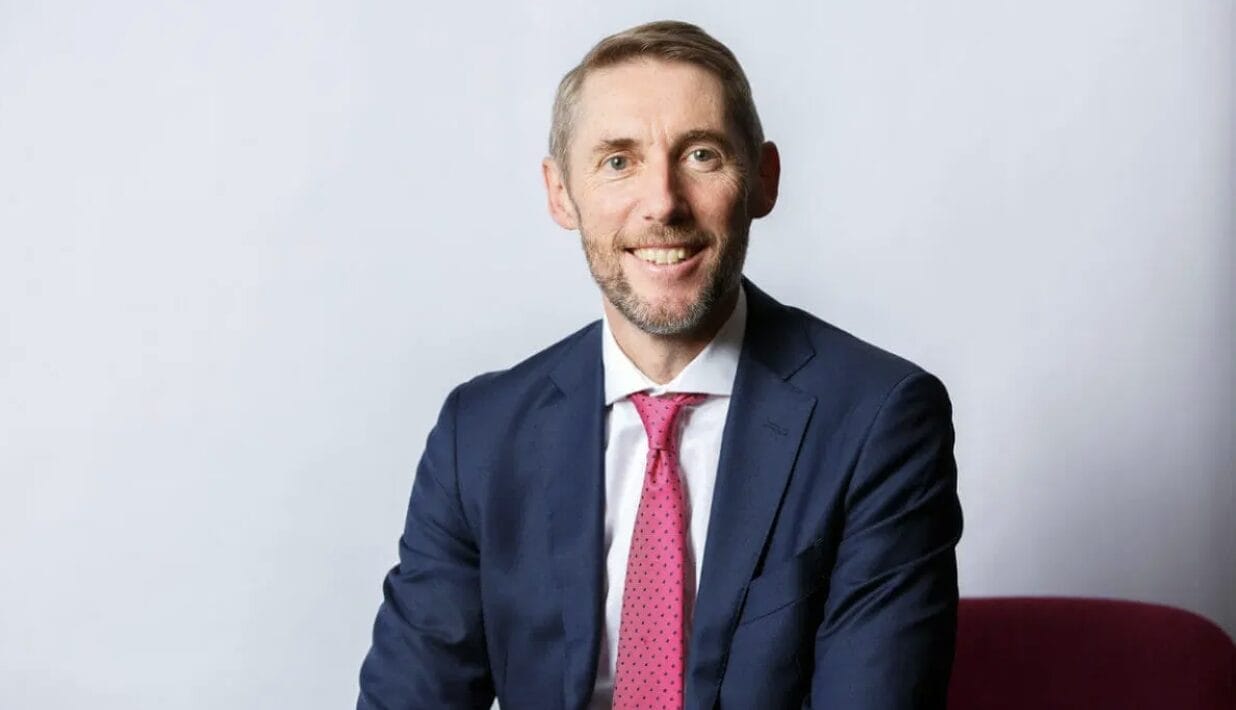

The A$175 billion Aware Super’s CIO Damian Graham said its venture capital investment in tech unicorn Canva has been good value for money but “pretty unusual” in the scheme of things. He reflects on the asset class and the broader pension investing purpose.
Australian pension investors tend to be cautious about venture capital investment for various reasons. One is that with only an estimated A$20 billion AUM as of mid-2023, Australia-focused venture capital, the asset class is too small and can be difficult for large pension funds to make a meaningful allocation. However, when betting on the right horses, the return can be very attractive.
The A$175 billion Aware Super is one of the early investors of Australian tech unicorn and graphic design platform, Canva, which is currently valued at $26 billion and touting an NYSE IPO in 2025 or 2026. The exposure was through investment manager Blackbird.
The pension fund was returned some capital last year as Blackbird sold down its shares. While declining to confirm the specific number, Aware Super’s chief investment officer Damian Graham said the fund still holds most of its investments in Canva.
“Value for money has been good,” Graham said of the investment at the Fiduciary Investors Symposium in Sydney earlier this month. Although he conceded that the fund has become too large to consider smaller opportunities.
“Occasionally, you do get a very small investment idea come to you, and it’s $3 million, $5 million, $10 million or even $20 million, and the governance to own that, in a direct fashion particularly, is just not time well spent,” he said.
Aware Super has a ‘Venture direct’ program where the fund’s internal team identifies early-stage investment opportunities.
“That hasn’t been a huge amount of money, but we’ve found some good investments,” Graham said. “But it’s hard one because you’ve only got so much bandwidth, and most of our risk is in listed equities.”
“So when you think about the risk of managing the portfolio, we want to make sure we get those big drivers of returns and risk right.
“[Canva] went from a very small investment to our biggest investment at a point in time, so that’s been a fantastic outcome, but pretty unusual in the scheme of things.”
Aware Super last year joined a list of Australian pension funds in opening an overseas office in London. The highly publicised move saw Aware executives meeting King Charles at a Buckingham Palace reception and appear in one conference alongside Chancellor Jeremy Hunt.
Graham remained in Australia but his deputy CIO Damien Webb has relocated to oversee investment operations in the UK.
Speaking of ways to attract investment talents in a so-called deep financial market such as the UK where there is relatively little recognition of what Australian superannuation is about, Graham said the process “doesn’t start with rem[umeration], it starts with purpose”.
“[Managing retirement savings] are important jobs, but we’re not important people,” he said.
“The key for me is if we have the right people for trustees to have confidence that they’ve got the program of work well set up for long term. And it’s about building a sustainable program of work to so it’s not just great returns for one year… but you’ve got to be able to do it over decades.
“The really critical issue is… are we delivering great outcomes to members, and I’m sure most people in the super system would say we can continue to do better.”








Leave a Comment
You must be logged in to post a comment.
Login