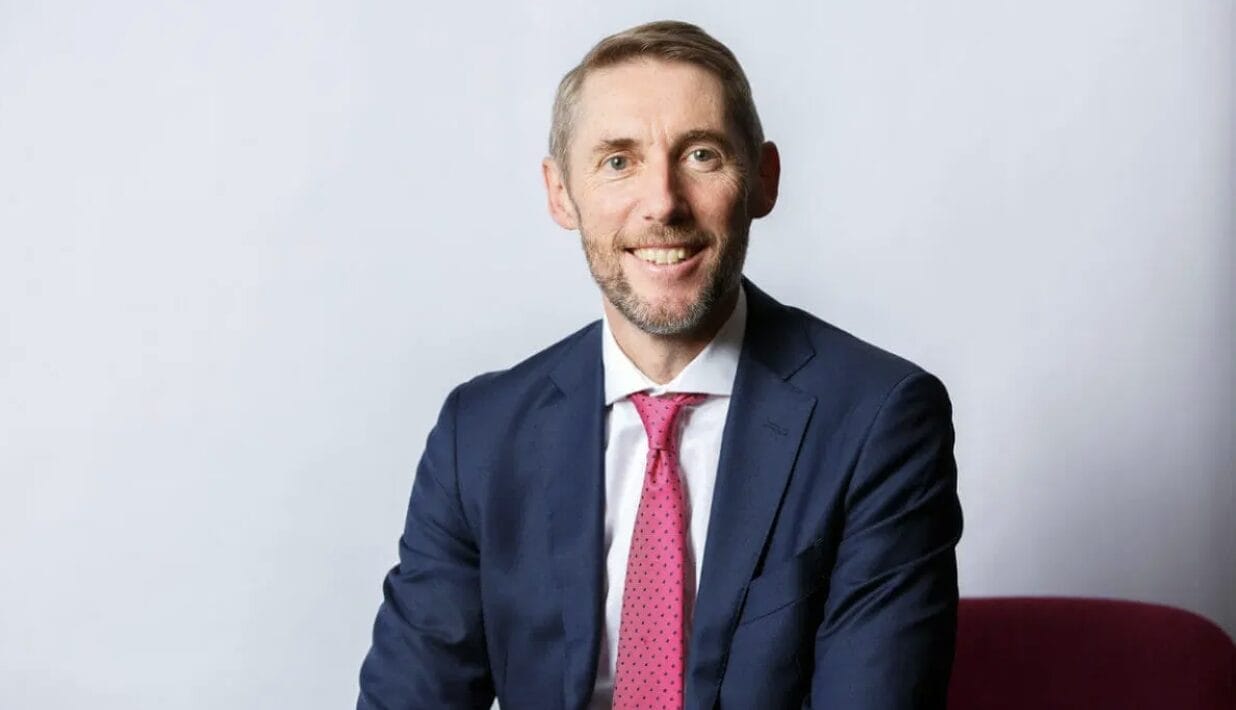

Australia’s Aware Super on VC and the pension investing purpose

The A$175 billion Aware Super’s CIO Damian Graham said its venture capital investment in tech unicorn Canva has been good value for money but “pretty unusual” in the scheme of things. He reflects on the asset class and the broader pension investing purpose.  

Australian pension investors tend to be cautious about venture capital investment for various reasons. One is that with only an estimated A$20 billion AUM as of mid-2023, Australia-focused venture capital, the asset class is too small and can be difficult for large pension funds to make a meaningful allocation.  However, when betting on the right horses, the return can be very attractive.  

The A$175 billion Aware Super is one of the early investors of Australian tech unicorn and graphic design platform, Canva, which is currently valued at $26 billion and touting an NYSE IPO in 2025 or 2026. The exposure was through investment manager Blackbird. 

The pension fund was returned some capital last year as Blackbird sold down its shares. While declining to confirm the specific number, Aware Super’s chief investment officer Damian Graham said the fund still holds most of its investments in Canva.   

“Value for money has been good,” Graham said of the investment at the Fiduciary Investors Symposium in Sydney earlier this month. Although he conceded that the fund has become too large to consider smaller opportunities. 

“Occasionally, you do get a very small investment idea come to you, and it’s $3 million, $5 million, $10 million or even $20 million, and the governance to own that, in a direct fashion particularly, is just not time well spent,” he said. 

Sponsored Content

Aware Super has a ‘Venture direct’ program where the fund’s internal team identifies early-stage investment opportunities. 

“That hasn’t been a huge amount of money, but we’ve found some good investments,” Graham said. “But it’s hard one because you’ve only got so much bandwidth, and most of our risk is in listed equities.” 

“So when you think about the risk of managing the portfolio, we want to make sure we get those big drivers of returns and risk right. 

“[Canva] went from a very small investment to our biggest investment at a point in time, so that’s been a fantastic outcome, but pretty unusual in the scheme of things.” 

Aware Super last year joined a list of Australian pension funds in opening an overseas office in London. The highly publicised move saw Aware executives meeting King Charles at a Buckingham Palace reception and appear in one conference alongside Chancellor Jeremy Hunt.  

Graham remained in Australia but his deputy CIO Damien Webb has relocated to oversee investment operations in the UK.  

Speaking of ways to attract investment talents in a so-called deep financial market such as the UK where there is relatively little recognition of what Australian superannuation is about, Graham said the process “doesn’t start with rem[umeration], it starts with purpose”. 

“[Managing retirement savings] are important jobs, but we’re not important people,” he said. 

“The key for me is if we have the right people for trustees to have confidence that they’ve got the program of work well set up for long term. And it’s about building a sustainable program of work to so it’s not just great returns for one year… but you’ve got to be able to do it over decades. 

“The really critical issue is… are we delivering great outcomes to members, and I’m sure most people in the super system would say we can continue to do better.” 

Asset Owner:Aware Super

Leave a Comment

NZ Super cuts benchmark return expectation on US valuation concerns

NZ Super cuts benchmark return expectation on US valuation concerns

A view that the US stock market is overvalued and equity risk premia will be lower over the long term has driven New Zealand Super to lower the return expectations for its reference portfolio following its recent five-yearly review of the benchmark. Co-chief investment officer Brad Dunstan also flags underweight commodity exposure as an area to address and explains why the fund remains sceptical of illiquidity premia despite seeing a growing case for private markets.

Sort content by

URS bets on nuclear to power AI and lower emissions

Next-generation nuclear energy, and the money pouring into it, will truly change the world, according to CIO of Utah Retirement System John Skjervem. It’s a lonely position as the CIO of a public pension fund but one Utah is embracing as it builds out early-stage investments in nuclear energy as part of its alternative energy portfolio. He speaks to Sarah Rundell in an exclusive interview about how investing in transformational energy technologies can be part of prudent investment management.

Managing volatility and inflation: Constant rebalancing shores up UK’s lifeboat fund

A keen focus on rebalancing, and best in class systems, allows the UK’s £31.2 billion Pension Protection Fund to effectively implement a dynamic hedging strategy for one of the UK's biggest LDI portfolios. Sarah Rundell reports.

Velliv reset: More Danish funds lean into low cost DC model

In Denmark’s fiercely competitive commercial pension industry, Velliv was quick to take action with a root-and-branch overhaul of its pension provision when it experienced a drop in returns in the first half of 2024. It sacked its active equity managers, scaling up internal active strategies and low-cost, index-based investments instead, and stopped allocating to its $4.3 billion alternatives allocation. Thor Schultz Christensen, deputy chief investment officer at Velliv, unpacks the change.

Ohio sounds warning bells on PE liquidity logjam

Farouki Majeed, chief investment officer of the $23 billion Ohio School Employees Retirement System, has highlighted worrying signs in private equity that resulted from a backlog of exits, including industry murmurs that some GPs are having to borrow money to operate their business because LP fees are drying up. In an interview with Top1000funds.com, Majeed unpacks why its 12 per cent PE allocation is shielded from the rout.

Funds SA cuts active risk as CIO puts stable beta first

Australia’s $36 billion Funds SA has slashed tracking error in its equities book and is reorienting its philosophy around stable beta, as chief investment officer Con Michalakis argues the role of alpha in a multi-asset portfolio needs a fundamental rethink.

La Caisse’s oil exit pays off as renewables portfolio pulls ahead of fossil fuels

Divesting from the oil sector has been a boon for La Caisse’s performance, as the Canadian pension giant says its energy investments have earned billions in value-add compared to the benchmark since the inception of its climate strategy. Head of sustainability Bertrand Millot unpacks the fund’s approach in an interview with Top1000funds.com.



