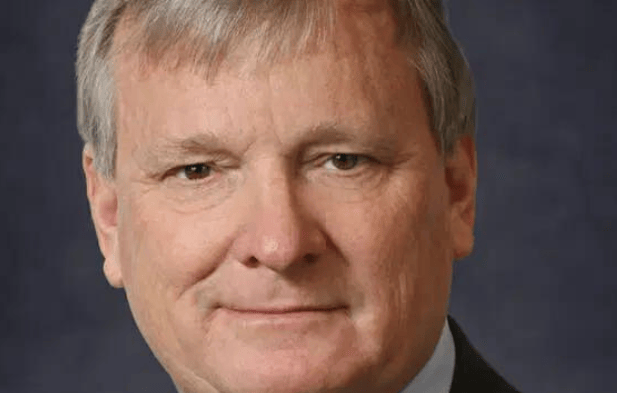

ARR vs funded status: North Carolina’s rock and a hard place

Barely touched for 60 years, under State Treasurer Dale Folwell’s watch, North Carolina Retirement Systems has lowered its assumed rate of return for the principal pension fund three times since 2018. The consequences for the $114.3 billion plan’s 87 per cent funded status weighs particularly heavily on his shoulders.

“If I cared about my funded ratio, I wouldn’t lower my rate of return,” he says, speaking from the Retirement Systems’ Raleigh headquarters. “The second you lower your assumed rate of return the funding level drops. It could be 90 per cent funded, you lower the ARR, and the next morning it will be 88 per cent.”

Now at 6.5 per cent, each assumed notch lower makes the road back to being fully funded more arduous and challenging. Particularly given North Carolina is paying out more in benefits every month because of longer life expectancy and early retirement. “Lowering the assumed rate of return at the same time as funding the pension plan is really Herculean.”

The fund, he says, is stuck between a rock and a hard place. The outlook for returns ahead is increasingly bleak. And despite, like many US public pension funds, a recent spate of healthy returns bolstering the funded status,  over the long-term North Carolina’s past returns have failed to achieve their assumed rate of return, on average, for the last 20 years.

“Lowering the ARR has been recommended for over a decade but never done. Doing right is rarely wrong,” he says, coining a phrase that helped his resolve during difficult requests for more money with North Carolina’s General Assembly, councils, and cities in the form of employer contributions to make up the shortfall, alongside reduced benefits. “Every time you lower the assumed rate of return you have to ask your funders for money.”

Conserve, liberate and set free

Investment gains make up almost two thirds of the contributions going into the pension fund and although Folwell says he’s not generally one to blame or complain, he does point the finger at Fed interventions for the challenging investment environment. “In the Spring of 2020 we were all set to take advantage of fantastic investment opportunities, but then the Fed showed up and started betting against us.”

Sponsored Content

Today, he believes Fed largesse has fuelled the inflation crisis and led to too much money chasing too few assets. “They’ve put us in a situation where there is too much money on the street, and they’ve also created an employment crisis. I’m a conservative, my priority is to conserve, liberate and set free.”

The same free market beliefs inform Folwell’s frustration with the rise of shareholders intervening in corporate governance, particularly regarding climate change. Like other funds, North Carolina is in the process of reclaiming its voting powers from proxy advisors, taking back its ability to vote on corporate climate policy in accordance with the pension fund’s best economic interests.

“We don’t want our proxy to be used to promote policies that don’t have anything to do with our fiduciary responsibility; to use these assets and vote these assets in a way that is contrary to our fiduciary responsibilities is not something we are going to do anymore.” Elsewhere, he says that the rise of ESG has deflected from the importance of energy security and provided an excuse for investment managers to charge higher fees.

“We have recently learned that even the SEC is somewhat uncertain what ESG investment actually is,” he says in response to new rules being prepared by the Securities and Exchange Commission that will set standards for funds claiming to be ESG, sustainable, or low carbon.

Cash and short duration fixed income

North Carolina currently has a high allocation to cash and the shortest duration on its fixed income allocation ever, positioned to snap up assets that bring safety and value to the plan. Folwell’s strategy is to keep investments simple, prioritising “fat crayon” deals that jump off the paper, and make much of North Carolina’s sole fiduciary model. “If we decide to do something, we can act quickly.” He also says the plan benefits from not being a forced seller, able to hold onto assets to their maturity in fixed income if they fall below investment grade.

Continuity is another characteristic of the fund that Folwell believes will lend a competitive advantage in the months ahead. It’s encapsulated in North Carolina’s two CIOs (Christopher Morris and Jeff Smith) each with decade-long careers in the Department of State Treasurer, bringing a status quo and consistency to strategy that was absent in the years before Folwell took the helm when North Carolina ploughed through seven CIOs in 14 years.

Their constant presence avoids the churn of personnel and assets that often accompanies fresh blood and new ideas, he says. “A new CIO would say I don’t want this manager I want that one; my priority has always been to focus on the stability of the plan and the people who work here.”

Fees

Low returns make fee savings even more crucial. Around $17 billion in US equities is now managed internally, and over the last six years North Carolina has saved $650 million in Wall Street fees.  Some of the fund’s most successful investments have been side car allocations in distressed debt that in some instances have not had any fees or profit sharing attached, he says. “Don’t assume managers don’t want to work with you for lower fees; take advantage of the totality of your investments.” North Carolina’s private equity portfolio generated a total return of 58.5 per cent for the last fiscal year.

Folwell is adamant that having just one person in charge of the US’s ninth-biggest pension fund in a sole fiduciary model, long seen as outdated in terms of governance, is preferable to a board-supervised structure. His belief in continuity and persistence in a changing and challenging world holds firm. “We are in the cheque delivery business. At the end of the day, somebody has got to make government work.”

Leave a Comment

New Jersey’s $85 billion fund stockpiles cash, eyes PE secondaries

New Jersey’s $85 billion fund stockpiles cash, eyes PE secondaries

An underweight position across private markets, predicated on a view that geopolitics and inflation mean interest rates are not coming down any time soon, has positioned the New Jersey Division of Investment with plenty of dry powder and a cash position four times the policy allocation. It is now readying for opportunities in private equity secondaries and with emerging managers. Chief investment officer Shoaib Khan spoke to Top1000funds.com.

Sort content by

AP1’s young, quant team making change

Dmytro Sheludchenko, part of the internal quant team at AP1, underscores how leading pension funds are building internal young teams to embrace technology, look beyond short-term implementation to focus on long-term value, and draw expertise from the vast amounts of data in today’s new investment landscape.

Texas Teachers revamps AA, adds leverage

The board of the $154 billion Teacher Retirement System of Texas has approved changes to its strategic asset allocation as a result of its latest five-year study, increasing its allocation to private markets, risk parity and introducing leverage.

South Carolina ramps up PE

The $31.3 billion South Carolina Retirement System Investment Commission has launched a co-investment private equity program in a bid to reduce risk and enhance returns. Partnering with Chicago-headquartered GCM Grosvenor, RSIC will tap Grosvenor’s own private equity deal flow, as well as introductions to the manager’s GP network.

Danish fund cuts managers for better ESG

The €9.5 billion DanishPædagogernes Pension, PBU, is in the process of consolidating the number of managers in its listed equity portfolio. The decision at the fund - which has around 10 large, focused equity mandates - is linked to an ambition to reduce the number of companies in the portfolio in the belief that fewer companies in the 42 per cent actively-managed equity allocation allows greater ESG oversight.

The impact of technology on investments

Harshal Chaudhari recently sidestepped from his role as company-wide CIO at IBM, looking after $150 billion in pension assets, to a new role as the tech giant’s chief analytics officer. He spoke to Top1000Funds about the strategy he ran at the pension fund, his wider thoughts on the global economy and the impact of technology on the investment world.

QSuper: standing out from the crowd

QSuper CIO, Brad Holzberger, has long stood out from his peers by loading up on long-term government bonds and even the recent sudden collapse of yields, as investors started pricing in slower growth, hasn’t deterred him from sticking with this asset class. The retiring CIO of one of Australia's largest funds about expectations.

Previous



