
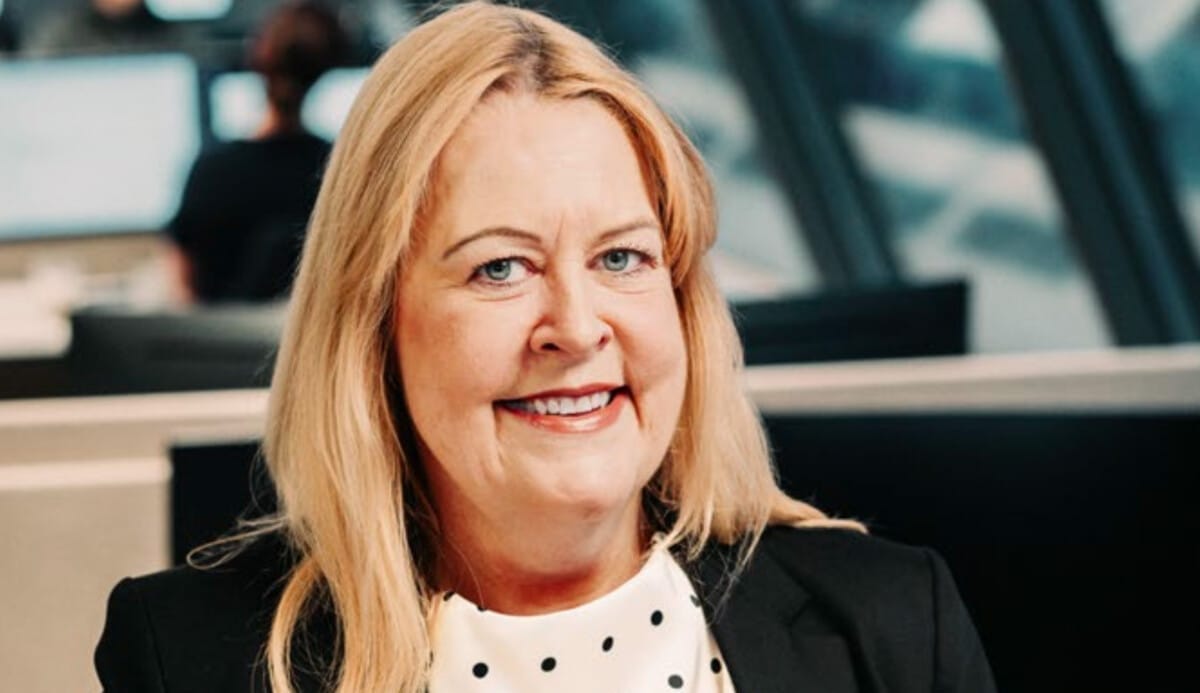

Over the last year, AP2, the SEK 475 billion ($52.3 billion) Swedish buffer fund, has completed two extensive transformations comprising the implementation of a new asset management model and integration of sister fund SEK 83.5 billion ($9.1 billion) AP6 in line with government policy.
The new management model has introduced changes, including clearer mandates and decision-making structures and processes. It will enhance AP2’s capacity to operate across different time horizons and review strategies within several asset classes.
The overhaul has also included updates to AP2’s proprietary indices and the introduction of a new fund structure with fewer and broader mandates within the fixed income portfolio.
“We moved from four to two internally managed mandates within fixed income, one covering Sweden and one covering global fixed income,” Eva Halvarsson, AP2’s outgoing CEO, tells Top1000funds.com. “Green bonds are now included in the global mandate, which opens for a wider universe of sustainable fixed income investments.”
The objective of the new management model is to generate higher returns and better meet an increasingly complex environment, says Halvarsson who adds the new strategy gives AP2 improved opportunities to act in a changing world and to generate returns across multiple time horizons.
In another milestone, private equity specialist and sister buffer fund AP6 has been wound down and its assets transferred to AP2.
AP2 has increased its strategic allocation to private equity from 10 to 15 per cent, but not all AP6 assets will remain in private equity.
“Because AP2 must remain a diversified buffer fund and its return and risk must be balanced according to the needs of the pension system, not all AP6 assets will remain in private equity,” states AP2.
Moreover, AP2 maintains it already has its own successful private equity allocation. “AP2 has over two decades of experience in successful private equity investments, supported by a Swedish and international network, a globally diversified portfolio, and a strategy that has delivered high returns,” says Halvarsson.
As such, around one-third of AP6’s assets have been put in a transport portfolio and will be transferred to AP2’s private equity allocation during 2026. The remaining assets will be managed separately in a transition portfolio until their respective liquidation dates, when the proceeds will be transferred to AP2’s portfolio.
A particular point of contention was AP6’s allocation to 85 co-investments with 25 managers has also gone into the transition portfolio – a strategy AP6 chief executive Katarina Staaf has predicted could contribute to losses of as much as SEK 70 billion ($7 billion) in returns over the next decade.
Last year AP6 returned SEK 6.4 billion ($0.7 billion) corresponding to an 8.3 per cent return of which the sale of the fund’s holding in Swedish healthcare group Asker, which was listed during the autumn, contributed around one third.
As AP6’s portfolio is mature in profile, around half of the transition portfolio is expected to reach liquidity within two years.
“This is the most cost‑effective way to implement the change,” states AP2.
To manage and oversee the increased capital from AP6, AP2 has strengthened the organisation and will welcome around 10 new employees in 2026 across asset management, business support, risk, legal and sustainability. AP2 estimates that it will save around SEK 80–100 million annually from 2027 onwards.
Currency impact hits returns
AP2, has just posted a 2025 return of 4.6 per cent.
One of the biggest impacts on performance was currency: currency effects had a negative impact on total return of –3.5 percentage points. The underlying return after costs, excluding currency effects, was 8.1 per cent.
“The currency impact was mainly caused by the strengthening of the SEK, given the portfolio’s global footprint. At the end of 2025, 30 per cent of our portfolio was exposed to foreign currency,” said Halvarsson.
“In the strategic allocation, we assess which currency exposure best supports long‑term risk‑adjusted returns. Based on market conditions, we then adjust individual currency positions within the dynamic allocation when we believe it can create value.”
The largest contributions came from emerging markets equities which returned 28 per cent in local currency, developed markets equities (14.9 per cent) and private equity (7.9 per cent), while real assets showed weaker performance (–4.5 per cent).
“Within real assets, our holdings in international real estate have performed weaker than our Swedish holdings, with a negative impact on valuations from higher interest rates and inflation in operating costs. Our sustainable infrastructure portfolio has also been partly affected by the new conditions for sustainable investments over the past year, including changes in US policy.”








Leave a Comment
You must be logged in to post a comment.
Login