
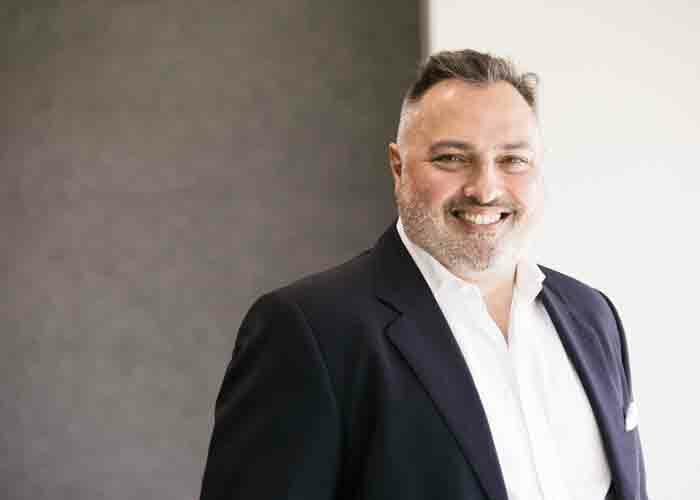

The chief investment officer of the A$7.3 billion ($5.8 billion) Statewide Super, Con Michalakis, has three framed photographs on his desk. They are of alleged drug smuggler, and fellow South Australian, Cassandra Sainsbury, Russian President Vladimir Putin and United States President Donald Trump – with a red “Make America Great Again” cap balanced on the frame.
The three photos act as a constant reminder of risk.
“I come in every day and look at their faces and it reminds me to always be thinking about risk. Personal risk, geopolitical risk and WTF risk,” he laughs, pointing at Sainsbury, Putin and Trump in that order.
On the day in August 2017 that Michalakis was interviewed, Trump was making headlines for stepping up his antagonism towards nuclear warhead-enabled North Korean dictator Kim Jong-un.
But despite the many frightening geopolitical risks in play Michalakis believes the biggest threat to financial markets is simply that investors have become too complacent.
“What worries me now is that the world was pretty messed up in 2008 and 2009, and people say, ‘If you weren’t scared back then you didn’t really understand how bad things were’,” he says.
“Well, now, nine years later, we’ve pretty much gone full circle, from absolute fear at the height of the GFC to, well, it’s not quite exuberance because people are still carrying the scars, but I’ve never seen complacency like this.”
Interest rates are very low, credit spreads are very tight, equity valuations are quite high and volatility is very low. But at the same time, major economies – the US and Australia included – are showing signs of strength as indicated by improving employment data and this is lulling investors into a false sense of safety.
“The problem is that markets are saying, ‘There’s nothing that worries us, we can buy risk assets, gear up and buy shares and property, buy debt, buy all these structured products, buy ETFs and go passive.’ I think it’s all a bit too easy,” Michalakis says.
A period of rebuilding
In the two years before the global financial crisis, Michalakis had been living in New York working as a director of marketing and client services for hedge fund Pzena Investment Management.
When he left at the start of August 2008, to take a short holiday before returning to his hometown of Adelaide, the capital of South Australia, for his current job, it looked like markets were getting back on track after the collapse of Bear Stearns a few months earlier.
Less than a month later, when he landed at Statewide, US mortgage brokers Freddie Mac and Fannie Mae were nationalised, and a week later Lehman Brothers was nationalised.
“So here I was, with my first gig running a pension fund and the world had turned pretty ugly,” he recalls.
Statewide head of alternatives and direct investments Chris Williams joined a few months later and the pair bunkered down to spend the next year getting the basics right. JANA was appointed as the fund’s asset consultant. An investment committee was formed, a new investment governance framework was formulated and the strategic asset allocation was reset. Former Sunsuper chief investment officer Jack Gray was brought in as a special adviser to the investment team and stayed seven years, having a huge influence.
In 2008, Statewide Super had about $1.6 billion in assets and was one of the worst-performing superannuation funds in the country. Today, following a 2012 merger with $1.3 billion rival Local Super, Statewide manages $5.8 billion in assets and is one of the country’s top performers. The fund’s MySuper option delivered an annual average return of 10.65 per cent from inception on July 1, 2013 to June 30, 2017.
Michalakis says success as a chief investment officer comes down to three things: getting the investment governance structure right, putting the right people into that structure and developing a sound set of investment beliefs.
“Today, we’ve got those big important things in place,” he says. “So the focus is on thinking about how to position the portfolio to be resilient, which you can’t really do but you can achieve a little bit at the margin.”
Tilting to absolutes
In recent months, Statewide has reduced its equity holdings to run a bit more cash, while retaining its preference for active management in local and global shares. It is slightly under-hedged in the Australian dollar.
“At the margin, we’re adding some absolute return strategies,” he says. “Taking the overall equity weight down a bit, not adding too much illiquidity. Just trying to diversify the portfolio.”
The fund has already done a lot to build its tilt to absolute return strategies over the past five years. When Michalakis joined Statewide, it had no allocation to absolute return strategies, while today they make up about 12 per cent of the portfolio.
Adelaide Airport and Flinders Ports are two direct infrastructure investments, inherited in the Local Super merger, that have performed well and helped diversify the portfolio.
Statewide’s exposure to listed equity markets has been reduced to 50 per cent, split roughly evenly between local and international markets.
“Everyone says go buy a low-cost option, but net of fees we’ve smashed it with active managers, so there’s no reason to change,” Michalakis says, noting that the Australian market in particular, with a benchmark index dominated by a handful of big banks and miners, is a dangerous index to be passive against. “Our size gives us an advantage because we can be in the small to mid-cap strategies and hire interesting managers.”
That is not to say he isn’t focused on implementing active strategies at the lowest possible cost. In his desk drawer, he keeps a full arm’s-length veterinarian’s plastic glove. It has proved a disarming prop when negotiating with managers over fees on more than one occasion.
“I really hate paying high fees,” he says.
Michalakis is prepared for returns to be lower, he expects that to be the case, forecasting that cash and bonds to be in the low single digits, and equities mid-single digits, and alternatives probably the same, over the next seven years. Diversification is the key he says.
Statewide’s MySuper offering, the default fund, has an asset allocation of Australian shares 31 per cent, international shares 25 per cent, property 10 per cent, growth alternative 4 per cent, infrastructure 10 per cent, alternative debt 3 per cent, diversified bonds 11 per cent, cash 6 per cent.
Team effort
Williams says Michalakis likes to act the joker, on Twitter and in real life, but when it comes to business he is incredibly focused. Michalakis says of Williams and the rest of the fund’s small investment team: “I don’t manage them, they manage me – and I really like that,” he explains.
Domestic equity and property manager David Obst and special adviser David Smelt joined the team via the Local Super merger. More recently, Daniel Dujmovic was promoted from the fund’s finance team working across cash and fixed income, while actuary Susannah Lock was recruited from the Responsible Investment Association of Australasia as a quantitative analyst.
Michalakis is certain the team will have their work cut out for them over the next few years.
“No one knows the future,” he says. “But I can say with relative certainty we’re in for an extended period of low returns and it’s likely to be combined with increased volatility, which will certainly test everyone’s behavioural responses.”
The biggest challenge for professional investors today, he says, is that the “signal-to-noise ratio is the lowest it has ever been”. In light of this, he thinks it’s an advantage for his team that they’re not based in Melbourne or Sydney.
“It means we don’t get infiltrated by the herd,” he says.







Leave a Comment
You must be logged in to post a comment.
Login