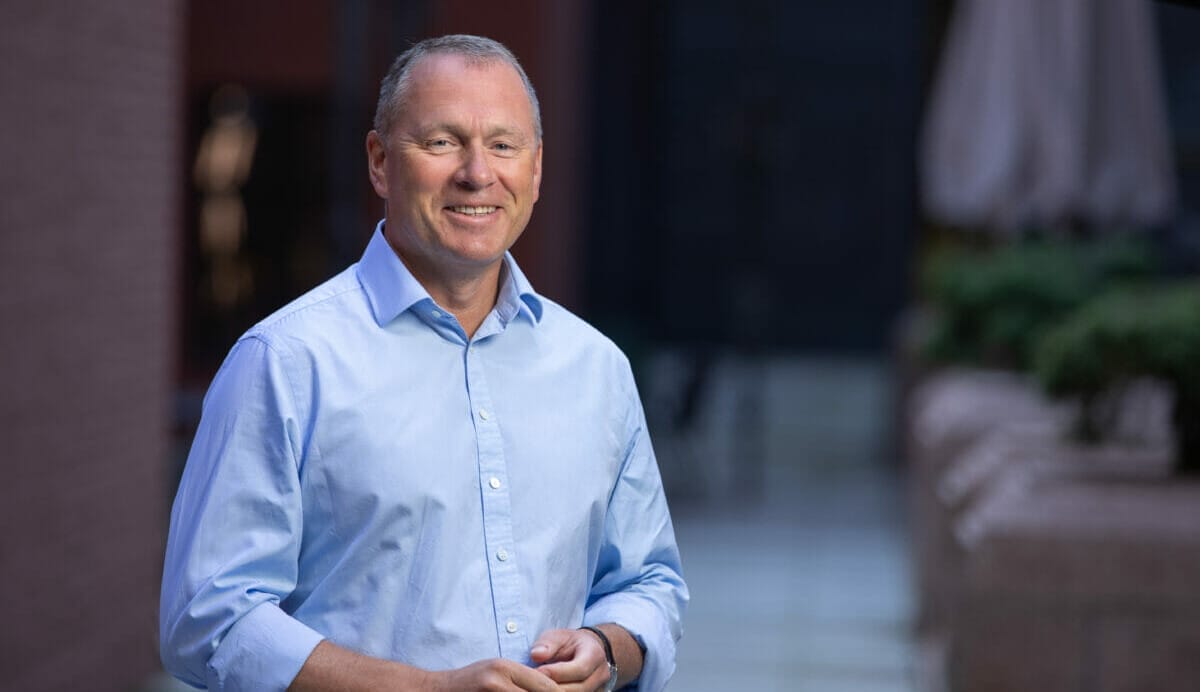

Why Norges Bank leads the world in transparency

Nicolai Tangen

When Top1000funds.com interviewed Nicolai Tangen i
Continue Reading

A Top1000funds.com subscription unlocks the full article

Join the global institutional investment platform read by the world's largest asset owners, fund managers and consultants.

New here

Create an account

Complimentary to register. We'll verify your details and grant access to the archive, our newsletters and the Asset Owner Directory (enhanced features coming soon).
Register now
Already a member

Sign in

Already activated your account? Sign in to continue reading and access your saved articles, preferences and member-only content.

One response to “Why Norges Bank leads the world in transparency”

  1. Mike Clark

    Well yes, they are very transparent. Good.

    But I am afraid they do not always benefit from the advice their transparency permits.

    Please have a look at those very modest return reductions in thier climate scenario work. Climate scientists do not know whether to laugh or cry.

    So far Norges have been deeply resistent to any engagement (even pro bono!) on this issue. Sad.

Leave a Comment

Future Fund sees EM shifts widening alpha opportunities; CEO to depart

Future Fund sees EM shifts widening alpha opportunities; CEO to depart

Australia’s Future Fund has highlighted strong performance in global equities, particularly in Japan and emerging markets, as a key return driver for its last reporting period. Despite increased concentration in EM indexes, new CIO Richard Brandweiner said it could lead to more alpha opportunities. Meanwhile, CEO Raphael Arndt said the time has come for a “fresh leader” to steer the fund as he prepares to close out a close to two-decade tenure with the $255 billion investor.

Sort content by

Bridgewater and PGGM discuss ESG’s need for better communication

Bridgewater’s Carsten Stendevad and PGGM’s Jaap van Dam discuss the need for more clarity and better communication in sustainability and explore how investing for impact is re-shaping investment strategies.

Maryland’s record year prompts actuarial rate reduction

Maryland State Retirement  and Pension System is the latest fund to record an historical performance for the 2021 financial year, returning a best ever 26.7 per cent. Again public and private equities were the star performers with an exceptional 51.85 per cent return in private equity and 44.54 per cent in public equities  But in recognition there might be a bill to pay for those higher returns in the future the fund has lowered its actuarial rate of return.

AP2 continues sustainability journey with stellar returns and costs

Swedish buffer fund, AP2, has incorporated Paris-aligned rules into its benchmark construction for global and emerging market equities. This year it turns its attention to Swedish and Chinese equities. The moves come on the back of the best-ever half year return for the SEK421.2 billion fund and its lowest ever costs.

POBA performance reflected in funding level

The $15 billion fund for Korean public officials, POBA, has reached new heights including a diversified, resilient portfolio, full funding and a stellar return due to a global alternatives program. Amanda White spoke to CIO Dong Hun Jang.

Why disclosure and communication are key to pension excellence

Comprehensive, holistic value disclosures and compelling communication are key benchmarks for pension funds. This has been confirmed by the first year experience working with leading global pension funds for the Global Pension Transparency Benchmark, a collaboration between Top1000funds.com and CEM Benchmarking. In year two, in recognition of this belief and communication excellence, we have decided to award bonus points to funds preparing Framework integrated annual reports. Mike Heale looks at four examples of pension funds already using the Framework.

CalPERS’ new asset allocation to take on more risk

The largest pension fund in the United States, the $469 billion CalPERS, is in the middle of an asset liability modelling exercise to set a new asset allocation by June 2022. Chief executive Marcie Frost says it’s the most significant decision the board makes with regard to the investment portfolio and that achieving a return target of 6.8 per will require “pushing everyone’s risk appetite”.

Previous



