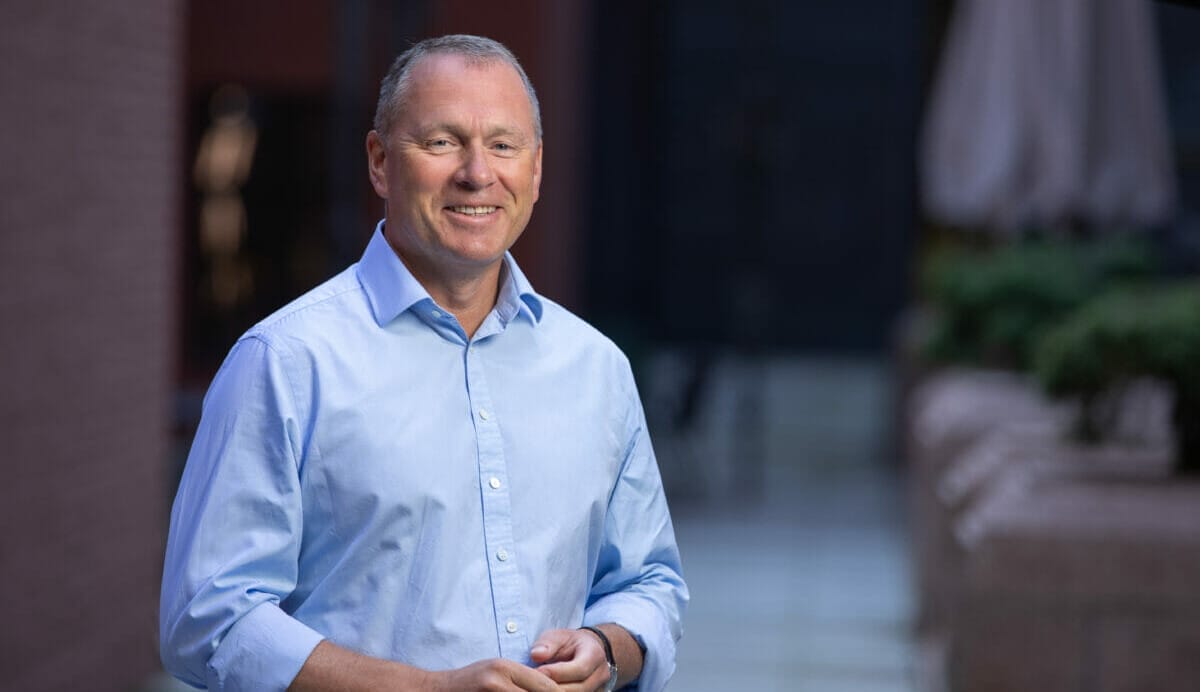

Why Norges Bank leads the world in transparency

Nicolai Tangen

When Top1000funds.com interviewed Nicolai Tangen i
Continue Reading

A Top1000funds.com subscription unlocks the full article

Join the global institutional investment platform read by the world's largest asset owners, fund managers and consultants.

New here

Create an account

Complimentary to register. We'll verify your details and grant access to the archive, our newsletters and the Asset Owner Directory (enhanced features coming soon).
Register now
Already a member

Sign in

Already activated your account? Sign in to continue reading and access your saved articles, preferences and member-only content.

One response to “Why Norges Bank leads the world in transparency”

  1. Mike Clark

    Well yes, they are very transparent. Good.

    But I am afraid they do not always benefit from the advice their transparency permits.

    Please have a look at those very modest return reductions in thier climate scenario work. Climate scientists do not know whether to laugh or cry.

    So far Norges have been deeply resistent to any engagement (even pro bono!) on this issue. Sad.

Leave a Comment

Future Fund sees EM shifts widening alpha opportunities; CEO to depart

Future Fund sees EM shifts widening alpha opportunities; CEO to depart

Australia’s Future Fund has highlighted strong performance in global equities, particularly in Japan and emerging markets, as a key return driver for its last reporting period. Despite increased concentration in EM indexes, new CIO Richard Brandweiner said it could lead to more alpha opportunities. Meanwhile, CEO Raphael Arndt said the time has come for a “fresh leader” to steer the fund as he prepares to close out a close to two-decade tenure with the $255 billion investor.

Sort content by

NEST challenges private equity fees

UK pension scheme NEST’s first foray into private equity offers hope for investors looking beyond standard operating models in the asset class. The £20 billion defined contribution fund, currently sifting through 60-odd procurement responses to allocate more than £1 billion at the beginning of next year, is quietly confident it will be able to hammer out a deal with GPs to make the expensive asset class known for 2:20 fees affordable.

Future Fund uses alternatives as a skeleton key to achieve portfolio goals

Absolute return strategies are an important skeleton key to building a resilient portfolio according to Ben Samild, deputy chief investment officer, portfolio strategy at the Future Fund.

Unprecedented opportunity ahead

The climate challenge requires new investment on a staggering scale: new generating capacity, the electrification of everything, emissions-free fuel, carbon capture and sequestration, new supply chains and infrastructure, plus the building of negative emissions technologies. Stanford’s Dr Arun Majumdar explores the opportunities for new investment, the risk return trade-off and how investors should approach the opportunities.

ESG needs better data, better ratings and better products

Mass PRIM is involved in an MIT initiative to improve ESG with better data, ratings and ultimately products. Executive director and CIO, Michael Trotsky, explains how the ambiguity around ESG ratings creates acute challenges for investors trying to achieve both financial and social return.

The challenge of scenario analysis

Scenario analysis shows that the ability of pension funds to pay their pensions will be severely impacted by climate. But a discussion between asset owners at Sustainability in Practice revealed the challenges in the process.

Net zero pledge creates opportunity in China

China’s pledge to achieve carbon neutrality by 2060 will require radical change and formidable challenges lie ahead. But as delegates at the Sustainability in Practice event heard, investment opportunities include renewables, electric vehicles and energy storage.

Previous



