
Under-priced climate risk plagues pension portfolios

Climate risk remains systematically under-priced, the world isn’t on course to meet net zero and investors must prepare for the risks of climate and environmental change.

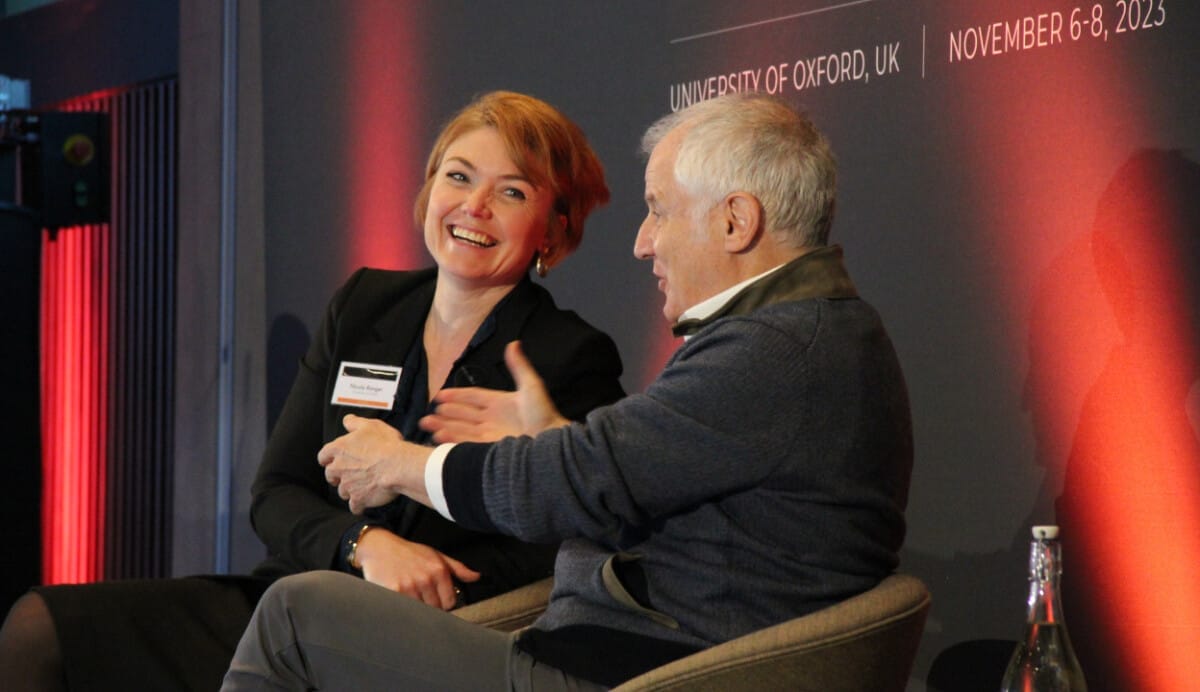
So warned Nicola Ranger, executive director of the Oxford Martin Programme on Systemic Resilience and a senior research fellow at the Institute for New Economic Thinking at Oxford Martin School, opening the second day of Sustainability in Practice at the University of Oxford. She said that climate risks are coming thick and fast, with a direct impact on assets, labour productivity, patterns in demand, supply chains and markets.

Ranger urged asset owners to re-evaluate climate risk and bring this analysis into their decision-making. For example, few asset owners report on the physical risk of climate change in their portfolio.

“Not managing this risk means the wider economy is not getting the economic signals it needs to create changes. Financial institutions need to price risk properly, and signal to the wider economy that it needs to adapt.”

If governments and countries meet all their pledges, she predicted global warming could be capped at 1.8 degrees, below the threshold for catastrophic tipping points. But she also described a much more pessimistic view based on progress to date and the fact global emissions keep climbing and still haven’t peaked. “We are not on course.”

The risks of climate change are already visible. For example, high temperatures is causing deaths, disrupting transport networks and leading to floods and drought as rainfall patterns change, impacting agricultural systems. She flagged implications for water-dependent industries and big increases in volatility of commodity prices. “Sixty percent of our food comes from five countries,” she said, predicting shocks to supply chains and impact on sovereign credit ratings.

Sponsored Content

Investors have a role to mobilize finance across geographies, countries, sectors, infrastructure and agriculture. But she warned that many investment decisions are not building resilience. For example, new infrastructure investment doesn’t always consider climate-related risk. “We are still building physical infrastructure that economies depend on, but we are not doing it in a way that is considering climate risk, risking both investors and society,” she said. Similarly, she flagged the much of the estimated annual $6 trillion invested in agriculture doesn’t consider future climate risks.

Ranger urged asset owners to take a holistic approach to managing risk and align their portfolios with resilience. They should ensure they “do no harm” and manage risk in their own portfolio to ensure it doesn’t create risks for society. For example, she said water companies have a significant impact on water scarcity.  Elsewhere she noted that data centres are exposed to climate risk like heat, and they are also water dependent. Adaption can bring returns from investing in new technology, but adaptation also incurs long term costs. For example, retrofitting buildings requires upfront investment.

“We, as a society, are mismanaging climate risk. We are putting insufficient emphasis on our safety and not properly valuing the impact of climate change or logging or exploitation of the soil. Many things doing that are impacting environment that are impacting on us.”

Leave a Comment

CPP, NBIM CEOs swap notes on leading through teams, not bureaucracy

CPP, NBIM CEOs swap notes on leading through teams, not bureaucracy

In a high-level exchange between two of the world's largest and most sophisticated asset owners, CPP Investments’ chief executive John Graham shared a leadership lesson with Norges Bank Investment Management chief executive Nicolai Tangen: having an aligned senior team is one of the most critical things a leader can build. The two funds, which are consistently leaders in transparency, also exchanged playbooks on managing bureaucracy at large organisations.

Sort content by

The hands and feet of AI and the renewable energy transition

A foundation stone of the transition to renewable energy - semiconductors - is paradoxically a major contributor to the problem it’s helping to solve. How asset owners think about investing in a solution that is also part of the problem is a challenging and complex task.

AI could be ‘as big as the internet’ for investors

After a slow and steady research and development phase, the “big bang” moment of last year’s ChatGPT launch will kick off a slew of innovations that could rival the internet for their profitable application to investible businesses, says tech equity analyst Owen Hyde of Jennison Associates.

Pension CIOs re-evaluate China exposure

The CIOs of three global pension schemes have told the 2023 Fiduciary Investors Symposium they are re-evaluating or reducing their exposure to the world’s second largest economy as tensions between the US and China escalate. But they are resisting total divestment to a country that still dominates emerging markets benchmarks.

Railpen: Fiduciary management in practice

Railpen has combined its fiduciary and risk management roles enhancing the fiduciary element across investment strategy and developing a risk model that fits better with the long-term thinking of a pension fund explains Mads Gosvig, the fund's chief officer, fiduciary and investment management.

Florida SBA hikes pay levels; portfolio managers gain most

Florida State Board of Administration has significantly increased compensation for its investment professionals in line with midway pay levels at peer funds. Early stage portfolio managers see the sharpest rises reflecting competition in that corner of the market but the SBA is also paying more to its back office staff.

Why City of Austin goes evergreen in first private markets foray

With a new funded policy in place, CIO David Kushner is building a new private markets allocation at COAERS. He explains why private credit evergreen investments make a good starting point for a new private markets allocation that will make up 10 per cent of the fund.

Previous