
Under-priced climate risk plagues pension portfolios

Climate risk remains systematically under-priced, the world isn’t on course to meet net zero and investors must prepare for the risks of climate and environmental change.

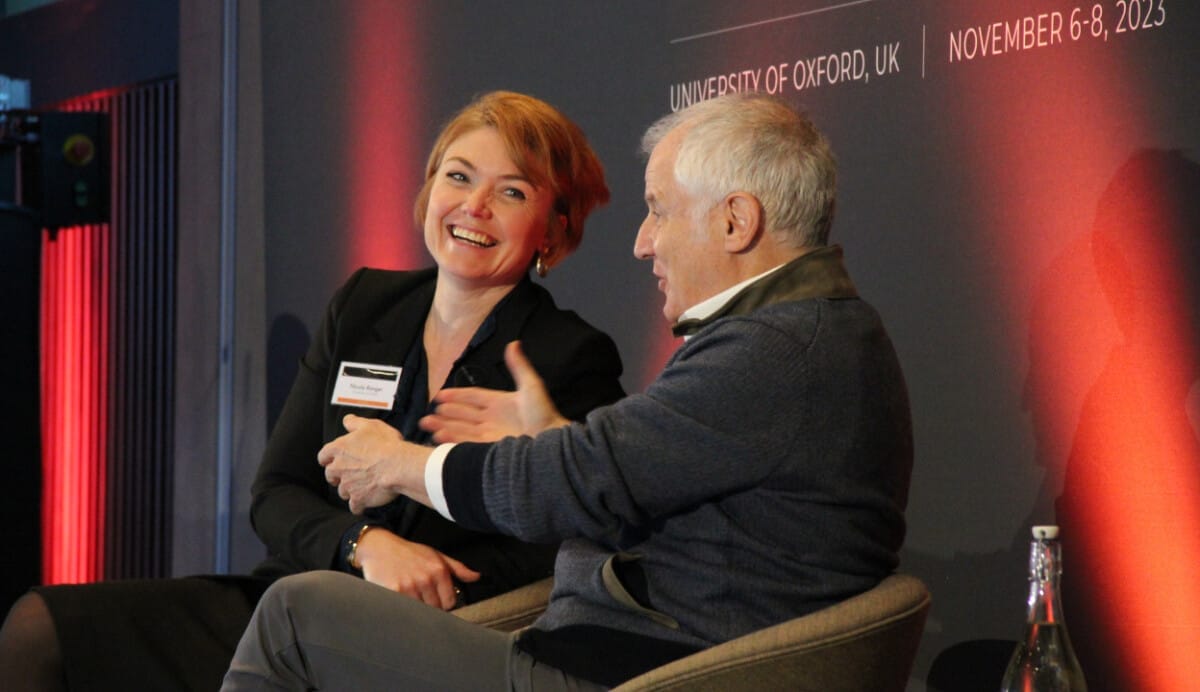
So warned Nicola Ranger, executive director of the Oxford Martin Programme on Systemic Resilience and a senior research fellow at the Institute for New Economic Thinking at Oxford Martin School, opening the second day of Sustainability in Practice at the University of Oxford. She said that climate risks are coming thick and fast, with a direct impact on assets, labour productivity, patterns in demand, supply chains and markets.

Ranger urged asset owners to re-evaluate climate risk and bring this analysis into their decision-making. For example, few asset owners report on the physical risk of climate change in their portfolio.

“Not managing this risk means the wider economy is not getting the economic signals it needs to create changes. Financial institutions need to price risk properly, and signal to the wider economy that it needs to adapt.”

If governments and countries meet all their pledges, she predicted global warming could be capped at 1.8 degrees, below the threshold for catastrophic tipping points. But she also described a much more pessimistic view based on progress to date and the fact global emissions keep climbing and still haven’t peaked. “We are not on course.”

The risks of climate change are already visible. For example, high temperatures is causing deaths, disrupting transport networks and leading to floods and drought as rainfall patterns change, impacting agricultural systems. She flagged implications for water-dependent industries and big increases in volatility of commodity prices. “Sixty percent of our food comes from five countries,” she said, predicting shocks to supply chains and impact on sovereign credit ratings.

Sponsored Content

Investors have a role to mobilize finance across geographies, countries, sectors, infrastructure and agriculture. But she warned that many investment decisions are not building resilience. For example, new infrastructure investment doesn’t always consider climate-related risk. “We are still building physical infrastructure that economies depend on, but we are not doing it in a way that is considering climate risk, risking both investors and society,” she said. Similarly, she flagged the much of the estimated annual $6 trillion invested in agriculture doesn’t consider future climate risks.

Ranger urged asset owners to take a holistic approach to managing risk and align their portfolios with resilience. They should ensure they “do no harm” and manage risk in their own portfolio to ensure it doesn’t create risks for society. For example, she said water companies have a significant impact on water scarcity.  Elsewhere she noted that data centres are exposed to climate risk like heat, and they are also water dependent. Adaption can bring returns from investing in new technology, but adaptation also incurs long term costs. For example, retrofitting buildings requires upfront investment.

“We, as a society, are mismanaging climate risk. We are putting insufficient emphasis on our safety and not properly valuing the impact of climate change or logging or exploitation of the soil. Many things doing that are impacting environment that are impacting on us.”

Leave a Comment

CPP, NBIM CEOs swap notes on leading through teams, not bureaucracy

CPP, NBIM CEOs swap notes on leading through teams, not bureaucracy

In a high-level exchange between two of the world's largest and most sophisticated asset owners, CPP Investments’ chief executive John Graham shared a leadership lesson with Norges Bank Investment Management chief executive Nicolai Tangen: having an aligned senior team is one of the most critical things a leader can build. The two funds, which are consistently leaders in transparency, also exchanged playbooks on managing bureaucracy at large organisations.

Sort content by

CDPQ’s two-way street of efficient external manager relations

Like all good long-term relationships, external fund manager partnerships should be steeped in trust, open dialogue, patience and new ideas. Mario Therrien, head of funds at CDPQ explains the key to external partnership success and the important role external managers play in plugging knowledge gaps.

Managing not just measuring risk is key to long-term returns

Nobel Prize-winning economist Myron Scholes told the Fiduciary Investors Symposium at Stanford University that the focus of asset owners needs to shift from measuring risk to managing it, to avoid the downside while capturing the upside and allowing compounding to do its thing.

How Swiss PUBLICA integrates climate risk

PUBLICA, one of the largest pension funds in Switzerland, has built a bespoke equity benchmark to reduce climate risk. It's not the consequence of any target to reduce emissions in the portfolio or wider ESG legislation. Senior portfolio manager Frederik von Ameln explains the process behind the strategy.

Operational excellence as critical as asset allocation for success

Asset allocation is often nominated as the most important element in long-term investment performance. But the Fiduciary Investor s Symposium at Stanford University heard that no investment strategy or process can operate in a vacuum – it can’t happen effectively without operational excellence.

Get on board: why the megatrend is your friend

Megatrends are the forces that will shape our planet, our society and our lives decades into the future. The Fiduciary Investors Symposium at Stanford University heard Megatrends provide potentially rich pickings for investors, as long as they know how to use them,.

Politics rivals profits for portfolio influence, says Bridgewater co-CIO

Bridgewater co-CIO Greg Jensen said government policy has steadily increased in influence over the economy and portfolio construction over the past 20 years and now outstrips the importance of private sector incentives. He says the pace of deglobalisation is a key trend for institutional investors to keep abreast of.

Previous



