
Under-priced climate risk plagues pension portfolios

Climate risk remains systematically under-priced, the world isn’t on course to meet net zero and investors must prepare for the risks of climate and environmental change.

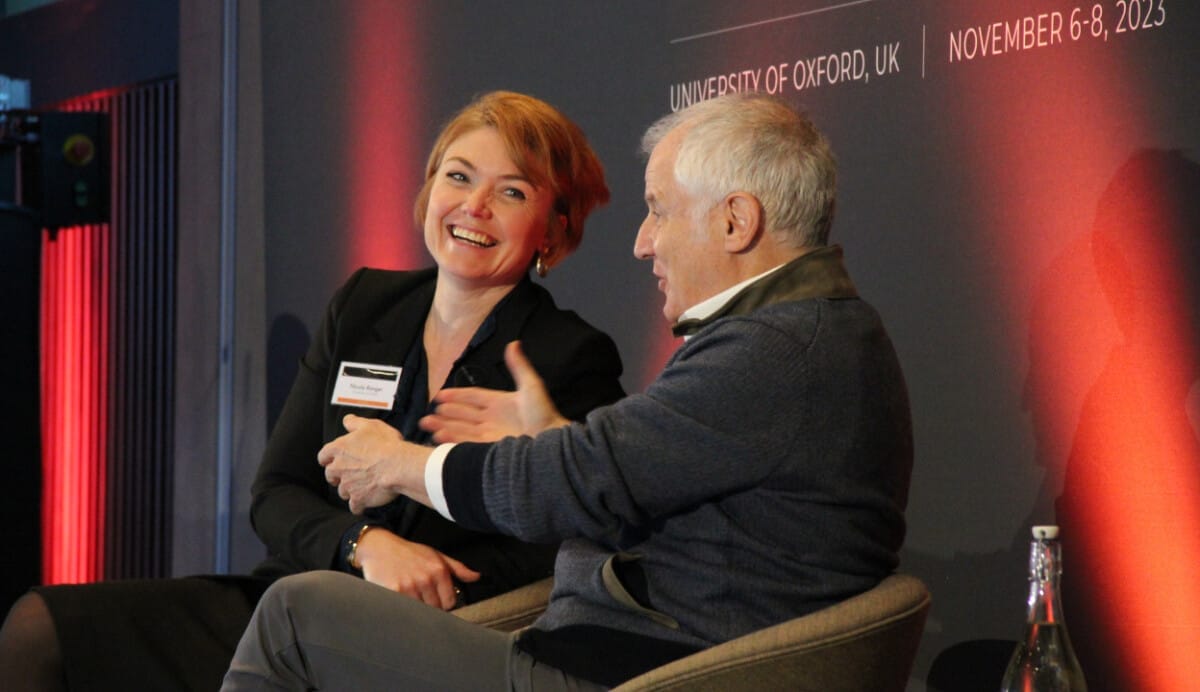
So warned Nicola Ranger, executive director of the Oxford Martin Programme on Systemic Resilience and a senior research fellow at the Institute for New Economic Thinking at Oxford Martin School, opening the second day of Sustainability in Practice at the University of Oxford. She said that climate risks are coming thick and fast, with a direct impact on assets, labour productivity, patterns in demand, supply chains and markets.

Ranger urged asset owners to re-evaluate climate risk and bring this analysis into their decision-making. For example, few asset owners report on the physical risk of climate change in their portfolio.

“Not managing this risk means the wider economy is not getting the economic signals it needs to create changes. Financial institutions need to price risk properly, and signal to the wider economy that it needs to adapt.”

If governments and countries meet all their pledges, she predicted global warming could be capped at 1.8 degrees, below the threshold for catastrophic tipping points. But she also described a much more pessimistic view based on progress to date and the fact global emissions keep climbing and still haven’t peaked. “We are not on course.”

The risks of climate change are already visible. For example, high temperatures is causing deaths, disrupting transport networks and leading to floods and drought as rainfall patterns change, impacting agricultural systems. She flagged implications for water-dependent industries and big increases in volatility of commodity prices. “Sixty percent of our food comes from five countries,” she said, predicting shocks to supply chains and impact on sovereign credit ratings.

Sponsored Content

Investors have a role to mobilize finance across geographies, countries, sectors, infrastructure and agriculture. But she warned that many investment decisions are not building resilience. For example, new infrastructure investment doesn’t always consider climate-related risk. “We are still building physical infrastructure that economies depend on, but we are not doing it in a way that is considering climate risk, risking both investors and society,” she said. Similarly, she flagged the much of the estimated annual $6 trillion invested in agriculture doesn’t consider future climate risks.

Ranger urged asset owners to take a holistic approach to managing risk and align their portfolios with resilience. They should ensure they “do no harm” and manage risk in their own portfolio to ensure it doesn’t create risks for society. For example, she said water companies have a significant impact on water scarcity.  Elsewhere she noted that data centres are exposed to climate risk like heat, and they are also water dependent. Adaption can bring returns from investing in new technology, but adaptation also incurs long term costs. For example, retrofitting buildings requires upfront investment.

“We, as a society, are mismanaging climate risk. We are putting insufficient emphasis on our safety and not properly valuing the impact of climate change or logging or exploitation of the soil. Many things doing that are impacting environment that are impacting on us.”

Leave a Comment

CalPERS’ public and private equity reset shapes performance

CalPERS’ public and private equity reset shapes performance

CalPERS is continuing to reap the benefits of a sweeping overhaul of its public and private equity programs, with the two asset classes, which are the biggest components in the portfolio, powering a 14.8 per cent return for the $637 billion fund in the last reporting period.

Sort content by

How Denmark’s Industriens is exploring AI to overhaul risk analysis

Industriens, the DKK 217 billion ($30.6 billion) Danish pension fund, is using advanced technology and exploring AI models to bring sweeping advantages to its risk management processes. Julia Sommer Legaard, investment risk and data manager at the fund for the last year, explains the process behind the innovation.

CIOs’ predictions for 2024

In a year forecast to be volatile, and with the spectre of recession still very much on the cards, Top1000funds.com finds CIOs exploring new strategies, paring back on active equity, investing in technology and wrestling with the many disparate approaches to sustainability.

The best of 2023

In 2023, readers embraced our in-depth analysis and Investor Profiles as we continue our quest for a deeper understanding of institutional investment best practice and driving the industry to produce better outcomes for stakeholders. Below is a look at the most popular stories of 2023.

Helmsley meets new managers as it hunts for different strategies

Helmsley Charitable Trust is meeting new investment managers on the hunt for new exposures and allocations in the new economic regime. On the eve of her departure Rosalind Hewsenian explains how she approaches new manager relationships.

COP28: Transition ‘out’ is now transition ‘away’

After COP28 Tim Hodgson says the investment industry needs to decide whether the transition away from fossil fuels will be too little, too late or whether net zero by 2050, with all the associated transformational consequences, is possible. Either way the industry needs to “get really good at intertemporal risk management”.

At COP28, financial sector innovation bolsters headlines

COP28 in Dubai had all the ingredients for both decisive action and controversy, given the UAE's status as a significant fossil fuel producer. But importantly for this sector there was also financial innovation on display. FCLTGlobal’s Olivier Lebleu highlights some of the fund managers showing ingenuity at COP28.

Previous