
Under-priced climate risk plagues pension portfolios

Climate risk remains systematically under-priced, the world isn’t on course to meet net zero and investors must prepare for the risks of climate and environmental change.

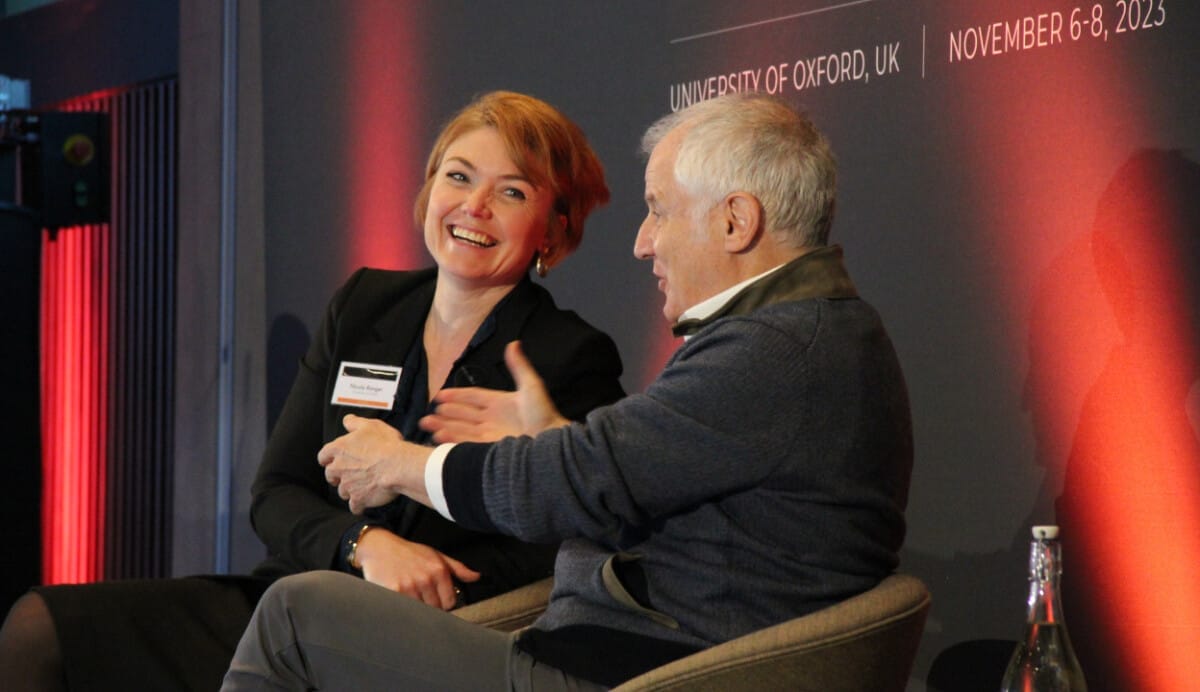
So warned Nicola Ranger, executive director of the Oxford Martin Programme on Systemic Resilience and a senior research fellow at the Institute for New Economic Thinking at Oxford Martin School, opening the second day of Sustainability in Practice at the University of Oxford. She said that climate risks are coming thick and fast, with a direct impact on assets, labour productivity, patterns in demand, supply chains and markets.

Ranger urged asset owners to re-evaluate climate risk and bring this analysis into their decision-making. For example, few asset owners report on the physical risk of climate change in their portfolio.

“Not managing this risk means the wider economy is not getting the economic signals it needs to create changes. Financial institutions need to price risk properly, and signal to the wider economy that it needs to adapt.”

If governments and countries meet all their pledges, she predicted global warming could be capped at 1.8 degrees, below the threshold for catastrophic tipping points. But she also described a much more pessimistic view based on progress to date and the fact global emissions keep climbing and still haven’t peaked. “We are not on course.”

The risks of climate change are already visible. For example, high temperatures is causing deaths, disrupting transport networks and leading to floods and drought as rainfall patterns change, impacting agricultural systems. She flagged implications for water-dependent industries and big increases in volatility of commodity prices. “Sixty percent of our food comes from five countries,” she said, predicting shocks to supply chains and impact on sovereign credit ratings.

Sponsored Content

Investors have a role to mobilize finance across geographies, countries, sectors, infrastructure and agriculture. But she warned that many investment decisions are not building resilience. For example, new infrastructure investment doesn’t always consider climate-related risk. “We are still building physical infrastructure that economies depend on, but we are not doing it in a way that is considering climate risk, risking both investors and society,” she said. Similarly, she flagged the much of the estimated annual $6 trillion invested in agriculture doesn’t consider future climate risks.

Ranger urged asset owners to take a holistic approach to managing risk and align their portfolios with resilience. They should ensure they “do no harm” and manage risk in their own portfolio to ensure it doesn’t create risks for society. For example, she said water companies have a significant impact on water scarcity.  Elsewhere she noted that data centres are exposed to climate risk like heat, and they are also water dependent. Adaption can bring returns from investing in new technology, but adaptation also incurs long term costs. For example, retrofitting buildings requires upfront investment.

“We, as a society, are mismanaging climate risk. We are putting insufficient emphasis on our safety and not properly valuing the impact of climate change or logging or exploitation of the soil. Many things doing that are impacting environment that are impacting on us.”

Leave a Comment

Silver is the new gold: France’s UMR targets opportunities in ageing economy

Silver is the new gold: France’s UMR targets opportunities in ageing economy

French pension organisation UMR has launched a multi-asset thematic program that will target opportunities in Europe’s ageing economy. It’s part of a broader strategy to increase diversification in private markets where it sees secondary markets as an increasingly important tool.

Sort content by

Investors brace for volatility as tariffs spark global reckoning

The investors which will do well in times of market volatility will have the ability to do extensive, forward-looking scenario analysis, move assets tactically and dynamically and have liquidity. Top1000funds.com looks at investor reactions to tariff-induced market volatility.

APG doubles down on Asia as next growth hub

APG Asset Management is bullish on Asia’s growth prospects, with local CEO Thijs Aaten saying he would like to eventually see half of the Dutch pension fund’s real assets invested in the region. 

How next-gen investors at GIC, Temasek harness AI potential

A new generation of investors are starting their careers with artificial intelligence on their side as not only an investment trend that offers immense return potential but also a critical portfolio management tool. Professionals from GIC and Temasek told FIS Singapore how both SWFs are integrating AI in their operations.

Alabama Retirement Systems: Trump’s policies don’t work for pension funds

Alabama Retirement Systems' veteran CEO David Bronner explains how rapid policy changes with little thought to the long-term consequences coming out of the new Trump administration leave the pension fund "flying blind". The fund is prioritising cash.

OPTrust prioritises diversification as tariffs bite

OPTrust's Peter Lindley says staying diversified is the best way for Canadian pension funds to navigate the impact of US tariffs and the looming trade war that has just ratcheted up since US President Donald Trump announced tariffs on Canadian steel and aluminium exports to the US.

Right benchmark provides different perspective on private markets alpha

A private market equivalent benchmark is superior to either peer group benchmarks or a public market equivalent in measuring private equity and infrastructure manager outperformance, according to Frederic Blanc-Brude, director of Scientific Infra & Private Assets at EDHEC Asia Pacific.  

Previous



