
Under-priced climate risk plagues pension portfolios

Climate risk remains systematically under-priced, the world isn’t on course to meet net zero and investors must prepare for the risks of climate and environmental change.

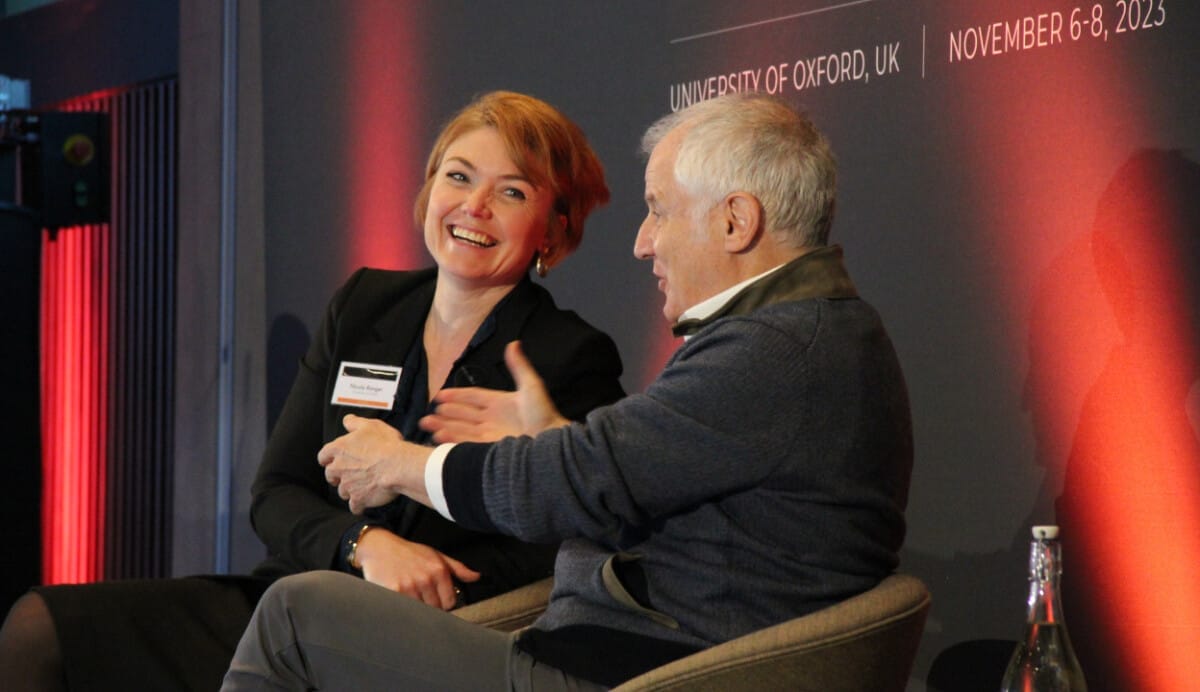
So warned Nicola Ranger, executive director of the Oxford Martin Programme on Systemic Resilience and a senior research fellow at the Institute for New Economic Thinking at Oxford Martin School, opening the second day of Sustainability in Practice at the University of Oxford. She said that climate risks are coming thick and fast, with a direct impact on assets, labour productivity, patterns in demand, supply chains and markets.

Ranger urged asset owners to re-evaluate climate risk and bring this analysis into their decision-making. For example, few asset owners report on the physical risk of climate change in their portfolio.

“Not managing this risk means the wider economy is not getting the economic signals it needs to create changes. Financial institutions need to price risk properly, and signal to the wider economy that it needs to adapt.”

If governments and countries meet all their pledges, she predicted global warming could be capped at 1.8 degrees, below the threshold for catastrophic tipping points. But she also described a much more pessimistic view based on progress to date and the fact global emissions keep climbing and still haven’t peaked. “We are not on course.”

The risks of climate change are already visible. For example, high temperatures is causing deaths, disrupting transport networks and leading to floods and drought as rainfall patterns change, impacting agricultural systems. She flagged implications for water-dependent industries and big increases in volatility of commodity prices. “Sixty percent of our food comes from five countries,” she said, predicting shocks to supply chains and impact on sovereign credit ratings.

Sponsored Content

Investors have a role to mobilize finance across geographies, countries, sectors, infrastructure and agriculture. But she warned that many investment decisions are not building resilience. For example, new infrastructure investment doesn’t always consider climate-related risk. “We are still building physical infrastructure that economies depend on, but we are not doing it in a way that is considering climate risk, risking both investors and society,” she said. Similarly, she flagged the much of the estimated annual $6 trillion invested in agriculture doesn’t consider future climate risks.

Ranger urged asset owners to take a holistic approach to managing risk and align their portfolios with resilience. They should ensure they “do no harm” and manage risk in their own portfolio to ensure it doesn’t create risks for society. For example, she said water companies have a significant impact on water scarcity.  Elsewhere she noted that data centres are exposed to climate risk like heat, and they are also water dependent. Adaption can bring returns from investing in new technology, but adaptation also incurs long term costs. For example, retrofitting buildings requires upfront investment.

“We, as a society, are mismanaging climate risk. We are putting insufficient emphasis on our safety and not properly valuing the impact of climate change or logging or exploitation of the soil. Many things doing that are impacting environment that are impacting on us.”

Leave a Comment

What a brief encounter with Elon Musk taught me about the limits of capitalism

What a brief encounter with Elon Musk taught me about the limits of capitalism

In 2013, on the sidelines of the Milken Conference at the Beverly Hilton, my friend and then-colleague Sean Scallan and I found ourselves in a seven-minute private conversation with Elon Musk.   He was not yet the figure he is today. Tesla was struggling. SpaceX had launched but not yet proven itself. The idea of humans

Sort content by

APG’s infra ramp-up: APAC markets in focus

APG Asset Management, Europe’s largest pension investor, is set to double its global infrastructure allocation in the next five years and is stepping up its push into infrastructure assets in the Asia Pacific with a focus on Australia, India and Southeast Asia and opportunistic investments in Japan and Korea.

BCI: A masterclass in private debt

British Columbia Investment Management Corporation has been investing in private debt since 2018. Global head of public markets Daniel Garant, whose team oversees private debt, articulates the secrets of success at a time of fierce competition for returns as more investors pile into the asset class, tightening credit spreads.

Responsible AI: Railpen lays out the risks

Much is written extolling the investor opportunities inherent in AI at a time policy makers continue to prioritise deregulation and innovation over safety, but a new report from £34 billion Railpen on the risks AI holds for investors' portfolio companies provides a valuable reality check.

A rock and a hard place: GEPF on the challenges of transitioning coal

Reducing exposure to the risk in coal is particularly challenging for South Africa’s $122 billion Government Employees Pension Fund. ESG manager Belaina Negash explains the complexities due to the industry's tie with the economy and the fund's transition framework.

Mid-market, asset-backed private credit shines for growing Asian allocators

Asia's growing investors, including university endowments and family offices, are hunting for returns in lower-middle market and asset-backed private credit. In an interview with Top1000funds.com, head of Asian clients at the $92 billion OCIO Cambridge Associates, Prabhat Ojha, talks manager selection and Asian allocators' rising appetite for alternatives.

France’s FRR ups risk in line with longer term investment horizon

Fonds de reserve pour les retraites (FRR), France’s €21 billion ($24 billion) pension reserve fund, has increased its weighting to equity in line with a new strategic asset allocation to reflect the investor's longer return horizon. It is also eyeing more unlisted assets including private equity, private debt and infrastructure.

Previous



