
Under-priced climate risk plagues pension portfolios

Climate risk remains systematically under-priced, the world isn’t on course to meet net zero and investors must prepare for the risks of climate and environmental change.

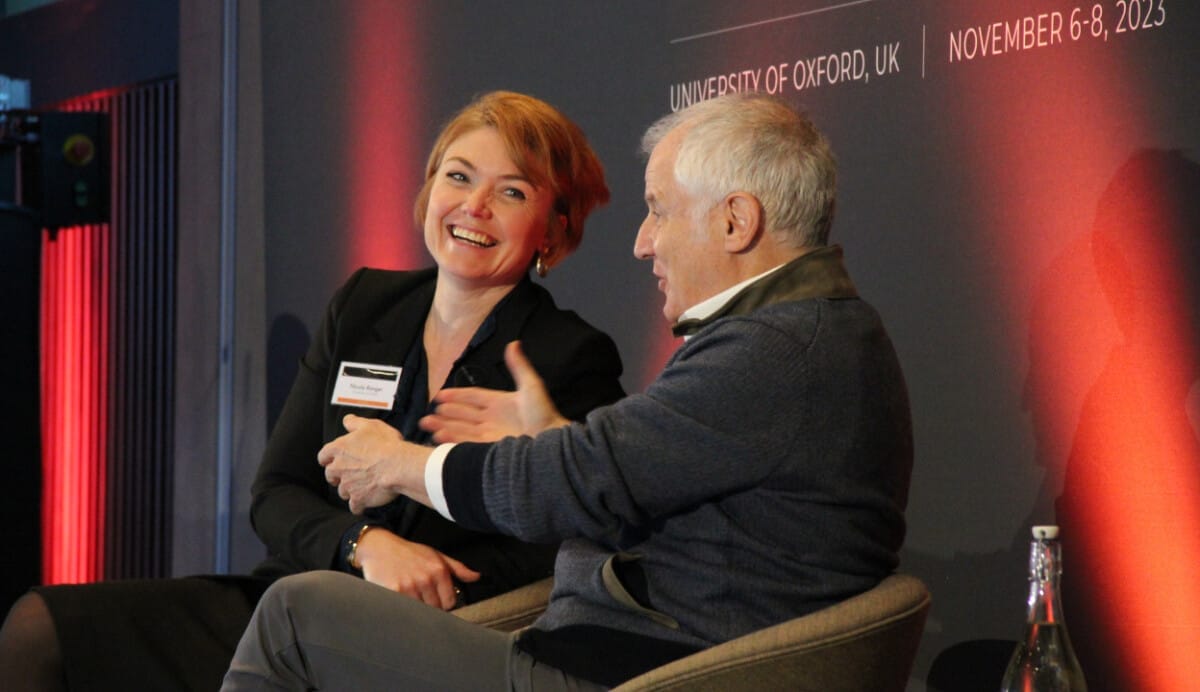
So warned Nicola Ranger, executive director of the Oxford Martin Programme on Systemic Resilience and a senior research fellow at the Institute for New Economic Thinking at Oxford Martin School, opening the second day of Sustainability in Practice at the University of Oxford. She said that climate risks are coming thick and fast, with a direct impact on assets, labour productivity, patterns in demand, supply chains and markets.

Ranger urged asset owners to re-evaluate climate risk and bring this analysis into their decision-making. For example, few asset owners report on the physical risk of climate change in their portfolio.

“Not managing this risk means the wider economy is not getting the economic signals it needs to create changes. Financial institutions need to price risk properly, and signal to the wider economy that it needs to adapt.”

If governments and countries meet all their pledges, she predicted global warming could be capped at 1.8 degrees, below the threshold for catastrophic tipping points. But she also described a much more pessimistic view based on progress to date and the fact global emissions keep climbing and still haven’t peaked. “We are not on course.”

The risks of climate change are already visible. For example, high temperatures is causing deaths, disrupting transport networks and leading to floods and drought as rainfall patterns change, impacting agricultural systems. She flagged implications for water-dependent industries and big increases in volatility of commodity prices. “Sixty percent of our food comes from five countries,” she said, predicting shocks to supply chains and impact on sovereign credit ratings.

Sponsored Content

Investors have a role to mobilize finance across geographies, countries, sectors, infrastructure and agriculture. But she warned that many investment decisions are not building resilience. For example, new infrastructure investment doesn’t always consider climate-related risk. “We are still building physical infrastructure that economies depend on, but we are not doing it in a way that is considering climate risk, risking both investors and society,” she said. Similarly, she flagged the much of the estimated annual $6 trillion invested in agriculture doesn’t consider future climate risks.

Ranger urged asset owners to take a holistic approach to managing risk and align their portfolios with resilience. They should ensure they “do no harm” and manage risk in their own portfolio to ensure it doesn’t create risks for society. For example, she said water companies have a significant impact on water scarcity.  Elsewhere she noted that data centres are exposed to climate risk like heat, and they are also water dependent. Adaption can bring returns from investing in new technology, but adaptation also incurs long term costs. For example, retrofitting buildings requires upfront investment.

“We, as a society, are mismanaging climate risk. We are putting insufficient emphasis on our safety and not properly valuing the impact of climate change or logging or exploitation of the soil. Many things doing that are impacting environment that are impacting on us.”

Leave a Comment

TPA to usher in clearer accountability at CalPERS

TPA to usher in clearer accountability at CalPERS

CalPERS chief investment officer Stephen Gilmore said the $650 billion fund’s upcoming shift to a total portfolio approach will sharpen investment accountability and help it focus capital allocation decisions on fund-level objectives.

Sort content by

Improving long-term performance

A confluence of recent research and the evolution in perspective of the Delaware courts presents an opportunity for companies and investors to systematically improve performance while reducing unwanted risk exposures. But investors must make the first move.

RFK Human Rights achievements

President of Robert F Kennedy Human Rights, Kerry Kennedy, welcomed delegates to its 2019 investor conference by outlining some of the milestones achieved by the organization in the past year. These include criminal legal system reform; suing Colombia on behalf of a journalists’ family; and major advancements in farm workers’ rights.

A guide for trustees for the long term

Last month the book Achieving Investment Excellence, was launched in the auditorium of Dutch pension investor APG. The book is a guide to empowering pension fund trustees to get a good grip on the difficulty of successful long-term investing for pension funds. Top1000funds.com spoke to one of the authors, principal director investment strategy of PGGM, Jaap van Dam.

Professional development key for future

As the investment industry continues to experience accelerating change and disruption, what will the effect be on investment roles and required skills? In the first of a series of articles exploring the CFA Institute's Investment Professional of the Future report which gives roadmaps for investment professionals and organizations.

CalPERS prepares for market dislocation

CalPERS' CIO Ben Meng is preparing for a market dislocation by ensuring the $354 billion pension fund has enough dry powder on hand to take advantage of a drawdown. A liquidity management action plan is a top priority for the fund.

Understanding US/China relations

Understanding the fractious relationship between US and China is more important– and simultaneously more confronting – than it has been in the past, according to Stephen Kotkin, professor of history and international affairs at Princeton University. While the China investment challenge has always been to capture the aspirational middleclass, the high-profile historian says “the big money that’s going to be made in China is going to be made from the dislocation”.

Previous




