
Under-priced climate risk plagues pension portfolios

Climate risk remains systematically under-priced, the world isn’t on course to meet net zero and investors must prepare for the risks of climate and environmental change.

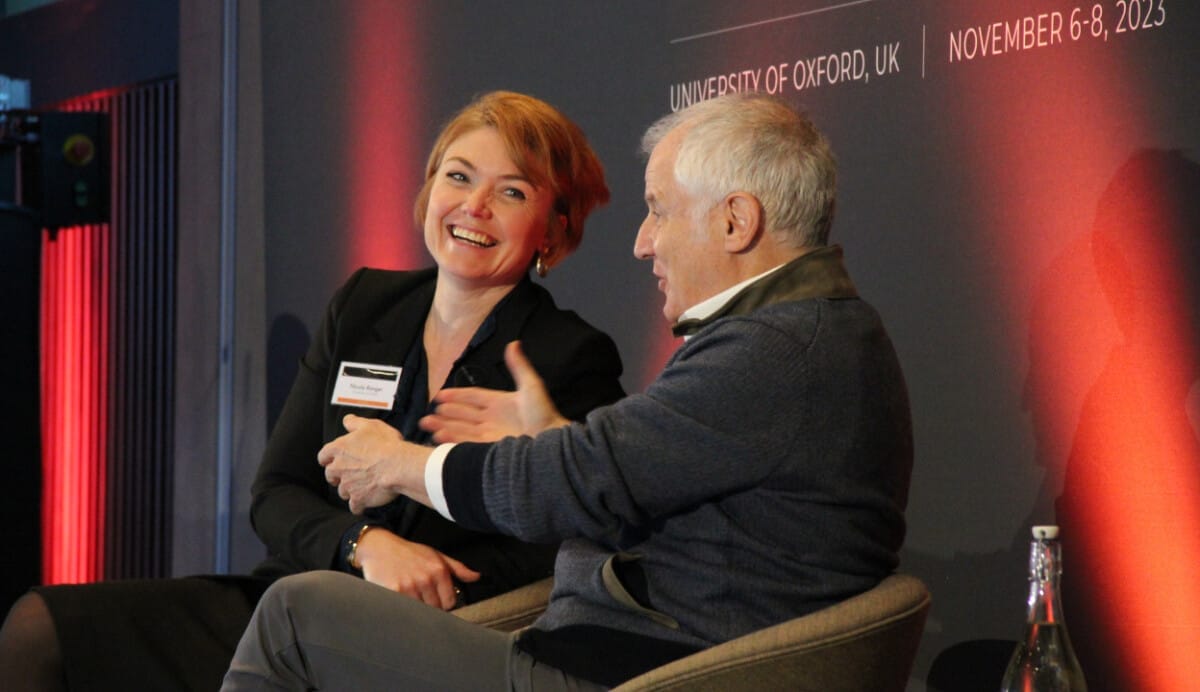
So warned Nicola Ranger, executive director of the Oxford Martin Programme on Systemic Resilience and a senior research fellow at the Institute for New Economic Thinking at Oxford Martin School, opening the second day of Sustainability in Practice at the University of Oxford. She said that climate risks are coming thick and fast, with a direct impact on assets, labour productivity, patterns in demand, supply chains and markets.

Ranger urged asset owners to re-evaluate climate risk and bring this analysis into their decision-making. For example, few asset owners report on the physical risk of climate change in their portfolio.

“Not managing this risk means the wider economy is not getting the economic signals it needs to create changes. Financial institutions need to price risk properly, and signal to the wider economy that it needs to adapt.”

If governments and countries meet all their pledges, she predicted global warming could be capped at 1.8 degrees, below the threshold for catastrophic tipping points. But she also described a much more pessimistic view based on progress to date and the fact global emissions keep climbing and still haven’t peaked. “We are not on course.”

The risks of climate change are already visible. For example, high temperatures is causing deaths, disrupting transport networks and leading to floods and drought as rainfall patterns change, impacting agricultural systems. She flagged implications for water-dependent industries and big increases in volatility of commodity prices. “Sixty percent of our food comes from five countries,” she said, predicting shocks to supply chains and impact on sovereign credit ratings.

Sponsored Content

Investors have a role to mobilize finance across geographies, countries, sectors, infrastructure and agriculture. But she warned that many investment decisions are not building resilience. For example, new infrastructure investment doesn’t always consider climate-related risk. “We are still building physical infrastructure that economies depend on, but we are not doing it in a way that is considering climate risk, risking both investors and society,” she said. Similarly, she flagged the much of the estimated annual $6 trillion invested in agriculture doesn’t consider future climate risks.

Ranger urged asset owners to take a holistic approach to managing risk and align their portfolios with resilience. They should ensure they “do no harm” and manage risk in their own portfolio to ensure it doesn’t create risks for society. For example, she said water companies have a significant impact on water scarcity.  Elsewhere she noted that data centres are exposed to climate risk like heat, and they are also water dependent. Adaption can bring returns from investing in new technology, but adaptation also incurs long term costs. For example, retrofitting buildings requires upfront investment.

“We, as a society, are mismanaging climate risk. We are putting insufficient emphasis on our safety and not properly valuing the impact of climate change or logging or exploitation of the soil. Many things doing that are impacting environment that are impacting on us.”

Leave a Comment

What comes next for US-China relations

What comes next for US-China relations

Investors should expect more friction between Washington and Beijing over technology and Taiwan in the years ahead, according to Jake Sullivan, former national security advisor to Vice President Biden during the Obama administration. Meanwhile, the rise of middle powers is a geopolitical theme to watch.

Sort content by

The impact of technology on investments

Harshal Chaudhari recently sidestepped from his role as company-wide CIO at IBM, looking after $150 billion in pension assets, to a new role as the tech giant’s chief analytics officer. He spoke to Top1000Funds about the strategy he ran at the pension fund, his wider thoughts on the global economy and the impact of technology on the investment world.

A sustainability taxonomy for investors

The EU expert group for sustainable finance has published a taxonomy, or green encyclopedia, that gives guidance to investors looking to finance the transition to an economy in line with the Paris Climate Agreement. PGGM’s Brenda Kramer, who is a member of the EC’s sustainable finance technical expert group, explains how this could be a game changer in the long term.

ADIA boosts internal active fixed income

The $700 billion Abu Dhabi Investment Authority, ADIA, is boosting its internal fixed income capabilities and scaling up capacity to run active strategies in-house as it simplifies the portfolio to become more fleet-of-foot.

Finding risk: First State Super

A decade of ultra-low rates and mediocre growth does not mean that every year will yield low returns for investors, according to Damian Graham, the CIO of First State Super one of Australia's largest institutional investors. He talks about how to get enough risk in the portfolio.

Caisse Geneva’s approach to risk

The pension fund for the Swiss Canton of Geneva runs a fundamental investment strategy shaped around harvesting the premia. The fund's CIO, Gregoire Haenni, mindful of heightened risk in the equity allocation because of the late cycle.

Why underperformers matter

The specter of “winning” associated with highly achieving firms in the investment industry can be dangerous. Head of manager research at Mercer, Deb Clarke, looks at why CIOs should not overlook underperforming firms.

Previous



