
Switzerland’s Migros profits from unique aspects of Swiss property market

Swiss pension fund MPK has withstood a difficult year in bonds and equities thanks to its large allocation to real estate. More people tend to rent than buy apartments creating steady demand for rental properties says chief executive, Christoph Ryter.

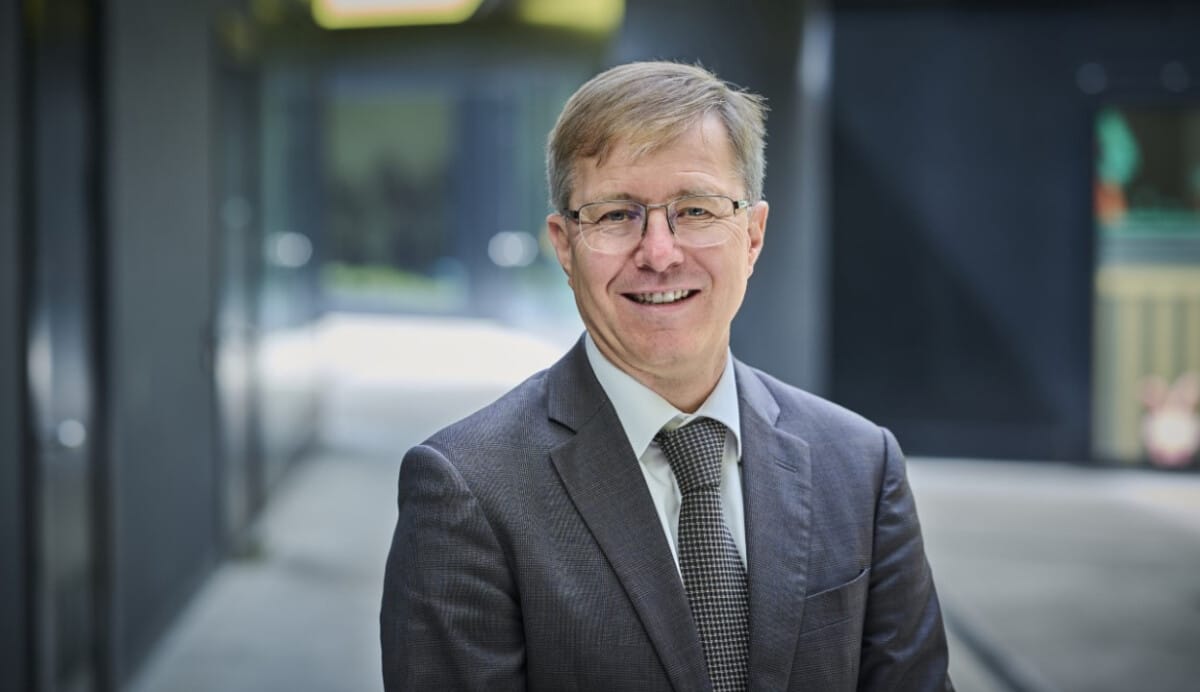
A large allocation to real estate at Migros-Pensionskasse (MPK) the CHF28.25 billion ($30.3 billion) pension fund for Switzerland’s largest retailer, Migros, supported returns in a difficult year, says MPK CEO Christoph Ryter in an interview with Top1000funds.com from his Zurich office.

“Real estate has been helpful in reducing our losses in equities and bonds,” he says. “Our high strategic asset allocation to real estate has been the main reason we performed better than other pension funds.” The fund has just recorded a loss of 5.6 per cent last year and a 9.4 per cent decline in the funding ratio to 124.5 per cent.

MPK’s strategic allocation to real estate and infrastructure (37 per cent) is larger than most of other pension funds in Switzerland. Other allocations comprise nominal value investments (33 per cent) equities (28 per cent) and gold (2 per cent). The real estate allocation is divided between a larger direct investment portfolio in Switzerland managed internally, and an international allocation that includes infrastructure, comprising fund investment and collective vehicles.

Returns

The bulk of MPK’s local real estate allocation is invested in rental apartments where valuations have escaped the impact of rising interest rates, and demand has been buoyant thanks to a jump in the number of people coming to live in Switzerland.

Moreover, unlike the United Kingdom or US market, more people in Switzerland tend to rent accommodation rather than buy their own properties in a cultural norm that means MPK has no plans to tweak the exposure. “In Switzerland, it’s more common to rent,” says Ryter. Around 80 per cent of the local real estate portfolio is rental apartments with the remainder invested in offices and commercial premises.

Sponsored Content

A single apartment lying empty will not really influence the total portfolio, he adds. In contrast, empty shops hit malls hard. “The volatility in rental apartments is much lower than in offices and commercial spaces.”

However, Ryter believes valuations are set to decline ahead. “Real estate valuations will decline over time although there will be some lag,” he predicts. Although he expects enduring rental demand for apartments, long-term, he expects gains in valuations to vanish or turn negative.

Ryter says another ingredient adding to the success of the portfolio comes from the fact most of the people running the properties the pension fund owns (cleaners to estate agents showing people around) are also employees of MPK. The identification with the portfolio is therefore much greater, he says.

One of the biggest challenges to the strategy in recent years has been finding enough properties in Switzerland to fill the target allocation. As MPK’s assets under management grew with buoyant returns from bonds and equities, it struggled to fill the illiquid allocation where buying and selling is slow and finding projects and securing permits time-consuming. Now bonds and equities have fallen back the target allocation is back on track.

“We are under less pressure to find new projects and to increase the allocation,” he says.

ESG

MPK has long-term targets to integrate ESG across the real estate portfolio, retrofitting heating systems and installing installation. However, Ryter charts slow and steady progress  to protect returns.

“We have to be careful, and take the long view,” he says.

“Real estate is the best asset class to do something good for the environment. It is really possible to change things for good, unlike bonds or equities where you can sell but someone else buys it.”


Leave a Comment

TPA to usher in clearer accountability at CalPERS

TPA to usher in clearer accountability at CalPERS

CalPERS chief investment officer Stephen Gilmore said the $650 billion fund’s upcoming shift to a total portfolio approach will sharpen investment accountability and help it focus capital allocation decisions on fund-level objectives.

Sort content by

Austrian APK smells equity opportunities

Top-performing APK Pensionskasse is examining different regions and sectors, looking to increase its allocation to equity if markets decline in the second quarter. Chief executive Christian Boehm expects technological developments and geopolitical influences to affect markets, including in Europe’s financial sector.

Illinois looks inward for new portfolio

The $42 billion Illinois Municipal Retirement Fund is using its enhanced internal management capabilities to start a quantitative portfolio applying multifactor strategies. The strategy is designed to build some downside protection into the fund’s equities allocation.

PMT’s new index shakes up its equities

The €72 billion Dutch metal industry pension fund has developed its own benchmark that combines ESG, long-term returns and current beneficiaries’ sensibilities with its previous passive strategy. The index’s various criteria have screened out many companies PMT previously held and reduced its allocation to US equities.

Most popular stories of 2018

We are also pleased to say that you, our readers, are spending more time on our site, as evidenced by our 10 most read stories, which averaged 4.2 minutes per article. Thank you to all our interview subjects, readers and supporters over the last year. Below is a look at the 10 most popular stories of 2018.

Washington works to be the best LP

Private equity has been a stand out for the $130 billion Washington State Investment Board and CIO Gary Bruebaker says the real trick is attracting the top general partners. That means making sharp investments, being true to your word and nurturing the relationship.

Australia’s rethink for the Future Fund

The CIO of Australia’s A$175 billion sovereign wealth fund, Raphael Arndt, sees a time on the not-too-distant horizon when the assumptions that have shaped investment strategy will no longer hold true. He’s working on a more comprehensive process for this challenging new world.

Previous



