
Switzerland’s Migros profits from unique aspects of Swiss property market

Swiss pension fund MPK has withstood a difficult year in bonds and equities thanks to its large allocation to real estate. More people tend to rent than buy apartments creating steady demand for rental properties says chief executive, Christoph Ryter.

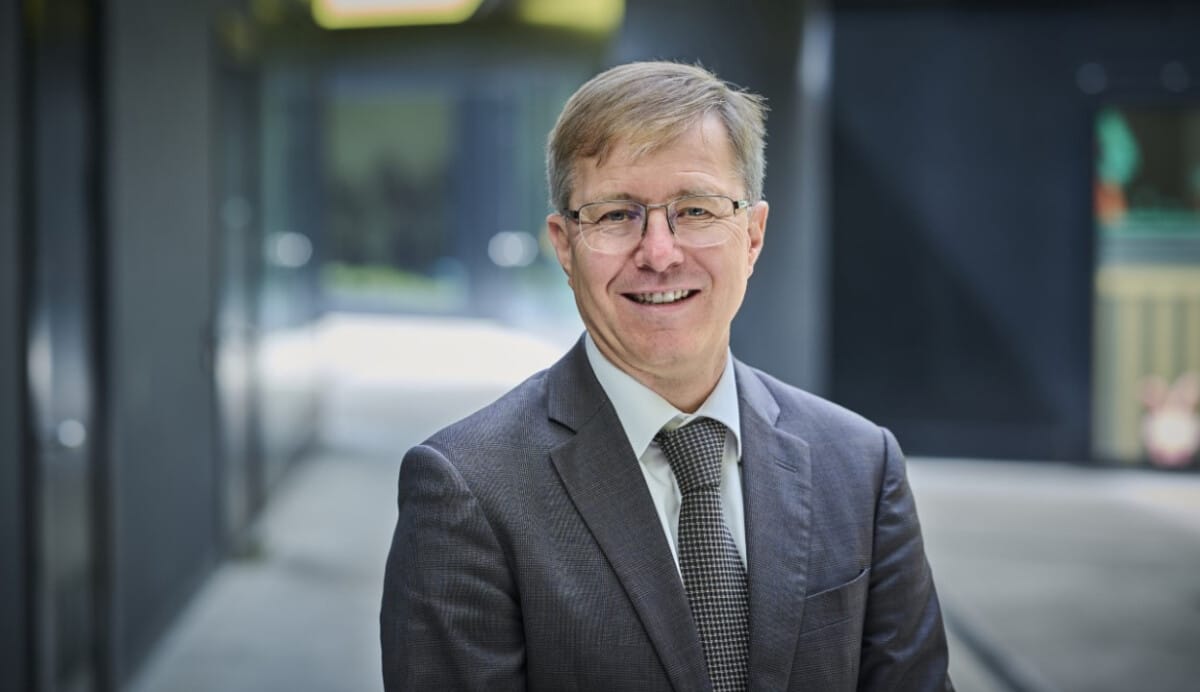
A large allocation to real estate at Migros-Pensionskasse (MPK) the CHF28.25 billion ($30.3 billion) pension fund for Switzerland’s largest retailer, Migros, supported returns in a difficult year, says MPK CEO Christoph Ryter in an interview with Top1000funds.com from his Zurich office.

“Real estate has been helpful in reducing our losses in equities and bonds,” he says. “Our high strategic asset allocation to real estate has been the main reason we performed better than other pension funds.” The fund has just recorded a loss of 5.6 per cent last year and a 9.4 per cent decline in the funding ratio to 124.5 per cent.

MPK’s strategic allocation to real estate and infrastructure (37 per cent) is larger than most of other pension funds in Switzerland. Other allocations comprise nominal value investments (33 per cent) equities (28 per cent) and gold (2 per cent). The real estate allocation is divided between a larger direct investment portfolio in Switzerland managed internally, and an international allocation that includes infrastructure, comprising fund investment and collective vehicles.

Returns

The bulk of MPK’s local real estate allocation is invested in rental apartments where valuations have escaped the impact of rising interest rates, and demand has been buoyant thanks to a jump in the number of people coming to live in Switzerland.

Moreover, unlike the United Kingdom or US market, more people in Switzerland tend to rent accommodation rather than buy their own properties in a cultural norm that means MPK has no plans to tweak the exposure. “In Switzerland, it’s more common to rent,” says Ryter. Around 80 per cent of the local real estate portfolio is rental apartments with the remainder invested in offices and commercial premises.

Sponsored Content

A single apartment lying empty will not really influence the total portfolio, he adds. In contrast, empty shops hit malls hard. “The volatility in rental apartments is much lower than in offices and commercial spaces.”

However, Ryter believes valuations are set to decline ahead. “Real estate valuations will decline over time although there will be some lag,” he predicts. Although he expects enduring rental demand for apartments, long-term, he expects gains in valuations to vanish or turn negative.

Ryter says another ingredient adding to the success of the portfolio comes from the fact most of the people running the properties the pension fund owns (cleaners to estate agents showing people around) are also employees of MPK. The identification with the portfolio is therefore much greater, he says.

One of the biggest challenges to the strategy in recent years has been finding enough properties in Switzerland to fill the target allocation. As MPK’s assets under management grew with buoyant returns from bonds and equities, it struggled to fill the illiquid allocation where buying and selling is slow and finding projects and securing permits time-consuming. Now bonds and equities have fallen back the target allocation is back on track.

“We are under less pressure to find new projects and to increase the allocation,” he says.

ESG

MPK has long-term targets to integrate ESG across the real estate portfolio, retrofitting heating systems and installing installation. However, Ryter charts slow and steady progress  to protect returns.

“We have to be careful, and take the long view,” he says.

“Real estate is the best asset class to do something good for the environment. It is really possible to change things for good, unlike bonds or equities where you can sell but someone else buys it.”


Leave a Comment

TPA to usher in clearer accountability at CalPERS

TPA to usher in clearer accountability at CalPERS

CalPERS chief investment officer Stephen Gilmore said the $650 billion fund’s upcoming shift to a total portfolio approach will sharpen investment accountability and help it focus capital allocation decisions on fund-level objectives.

Sort content by

AP2’s relationships in China

In the next of this new regular series, we examine the relationships that evolved as Sweden’s AP2 decided to invest with local managers in China. The story examines the process for choosing and monitoring Chinese managers, and the burgeoning focus on sustainability in that market.

Why slavery needs to be a priority

Chair of the Financial Sector Commission on Modern Slavery and Human Trafficking, PRI’s Fiona Reynolds explains how the financial sector is well positioned to identify, target and disrupt these crimes and their underlying causes.

Factors are useless without the research

Product providers cite all manner of factors behind the performance of their products but unless those factors adhere to what academics have replicated and standardised, it’s folly for investors to expect persistent returns from them.

Tough times greet new CalPERS CIO

Ben Meng isn’t easing into his role. The new CIO of CalPERS faces three new board members, a stressed private equity program and executive turnover, all under the pressure of a 70 per cent funded status and a maturing membership at the $340 billion fund.

Value lies where precious data is stored

Organisations across the globe are collecting data, analysing and re-analysing it more and more every day. As this trend continues, data infrastructure – tangible or intangible – becomes increasingly attractive. Canada’s OPTrust cites this reality as the rationale behind the EdgeCore partnership. It thinks data is its own asset class.

Homogenous behaviour imperils markets

Global markets are more interconnected than ever. That provides many benefits but it also has its drawbacks. Chief among those is the potential for investors to move in lockstep when driven by fear or euphoria, creating feedback loops that can result in crashes.

Previous



