
Shared investment objective critical to portfolio resilience: Bridgewater

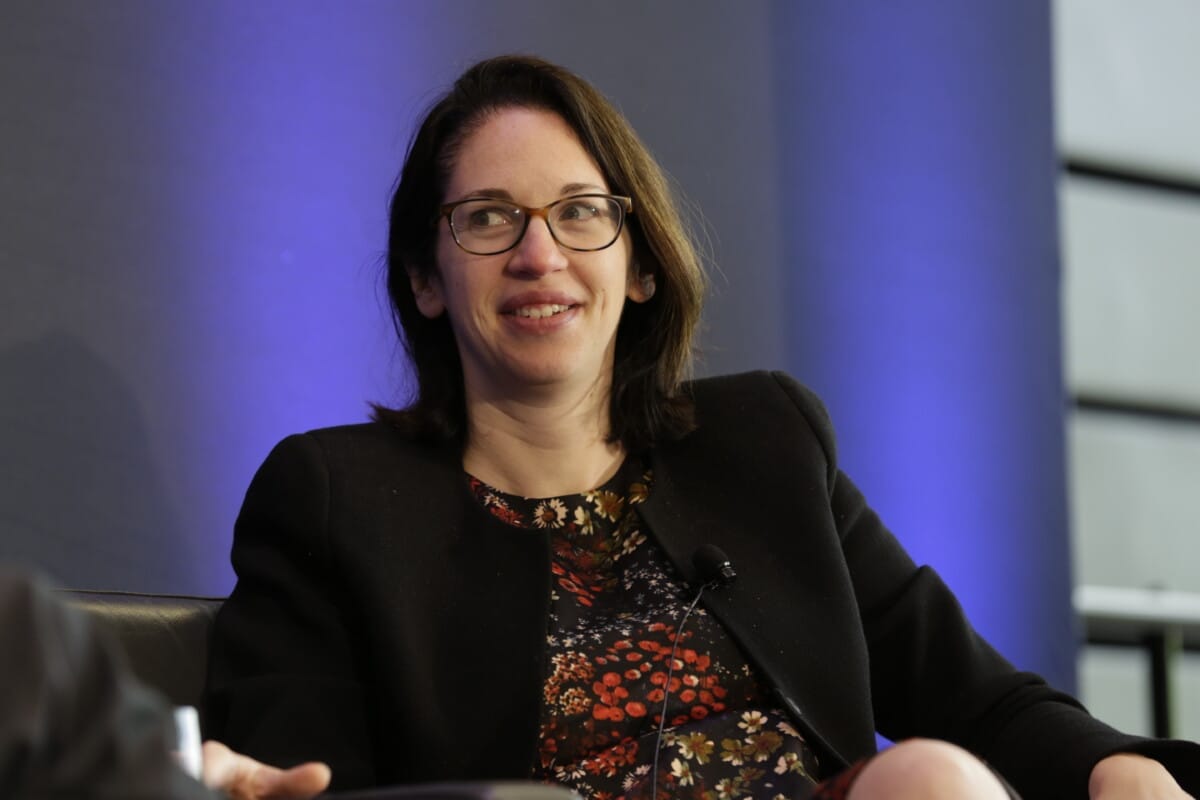
Karen Karniol-Tambour. Photo: Jack Smith

The stars aligned in the 2010s when a series of structural conditions stacked up favourably for global investors. Coming out of a decade defined by two major crises – the dotcom bubble and the GFC – the 2010s saw cheap valuations and a depressed economy needing to heal.  

Low inflation, increasing globalisation, pro-business policy and steady economic growth have together helped the average 70/30 developed world stock-bond portfolio to return 8.5 per cent in 2010s, outperforming the previous five decades, according to analysis by Bridgewater Associates.  

However, co-chief investment officer of the world’s largest hedge fund, Karen Karniol-Tambour, warned that these perfect conditions will be hard to replicate in the 2020s, and it’s high time that investors start building portfolio resilience.  

“I think, for any CIO sitting with the allocation that they have, what you definitely can’t do is be confident that you will get the 2010s again,” she told the Fiduciary Investors Symposium at the University of Toronto earlier this week.  

“[They need to think] ‘I don’t want to have a portfolio that is reliant on getting the amazing 2010s to repeat itself – what I want is something that’s a little more resilient to a range of options, knowing that the world has shifted in a way where a range of options might occur.” 

Resiliency can be defined with several characteristics, she said, including narrower range of outcomes, lower tail-risk outcomes, less likelihood of sustained period of underperformance and higher average return across the environments.  

Sponsored Content

In practice, Karniol-Tambour said investors can use “incremental decisions” such as shifting existing asset allocation, the types of exposures they hold within a particular asset class, or allocating to strategies that can hedge the tail risks.  

However, the biggest challenge in building resilience, she said, is for investors to remember that a part of their portfolio will need to be explicitly assessed relative to how the rest of the portfolio performed, rather than as standalone performance.  

It matters a lot to make it clear to that resilience-building part of the investment team that the plan is for them “to have a more consistent return or to only perform well when things are going poorly” in the rest of the portfolio, she said. 

“You’re not telling the person [responsible] that ‘you did a bad job’. You’re saying that was the plan.  

“If you don’t govern it that way, then the person who manages that bottom asset is going to say ‘wait a minute, we just had a great growth year, and I had this very low return relative to the rest of the portfolio, I better change my strategy to not have that happen to me again’.” 

Understanding, not avoiding risks 

Chief investment officer of the C$25 billion ($18 billion) pension OPTrust, James Davis, echoed the sentiment and said it’s governance can be a huge challenge when the objective is building resilience.  

“Resilience is not about avoiding risks, it’s about understanding them, and it’s about managing them,” he said.  

“We define risk not as volatility or return. We define it in terms of the probability of becoming under-funded. The reality is that the risk-free rate is not high enough that we could just invest in risk free assets and earn the returns we need to pay pensions, so we have to take risks.  

“We’re not trying to grow that funded status, just try to keep it stable. 

James Davis

“We do rigorous due diligence in all of our deals, and in our fund and direct investing. We treat risk as a scarce resource. We don’t incentivise excessive risk-taking.” 

Getting the board to understand this objective can take rigorous communications sometimes, Davis said, but that needs to be done.  

“It’s amazing how our board gets distracted by returns, and the media feeds into that.  

“At the end of the day, we can have a very good stable, potentially even improving funded status and have a negative rate of return. Think bonds that hedge your liabilities, then bonds have a bad year and yields went up. 

“Then our board is like ‘well, you say you did good, but did you really do good?’ 

“Boards in general, our board as well, are line item focused. This is one of the things you try to overcome by going to a total portfolio approach, but it’s hard to break that habit.” 

Karniol-Tambour said that at the end of the day, the first step to building resilience is to create shared understanding of the investment end goal within an organisation and its investment team.  

“Being able to really have that shared understanding of why over the long-term resilience is so valuable, especially be able to demonstrate mathematically how damaging it is to have ups and downs [in returns]. 

“People who think themselves as long term investors – given that we have requirements along the way to make payments – not being able to compound and having big ups and downs makes a big difference. 

“So creating that shared understanding, and then being able to have that understanding pushed through to the actual activities people are doing, to the actual choices they’re making [is important].” 

Leave a Comment

The ‘space economy’ is a legal and literal vacuum for investors

The ‘space economy’ is a legal and literal vacuum for investors

The looming SpaceX IPO has put the spotlight firmly on the so-called ‘space economy’, but asset owners have been urged to exercise caution about investing in a sector that still resembles the wild west, with no legal or governance framework to protect capital. That’s not to say money will not be made, but it might not be in the areas investors first expect.

Sort content by

Canada to allow retail contribution to new SWF

Canada has established its first national-level sovereign wealth fund with a seed of C$25 billion ($18.3 billion) to underwrite “nation-building” projects like ports, mines and energy infrastructure. In an unusual funding mechanism, the fund will issue a retail product that will allow individual investors to invest with the SWF and “participate in Canada’s growth”.

PKA ups the risk; builds out infrastructure

PKA, one of Denmark’s largest pension service providers, is exploring whether to increase its risk budget by 10 per cent to boost returns. Michael Flycht, deputy director of equities and liquid alternatives at PKA, outlines why the fund is achieving this objective via leverage rather than direct exposures, and where it's allocating towards in hedge funds and infrastructure.

NPS raises hedging ratio as Korea’s capital outflows weigh on won

South Korean investors’ pursuit of offshore investments has become a significant source of won weakness and triggered a shift in hedging rules for the $1 trillion National Pension Service. With an overseas asset exposure greater than Korea’s national foreign reserves, NPS’ move demonstrates the scale of impact FX risks can have on portfolios.

Balancing act: How investors can navigate pressure to invest more at home

As pension funds face growing pressure to invest more at home, investors face a balancing act between supporting long-term national interests and their fiduciary duties to beneficiaries. Investors call for policy incentives, not mandates, and transparency, not constraints.

‘AI-washing’ risk grows as tech due diligence on managers lags

The pace of change in AI models poses a significant challenge to the due diligence frameworks employed by asset owners, whose own ability to adapt is being outstripped by the technological advancements they’re being asked to assess.

NY Common joins allocator push on company AI transparency

The $273 billion New York State Common has upped the pressure on portfolio companies to report on how artificial intelligence usage is contributing to layoffs, as AI governance becomes a growing focus in the proxy voting and engagement activities of asset owners.

Previous



