
Risk management in an age of geopolitical uncertainty: Davos 2024 insights

The World Economic Forum’s annual meeting in Davos served as a pivotal forum for leaders to deliberate on the challenges confronting today’s business community. Artificial intelligence was the talk of the town – you would be hard-pressed to walk down Davos’s promenade without seeing “AI” emblazoned on a half dozen storefronts or events.

Beyond main street, the impact of geopolitics was a focal point for corporate and investors alike. In a world grappling with war in Ukraine and the Middle East, US-China tensions, and polarised domestic politics in many countries, business leaders find themselves at the crossroads of global complexities and investment decision-making.

Which begs the question: how are investors assessing and addressing geopolitical uncertainty in their strategies?

The cross-border risk premium has gone up

In discussions with institutional investors from around the world throughout the week, including in FCLTGlobal’s own CEO roundtable event, the overarching trend is one of viewing geopolitics through the lens of risks, commercial, reputational, and organizational. In that sense, the risk premium associated with cross-border investments has witnessed a significant uptick, forcing leading investors and corporates to acknowledge and incorporate geopolitical factors into their decision-making processes. Geopolitical effects are now an inescapable consideration for any new capital allocation decision, with risk management taking precedence over risk avoidance.

Insights from an EY survey of 100 global CEOs highlighted the pervasive influence of geopolitics on decision-making. A staggering 99 per cent of respondents acknowledged this influence, with 40 per cent reporting delayed investments and 37 per cent having to halt planned investments due to geopolitical concerns. This survey underscores the widespread impact and urgency of addressing geopolitical challenges in the investment landscape.

Engaging with governments emerged as a key strategy to assuage geopolitical concerns. While this has been a longstanding practice for corporates, it is a relatively novel pursuit for the investor community. The importance of bridging the gap between geopolitics and global investment through active dialogue was emphasized by participants, recognizing it as a critical component of risk management.

Sponsored Content

Not all crises are created equal

Each crisis must be assessed based on its strategic importance to the organization or portfolio, demanding the ability to distinguish short-term noise from long-term trends. With conflict in Ukraine, Gaza, and now flare ups on the border of Iran and Pakistan just this past week, sifting through which events require action and which don’t will be a critical skill for investors.

For the last several decades, investment behavior vis a vis geopolitical events has been far more reactionary than anticipatory. This approach was appropriate as geopolitical shocks were mostly temporary fluctuations. Now, there will be structural change to the industry as alliances and alignments are constantly changing shape.

It almost goes without saying that the evolving US-China relationship, which I heard described as a “fall thaw,” is firmly a trend rather than noise; this dynamic has universal implications for the investment community. Fundamental disagreements persist, and while tensions may ease of in the year ahead, the consensus is that cross-border investments will decrease over time. This transition to a multipolar world, coupled with rising protectionism, supply chain realignment, national security investment laws, and increased regulatory scrutiny, adds layers of complexity that necessitate strategic adjustments.

All geopolitics is local

More than 60 countries will hold elections in 2024, and the significance of domestic politics in shaping future policies cannot be overstated. Investors are increasingly recognizing that their home government policies can either exacerbate or mitigate the complexity of operating internationally.

The trends of nationalism and a desire for more autonomy underscore the evolving landscape. In response to these shifts, corporates are strategically reinforcing regional supply chains and adopting a “building local for local” approach, cultivating local supply to cater to local customer bases. The challenges extend beyond politics, with disparate sanctions regimes and climate policies presenting obstacles to scaling decisions across multiple jurisdictions. The inconsistency in governmental approaches to climate, specifically, has emerged as a major variable, with some nations prioritizing ambitious green initiatives, creating investment opportunities in renewables and sustainability. This policy divergence forces investors to navigate varied regulatory frameworks, incentives, and penalties.

As the world witnesses increasing tensions in key regions, the traditional notion of geopolitical events as strictly buying opportunities no longer holds. Such considerations are now inseparable from capital allocation decisions, prioritizing risk management and rendering risk avoidance nearly impossible. As new developments unfold, the ability to distinguish signal from noise will be more critical now than ever before.

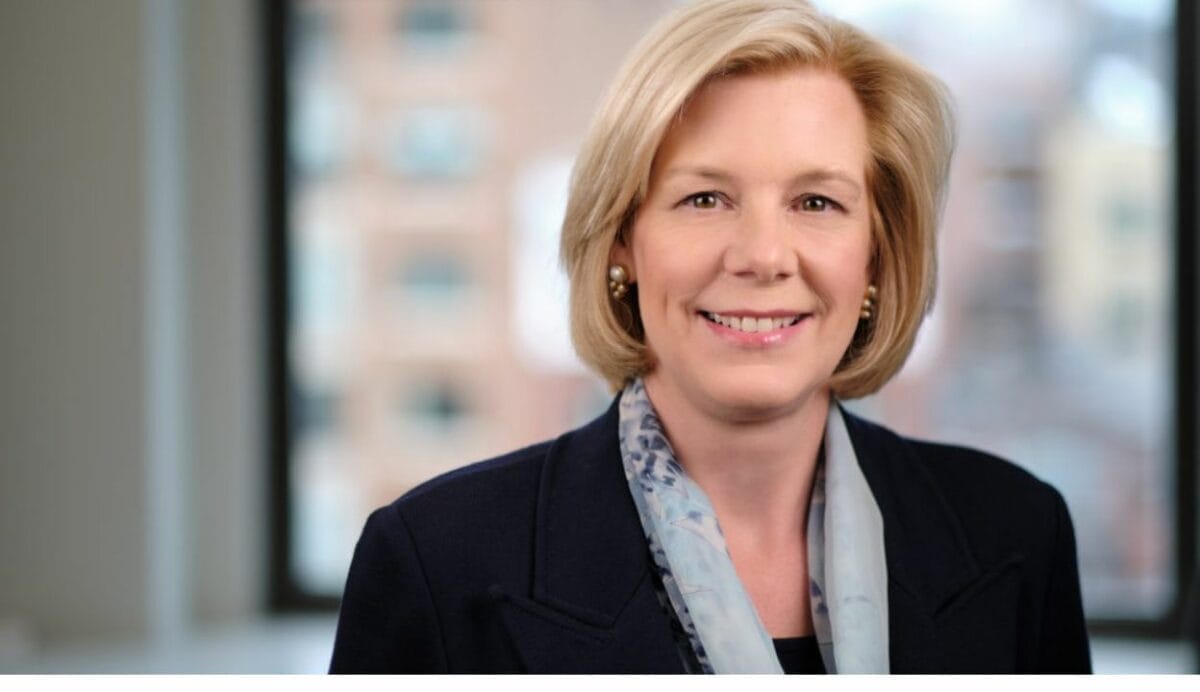
Sarah Keohane Williamson is chief executive of FCLTGlobal.

Leave a Comment

Why NYC pensions CIO hasn’t drunk the ‘TPA Kool-Aid’

Why NYC pensions CIO hasn’t drunk the ‘TPA Kool-Aid’

Three decades of investing have given Monte Tarbox sharp eyes for recognising risk and opportunities, and he’s putting it to use as the new permanent chief investment officer of the $306 billion NYC Bureau of Asset Management. In an interview with Top1000funds.com, Tarbox outlines his vision for the fund, why he’s bullish on infrastructure but “nervous” on PE, and why he hasn’t drunk the TPA “Kool-Aid”.

Sort content by

The future belongs to investors who can adapt

Canada's HOOPP has officially adopted the total portfolio approach since the start of 2026. Unpacking the move, the fund's managing director and head of total portfolio group Jacky Lee writes that while the approach doesn't magically make the return better, the fact that it frees the investment team from outdated processes and gives investment leaders the flexibility to act is what gives it an edge.

The world won’t wait for the investment committee 

What does it actually mean to be a long-term investor when the ground beneath your feet is shifting faster than your investment committee can convene? 

Rethinking portfolio construction at the human-AI nexus

As artificial intelligence models become more sophisticated, asset owners and managers are rethinking portfolio construction as an activity sitting at the nexus of human and machine, which means gaining an edge over the market increasingly needs investors to tap into the wisdom from both sources.

Investors boost inflation-hedging amid geopolitical conflicts; eye tactical shifts

Inflation hedging is back on top of the agenda for investors as conflict in the Middle East drives up energy prices globally, but the FIS Singapore heard that many portfolios are not well-prepared for the broad ways through which inflation can creep through. The new era of significant trade and capital flow shifts driven by modern mercantilism is also throwing out TAA opportunities.  

Oil crisis: Curb or catalyst to the green transition?

The blockage of the Strait of Hormuz has left the world facing another energy crisis and warning bells of a global recession are growing increasingly shrill. Ostensibly, the crisis could also push the energy transition back as governments and companies scramble to shoulder the cost of $100 per barrel of oil and prepare for higher

GPIF positions its alternatives database as first gate in manager selection

Japan’s Government Pension Investment Fund will soon look to expand its alternatives database project, which evaluates the performance of private markets GPs, to cover more funds. Director of research and analytics speaks with Top1000funds.com on how the $2 trillion pension giant will position the system as its first point of reference for private market manager due diligence.

Previous



