
Risk management in an age of geopolitical uncertainty: Davos 2024 insights

The World Economic Forum’s annual meeting in Davos served as a pivotal forum for leaders to deliberate on the challenges confronting today’s business community. Artificial intelligence was the talk of the town – you would be hard-pressed to walk down Davos’s promenade without seeing “AI” emblazoned on a half dozen storefronts or events.

Beyond main street, the impact of geopolitics was a focal point for corporate and investors alike. In a world grappling with war in Ukraine and the Middle East, US-China tensions, and polarised domestic politics in many countries, business leaders find themselves at the crossroads of global complexities and investment decision-making.

Which begs the question: how are investors assessing and addressing geopolitical uncertainty in their strategies?

The cross-border risk premium has gone up

In discussions with institutional investors from around the world throughout the week, including in FCLTGlobal’s own CEO roundtable event, the overarching trend is one of viewing geopolitics through the lens of risks, commercial, reputational, and organizational. In that sense, the risk premium associated with cross-border investments has witnessed a significant uptick, forcing leading investors and corporates to acknowledge and incorporate geopolitical factors into their decision-making processes. Geopolitical effects are now an inescapable consideration for any new capital allocation decision, with risk management taking precedence over risk avoidance.

Insights from an EY survey of 100 global CEOs highlighted the pervasive influence of geopolitics on decision-making. A staggering 99 per cent of respondents acknowledged this influence, with 40 per cent reporting delayed investments and 37 per cent having to halt planned investments due to geopolitical concerns. This survey underscores the widespread impact and urgency of addressing geopolitical challenges in the investment landscape.

Engaging with governments emerged as a key strategy to assuage geopolitical concerns. While this has been a longstanding practice for corporates, it is a relatively novel pursuit for the investor community. The importance of bridging the gap between geopolitics and global investment through active dialogue was emphasized by participants, recognizing it as a critical component of risk management.

Sponsored Content

Not all crises are created equal

Each crisis must be assessed based on its strategic importance to the organization or portfolio, demanding the ability to distinguish short-term noise from long-term trends. With conflict in Ukraine, Gaza, and now flare ups on the border of Iran and Pakistan just this past week, sifting through which events require action and which don’t will be a critical skill for investors.

For the last several decades, investment behavior vis a vis geopolitical events has been far more reactionary than anticipatory. This approach was appropriate as geopolitical shocks were mostly temporary fluctuations. Now, there will be structural change to the industry as alliances and alignments are constantly changing shape.

It almost goes without saying that the evolving US-China relationship, which I heard described as a “fall thaw,” is firmly a trend rather than noise; this dynamic has universal implications for the investment community. Fundamental disagreements persist, and while tensions may ease of in the year ahead, the consensus is that cross-border investments will decrease over time. This transition to a multipolar world, coupled with rising protectionism, supply chain realignment, national security investment laws, and increased regulatory scrutiny, adds layers of complexity that necessitate strategic adjustments.

All geopolitics is local

More than 60 countries will hold elections in 2024, and the significance of domestic politics in shaping future policies cannot be overstated. Investors are increasingly recognizing that their home government policies can either exacerbate or mitigate the complexity of operating internationally.

The trends of nationalism and a desire for more autonomy underscore the evolving landscape. In response to these shifts, corporates are strategically reinforcing regional supply chains and adopting a “building local for local” approach, cultivating local supply to cater to local customer bases. The challenges extend beyond politics, with disparate sanctions regimes and climate policies presenting obstacles to scaling decisions across multiple jurisdictions. The inconsistency in governmental approaches to climate, specifically, has emerged as a major variable, with some nations prioritizing ambitious green initiatives, creating investment opportunities in renewables and sustainability. This policy divergence forces investors to navigate varied regulatory frameworks, incentives, and penalties.

As the world witnesses increasing tensions in key regions, the traditional notion of geopolitical events as strictly buying opportunities no longer holds. Such considerations are now inseparable from capital allocation decisions, prioritizing risk management and rendering risk avoidance nearly impossible. As new developments unfold, the ability to distinguish signal from noise will be more critical now than ever before.

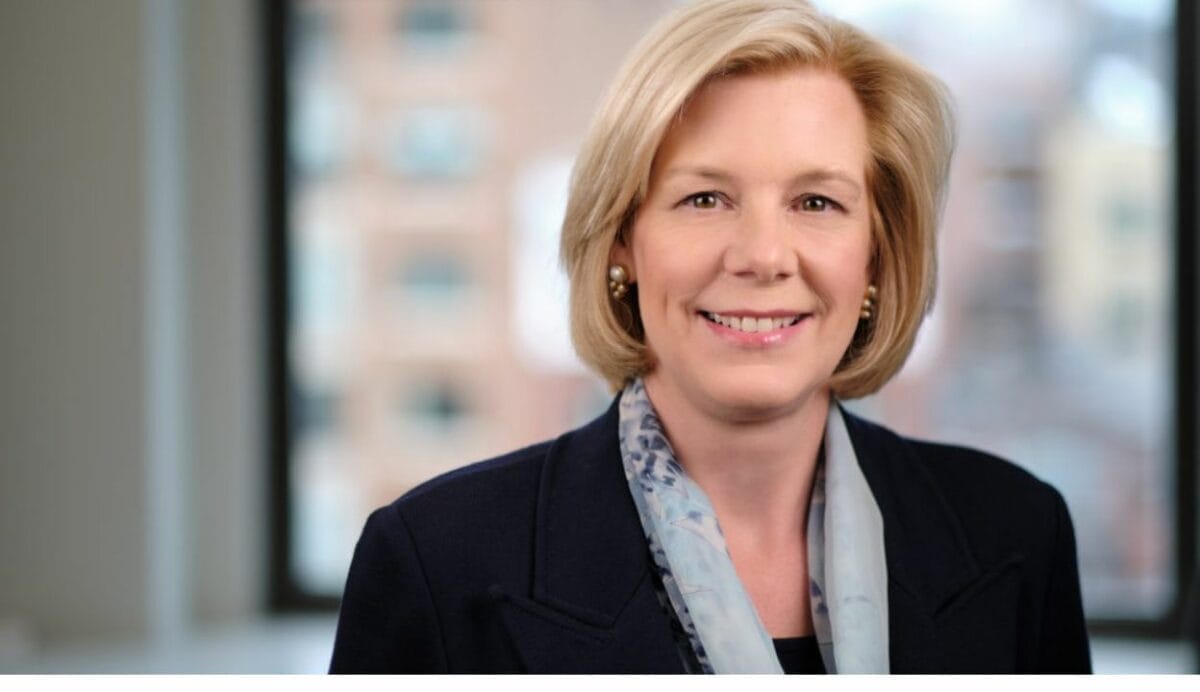
Sarah Keohane Williamson is chief executive of FCLTGlobal.

Leave a Comment

TPA to usher in clearer accountability at CalPERS

TPA to usher in clearer accountability at CalPERS

CalPERS chief investment officer Stephen Gilmore said the $650 billion fund’s upcoming shift to a total portfolio approach will sharpen investment accountability and help it focus capital allocation decisions on fund-level objectives.

Sort content by

Dynamic diversification: CalSTRS’ One Fund approach navigates uncertainty

Scott Chan is shocked the market hasn’t reacted more to the crisis emanating from the conflict in the Middle East. But the CalSTRS' CIO is confident its one fund approach allows it to position dynamically and ensure diversification no matter what is presented.

Germany’s largest pension fund VBL ups diversification; invests more abroad

Germany’s €70 billion pension provider VBL is increasing its diversification, notably investing in overseas real estate outside Germany for the first time. It's also increasing its tilt to international equities over European stocks, enabled by an organisational and investment process overhaul.

Why active managers are mimicking the flaw of passive benchmarks

AI dominates today’s portfolios, but the failures will outweigh the successes without genuine active management argues Loomis, Sayles & Company’s Aziz Hamzaogullari.

UTIMCO flags AI overweight; tweaks equity as US exceptionalism wanes

UTIMCO measures its AI exposure via analysis of how investee companies have integrated the technology. It reveals a 5 per cent overweight to AI thanks mostly to hedge fund strategies and infrastructure. Meanwhile, the investor pointed to history to flag a likely reversal to the mean in global equity markets.

Why Lothian is ready to lead on LGPS pooling – if it comes to Scotland

Scotland's Lothian Pension Fund's celebrated inhouse management affords active management at the price of passive and the ability to shape specific mandates with managers. It also positions the fund to lead on pooling - if pooling comes to Scotland's LGPS funds.

Stephen Kotkin on regional conflicts, and the one war investors can’t price

Stanford University’s Stephen Kotkin provides an insider’s view on the conflict in Iran, and explains why a US-China war remains the ultimate unpriceable risk event for investors. The celebrated geopolitical expert sat down with Conexus Financial’s Colin Tate at his office inside Hoover Tower.

Previous



