
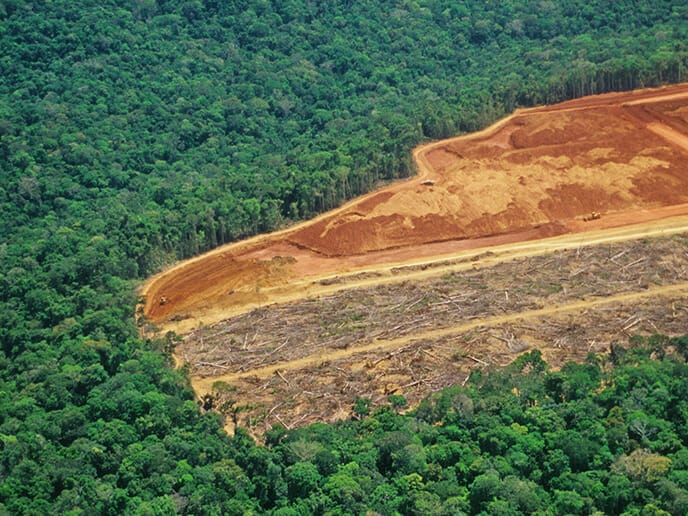

A consortium of APG, the asset manager for Dutch pension fund ABP, the UK’s Pension Protection Fund (PPF) and Australian superannuation fund UniSuper have just acquired one of the largest forestry operations in Australia, each owning a 33 per cent stake in the business.
The transaction, one of the largest single investments into Asia-Pacific’s forestry sector includes a land portfolio in Tasmania and one of the largest plantation forest estates in Australia. It combines a large-scale sustainable investment with compelling risk-adjusted returns, says Ben Avery, senior portfolio manager at APG.
The trio are the latest institutional investors to go after forestry assets. Nest, the United Kingdom’s £30 billion defined contribution scheme has begun the formal process of appointing one or more fund managers to help its 12 million members invest in timberland.
Timberland, says the pension fund, shows low correlation with traditional stocks and bonds and is resilient to shorter term-market dynamics – for example, timberland managers can delay harvesting times if wood prices are low. Returns from timberland also tend to have a strong correlation to long term inflation trends. Many other investors including Church Commissioners for England, New Zealand Super and the Swedish AP funds have been investing in timberland for years.
“We’ve been exploring ways to include natural capital investments into our portfolio as we continue to diversify our private markets allocation, take advantage of complex and scarce investment opportunities, and to decarbonise as we move closer to net zero targets. Timberland ticks all of these boxes,” says Stephen O’Neill, head of private markets at Nest. “The performance of timberland speaks for itself. It’s offered stable total returns underpinned by strong cash yields and should play a complementary role in our portfolio alongside our other illiquid investments.”
O’Neill says that a core element to procurement will be reassurance from bidders that they have a strong focus on sustainable forest management, as well as having enough scale for Nest to maintain a consistent portfolio allocation. The fast-growing pension fund takes in £500 million net contributions on a monthly basis.
AP2, the SEK 440 billion ($44.1 billion) Swedish buffer fund, is similarly mindful of sustainability in its extensive timberland investments, and has drawn up ten criteria for classifying its forestry assets as a climate investment. AP2 began investing in forestry back in 2010 and the majority of its investments are in Australia and the US in forest assets that produce saw timber and pulpwood.
“An investment in forests is not automatically beneficial to the climate and needs to live up to certain criteria in order to be classified as climate investment,” says AP2 chief executive, Eva Halvarsson.
The ten criteria to which managers must adhere include a comprehensive and externally published policy for responsible investments; that timberland assets must be managed in a sustainable manner that is verified by a third party through certification, and that all managers integrate TCFD in their reporting.
The benefits of vertical integration
APG, UniSuper and the PPF’s investment brings access to a leading forestry management platform and commodity exposure. Another compelling element of the investment includes vertically integrated assets and operations, says Avery.
The business owns and operates assets along the entire supply chain including some of Australia’s largest tree nurseries, 90,000 hectares of commercial hardwood and softwood plantation forests and significant infrastructure assets, including two large processing mills and facilities with port access for full supply chain integration from seed to ship. “Vertical integration provides greater control over each step of the supply chain,” he says.
Allocating money to forestry projects also offsets emissions from other investments and will deliver attractive returns as the price of carbon rises to reflect the increasing costs of pollution.
“The investment also brings positive exposure to carbon sequestration capacity. The forests sequestered 123 million tonnes of carbon in 2022,” says Avery. By way of comparison, the Netherlands’ total emissions in 2021 was the equivalent of roughly 168 million tonnes.
“To make another comparison, the carbon balance stored in these forests in 2022 is equivalent to the annual emissions of roughly eight million people in the United States, or taking 27 million vehicles off the road annually,” he continues.
A large part of the acquired estate is native forests which the investors will manage for biodiversity conservation.
“Production forests are typically the primary focus of our investment strategy, however when we considered the whole envelope of sustainability across all of the environmental assets managed by Forico, we recognised a unique opportunity to acquire and become stewards of significant natural infrastructure with assets such as trees, soil, air and water all essential to a wide range of services important to society,” he concludes.







Leave a Comment
You must be logged in to post a comment.
Login