
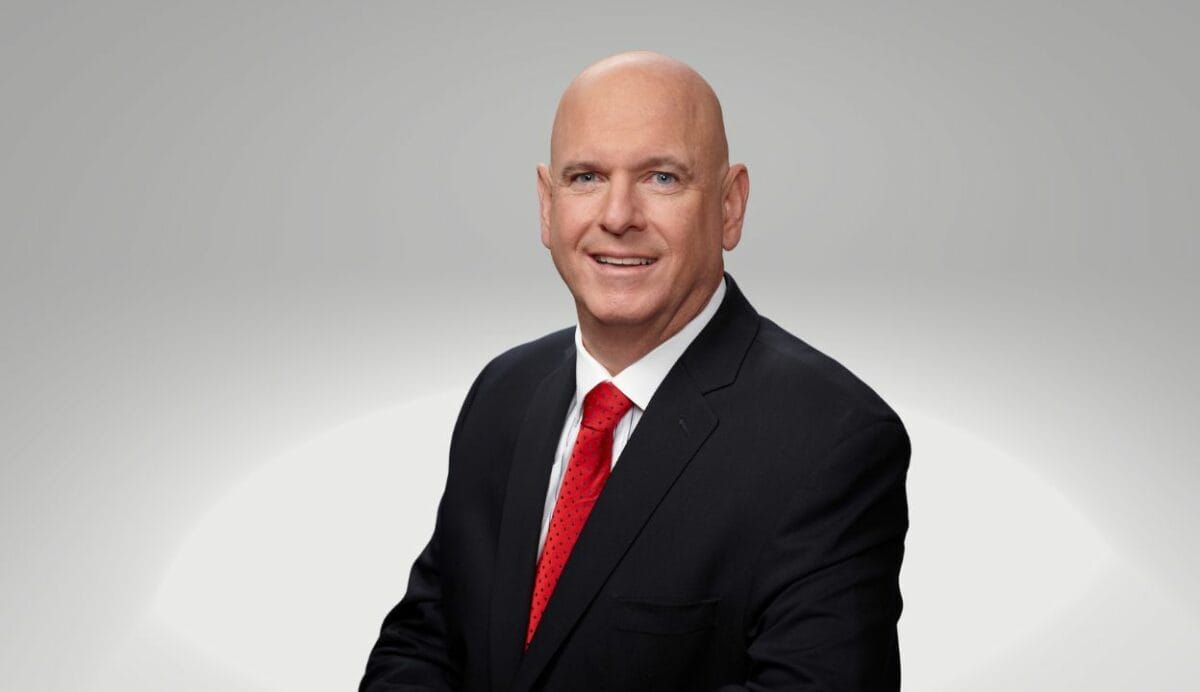

Chris Ailman, chief investment officer of $317.8 billion CalSTRS, spent much of his childhood surfing on America’s west coast and dreamt of becoming a lifeguard until he discovered the world of investment. Fittingly, he tends to describe seismic events as waves, and an investor’s job to time and ride them.
Reflecting on his tenure as he prepares to pack up his desk after 23 years in his Sacramento office (a process, he jokes, that could take some time given the junk accumulated) he says the pension fund has been dragged under twice.
First losing $15 billion when the tech bubble burst 18 months into his leadership – he took the CIO job in October 2000. Then, much worse, when $55 billion disappeared from the portfolio over a period of 120 days during the GFC. A traumatic time that led to a long-term collapse in CalSTRS’ funded status and an experience he still calls the most difficult time in his career (See Top1000funds.com’s interview with him in 2009 Back to basics as CalSTRS rethinks active/passive mix).
Now that wave is the energy transition, stirring and building in the deep and which Ailman says must hit the shore by 2030 if the world is to have any chance of preventing devastating climate change. CalSTRS’ investment team is paddling hard, mindful of both timing it right to not get crushed, but also that the waters will get very choppy if the world doesn’t transition as one.
“If CalSTRS achieves net zero alone, it doesn’t do anything. We need everyone around us to change behaviour. By 2030 we need to be looking out of the window and see a very different life, otherwise we will be in real trouble,” he says.
Top1000funds.com has followed the evolution of sustainability at CalSTRS including how Ailman questioned the morality of divesting non-US coal assets back in 2016; why the fund hired ESG-specific equity managers and more recently, CalSTRS’ net zero path and engagement wins, like its driving support of Engine No.1, the activist hedge fund that campaigned for directors with climate experience at oil giant Exxon.
But it’s the role of investors when it comes to financing the transition where much of Ailman’s thinking currently focuses.
He says it’s expensive cleaning up dirty industries, and the world needs and should welcome people who see the economic benefit from a green premium down the road. Building this new cohort of investors involves encouraging people like CalSTRS’ one million members (who he describes as “long-term, reasonable people,” a nod, perhaps, to the politicisation of ESG) to invest in greening industries.
It involves carving a middle ground between climate “zealots” who insist on divestment and boycotts, and a more unscrupulous bunch who continue to invest in high emitting sectors but won’t improve them.
“We still have investors who are willing to hold and buy coal,” he despairs.
Emerging risks
Ailman says he leaves his long tenure at CalSTRS as other risks also gather on the horizon, playing to his tendency for pessimism despite buoyant economic statistics like strong US GDP and historically low unemployment.
Geopolitical uncertainty and two regional wars concern him. And he believes November’s US election will see unprecedented levels of AI and deepfake from “bad actors” peddling misinformation to create instability and cynicism amongst an already weary voter population. “We need to be more sceptical about what we read and where it comes from,” he says.
The irony that America’s tech giants and the (worryingly few) companies leading the digital revolution are facilitating so much instability but have also provided some of the best returns for US equity investors isn’t lost on him.
Describing himself as “not generally a fan of regulation” he says the US urgently needs to draw up rules around AI and the internet, a Wild West that now poses an existential threat. “This is an area where we need regulation. If you think back to all types of communication in the past from postal services to TV and radio, the government had regulatory authority.”
Ailman may be calling for government action in one area, in another he is increasingly mindful of the risk ahead from policy maker largesse.
He predicts the cost of servicing US debt and financing the deficit in a climate of higher rates will be one of the biggest risks for the next President, whoever it is. “The cost of US debt will be the biggest budget line item by far.”
The risk (and opportunity) for investors will come with a new level of volatility in fixed income. Investors will face Treasury tails, the reaction from bond markets if auctions go badly and the government is forced to pay more to issue and service debt, for the first time in decades. “Ordinary people know what it is to go to the bank; ask for money, and the bank won’t give it,” he says. “We are just beginning to see the US struggle to finance its deficit.”
Riding the career wave
It’s not surprising that Ailman also compares his own career to riding a wave. In this case the growth of institutional investment off the back of pension fund reform in the 1980s before which CalSTRS was still part of CalPERS and run by around 40 people, hidden from view. “No one knew they existed!” he says.
He spent the 1980s as CIO of Sacramento County Employees Retirement System and joined the then $100 billion CalSTRS as CIO in 2000 after a four-year stint at Washington State Investment Board. Climbing up the ladder from financial analyst to investment officer, and ultimately CIO, in lock step with the growth of the industry and pension funds’ assets under management. “My job never changed. I got lucky, and caught a wave.”
Over the years, he was tempted to work for the sell side and join a Wall Street firm. But he says institutional investment always pulled him back, primarily because working at a pension fund in California best suited his family. The members of which pepper the conversation from his three-year old grandson to the influence his wife has played on his career. Or hearing how his sister and daughter, who both had careers in teaching, hold him to account over a crowded table. “I never wanted to move or meet demands that would have an impact on my family,” he says.
But his motivation has been purpose as well as personal. Namely his connection with CalSTRS’ beneficiaries and the fulfilment he derives from knowing they will be supported.
“Teachers spend their career on a modest income, and I love the fact we can provide a lifetime guaranteed income to help them in that trade off they’ve made.”
It was also CalSTRS’ beneficiaries who he credits with getting the investment team through some of the toughest days in the aftermath of the GFC, a connection that helped them all, him included, take ownership of what had happened and rebuild for the future.
Overseeing the growth of the investment team and championing them at any opportunity is, perhaps, his most important legacy.
“They are recognised as one of the best money managers in the world,” he says.
Grown from 35 when he joined to 230 today (and 70 per cent are women) they are responsible for managing $150 billion in house. The strategy has helped save more than $1.6 billion in costs since 2017 and CalSTRS currently targets an additional saving of $200 to $300 million a year over the next five years, a cost saving that is also supported by getting tough on asset managers about fees. He told Top1000funds in 2015 there was no need for the pension fund “to be friends with its asset managers.”
Ailman downplays his influence on the team’s success or his role in developing an investment mix that includes new portfolios introduced over the years like total portfolio management (begun during the GFC to bring asset class heads together to locate mortgage exposures and liquidity pockets), inflation sensitive and risk mitigating strategies. Insisting instead – in another glimpse of his light touch – that he just “hired the right people, gave them the right tools, pointed them in right direction and got out of their way.”
Typically, he spent much of the recent January board meeting when his retirement was made public celebrating the tenure of another CalSTRS employee. But he does allow himself one boast.
CalSTRS’ previous CIO lasted just three years in the role and at Ailman’s 2000 interview he promised the board he’d try and stay longer.
“I’ve smashed it,” he says.






Leave a Comment
You must be logged in to post a comment.
Login