
CalPERS extols the benefits of co-investment in private equity

Two themes dominate strategy in CalPERS’ $72.6 billion private equity portfolio as it gets back on course after an infamous lost decade of missed performance: co-investment; and reducing the bias to buy-out.

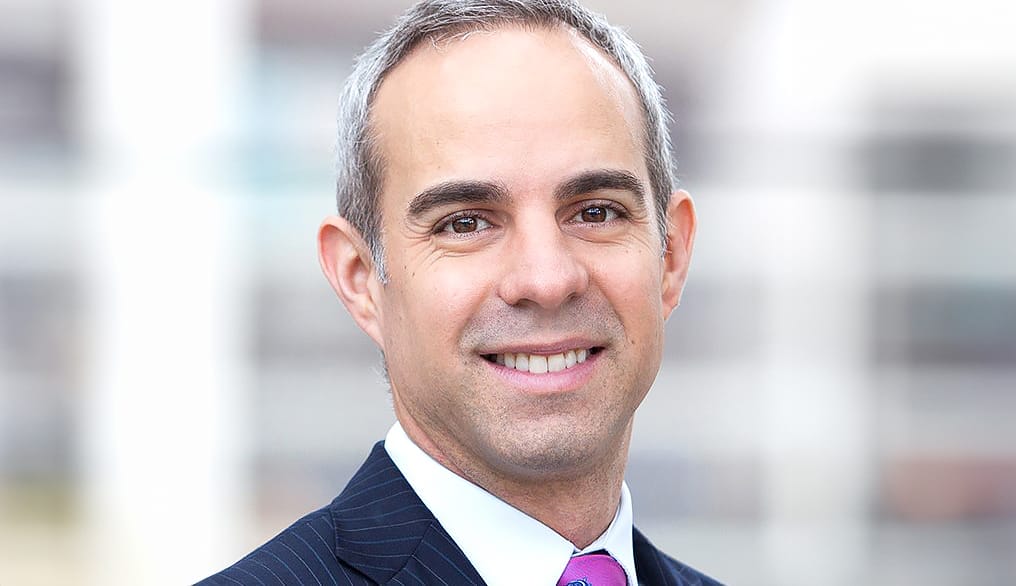
Co-investment, favoured for its structural alpha and dramatic savings compared to traditional fund investment, now accounts for 40 per cent of the portfolio. In marked contrast to the previous two decades when CalPERS prioritised large allocations to funds, in 2023 the majority of the pension fund’s private equity commitments were in co-investment which could, predicted Anton Orlich, managing investment director of the portfolio, save the pension fund $25 billion over the next ten years.

“Each $1 billion of co investment results in a $400 million saving thanks to not paying GP management fees and profit share. One third of those savings are made on the front end of the investment, and two thirds at the back end, meaning that the saving accelerates through the portfolio,” he said, speaking in a recent board meeting.

Nor does co-investment just lower fees. Orlich told the board that it had helped CalPERS develop its brand and trust with GPs, supporting key relationships so that the pension fund can still access investments, even when managers are oversubscribed.

“There is so much emphasis on cost saving within co-investment that governance gets overlooked,” he said.

CalPERS has increased its allocation to co-investment despite a tough climate in the asset class. The lack of deal flow and exits has knocked into new co-investment opportunities. “As the level of M&A declines, there are fewer co-investment opportunities,” he said.

Sponsored Content

Another important benefit of the co-investment programme is that it has avoided the build-up of large unfunded commitments. Co-investment has increased cash demand (which jumped from $3 billion to $9 billion in 2023) because commitments go straight into the ground. But Orlich espoused the benefits of quickly putting money to work over fund investments where GPs often delay capital calls and leave LPs at risk of meeting unfunded commitments in challenging markets.

The portfolio is cash flow negative because deal activity is slow, and CalPERS is seeing very little in the way of realised gains coming back into the portfolio. However, the lack of cash flowing back is impacting CalPERS less than others.

“It affects us less because of our under allocation during the current harvesting years,” Orlich says.

He predicts CalPERS will continue to deploy more than it gets back for another four years. Only then will the fund begins harvesting returns that can pay for future investment.

Mega buyout bias comes to an end

For the last two decades, large mega buyout funds dominated CalPERS’ strategy. Over the last two fiscal years, the team have reduced the allocation to buyout from 80 per cent of the portfolio – it used to account for 91 per cent in 2020-21 – to 67 per cent, equivalent to $48.9 billion. The shift has created an opportunity to generate alpha where there is a greater return dispersion across other allocations including growth, opportunistic, credit and venture.

Moreover, within the buyout portfolio, CalPERS is shifting to more mid-market buyout opportunities where managers are less dependent on leverage to generate returns.

But the strategy means manager selection (CalPERS invests with 126 managers and 363 funds) is even more important. Key deployment themes include vintage year consistency, along with a growing ($4 billion) allocation to diverse managers where CalPERS is able to tap into enhanced diversity and return dispersion. Orlich warned that allocating to emerging managers involves even greater emphasis on manager selection because there is more upside and downside.

He is also prioritising  consistent pacing. The team successfully allocated $15.5 billion every year for the last three years. Only with consistent pacing will it possible to achieve the fund’s recently increased goal to allocate 17 per cent of the portfolio to private equity – up from 13 per cent. “Consistency in commitments is important to avoiding another lost decade,” he said.

In another theme, the team have selectively diversified the portfolio geographically over the last two fiscal years. The program is still US centric (U.S. exposure is approximately 75 per cent) but European exposure is approximately 20 per cent.


Leave a Comment

The Austin advantage: Texas Teachers talks optimism, innovation and growth

The Austin advantage: Texas Teachers talks optimism, innovation and growth

Jase Auby, TRS's celebrated CIO, explains why TPA doesn't fit with its culture; why community push back on data centres could turn out to be an investor advantage, and argues the case for continuing to invest in fossil fuels. Top1000funds.com sat down with the CIO in his Austin office for an all-encompassing conversation.

Sort content by

USS invests in EM linkers

The £65 billion Universities Superannuation Scheme is investing in inflation-linked emerging market bonds to profit from developing economies higher bonds yields and levels of inflation.

Iceland’s LSR prepares to invest abroad

Iceland’s ISK900 billion ($7.5 billion) Lífeyrissjóður Starfsmanna Ríkisins (LSR), the Pension Fund for State Employees and the Pension Fund for Nurses is poised to invest more overseas as capital controls introduced in the wake of Iceland’s 2008 banking crisis finally ease.

Urgency needed in infrastructure

There is an urgent need for infrastructure investment that cannot wait, according to Jim Yong Kim, former president of the World Bank and now partner and vice president of Global Infrastructure Partners.

CalPERS wants PE ideas for new entity

The CalPERS’ board has approved the first step in the creation of a new private equity model, and now the fund’s CEO, Marcie Frost, is looking for advice on how to structure such an entity.

MetallRente builds risk return culture

A new fund in Germany combining liquidity, dynamic equity exposure and strong ESG focus is against the mould of the country’s more conservative, insurance-led investment style, and Heribert Karch, managing director of MetallRente which offers the fund, is determined to bring a return-seeking investment culture to Germany.

Creating safe zones for team decisions

Making your team a psychological safe zone for disagreement and diverse opinions is a step in the right direction to making better team decisions. So what does a psychological safe zone look like?

Previous



