
CalPERS extols the benefits of co-investment in private equity

Two themes dominate strategy in CalPERS’ $72.6 billion private equity portfolio as it gets back on course after an infamous lost decade of missed performance: co-investment; and reducing the bias to buy-out.

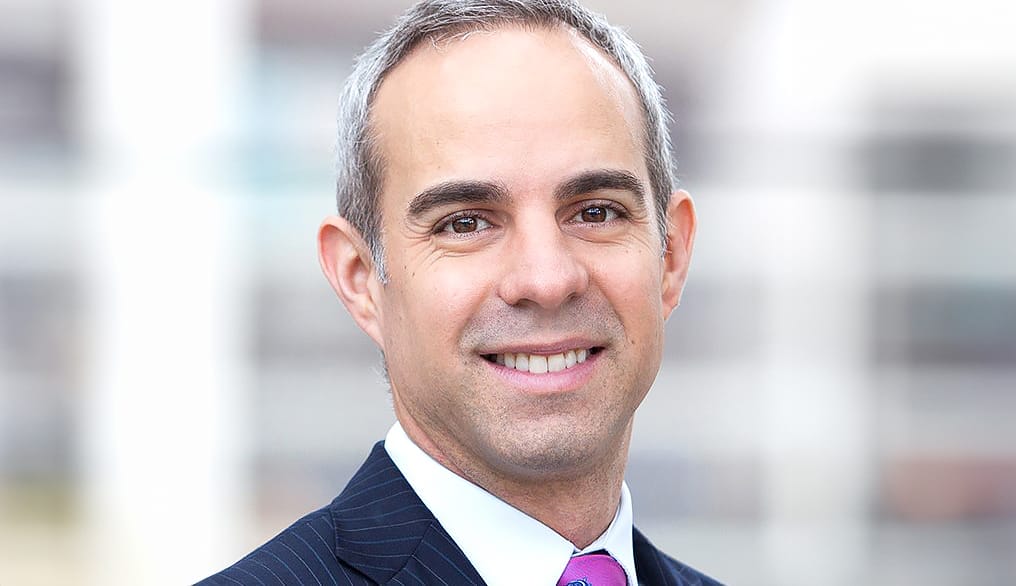
Co-investment, favoured for its structural alpha and dramatic savings compared to traditional fund investment, now accounts for 40 per cent of the portfolio. In marked contrast to the previous two decades when CalPERS prioritised large allocations to funds, in 2023 the majority of the pension fund’s private equity commitments were in co-investment which could, predicted Anton Orlich, managing investment director of the portfolio, save the pension fund $25 billion over the next ten years.

“Each $1 billion of co investment results in a $400 million saving thanks to not paying GP management fees and profit share. One third of those savings are made on the front end of the investment, and two thirds at the back end, meaning that the saving accelerates through the portfolio,” he said, speaking in a recent board meeting.

Nor does co-investment just lower fees. Orlich told the board that it had helped CalPERS develop its brand and trust with GPs, supporting key relationships so that the pension fund can still access investments, even when managers are oversubscribed.

“There is so much emphasis on cost saving within co-investment that governance gets overlooked,” he said.

CalPERS has increased its allocation to co-investment despite a tough climate in the asset class. The lack of deal flow and exits has knocked into new co-investment opportunities. “As the level of M&A declines, there are fewer co-investment opportunities,” he said.

Sponsored Content

Another important benefit of the co-investment programme is that it has avoided the build-up of large unfunded commitments. Co-investment has increased cash demand (which jumped from $3 billion to $9 billion in 2023) because commitments go straight into the ground. But Orlich espoused the benefits of quickly putting money to work over fund investments where GPs often delay capital calls and leave LPs at risk of meeting unfunded commitments in challenging markets.

The portfolio is cash flow negative because deal activity is slow, and CalPERS is seeing very little in the way of realised gains coming back into the portfolio. However, the lack of cash flowing back is impacting CalPERS less than others.

“It affects us less because of our under allocation during the current harvesting years,” Orlich says.

He predicts CalPERS will continue to deploy more than it gets back for another four years. Only then will the fund begins harvesting returns that can pay for future investment.

Mega buyout bias comes to an end

For the last two decades, large mega buyout funds dominated CalPERS’ strategy. Over the last two fiscal years, the team have reduced the allocation to buyout from 80 per cent of the portfolio – it used to account for 91 per cent in 2020-21 – to 67 per cent, equivalent to $48.9 billion. The shift has created an opportunity to generate alpha where there is a greater return dispersion across other allocations including growth, opportunistic, credit and venture.

Moreover, within the buyout portfolio, CalPERS is shifting to more mid-market buyout opportunities where managers are less dependent on leverage to generate returns.

But the strategy means manager selection (CalPERS invests with 126 managers and 363 funds) is even more important. Key deployment themes include vintage year consistency, along with a growing ($4 billion) allocation to diverse managers where CalPERS is able to tap into enhanced diversity and return dispersion. Orlich warned that allocating to emerging managers involves even greater emphasis on manager selection because there is more upside and downside.

He is also prioritising  consistent pacing. The team successfully allocated $15.5 billion every year for the last three years. Only with consistent pacing will it possible to achieve the fund’s recently increased goal to allocate 17 per cent of the portfolio to private equity – up from 13 per cent. “Consistency in commitments is important to avoiding another lost decade,” he said.

In another theme, the team have selectively diversified the portfolio geographically over the last two fiscal years. The program is still US centric (U.S. exposure is approximately 75 per cent) but European exposure is approximately 20 per cent.


Leave a Comment

Why traditional investment committees can amplify group biases

Why traditional investment committees can amplify group biases

Investment committee meetings, a governance cornerstone at every asset owner organisation, run the risk of amplifying group biases and social dynamics, and can push the IC towards recommending more extreme investment positions collectively than the average of their individual views. Bernhard Scherer, head of portfolio implementation at ADIA, unpacks the thesis in a new paper.

Sort content by

At a glance: FIS Cambridge day three

An overwhelming number of delegates at the Fiduciary Investors Symposium said the funds management industry was not doing well in innovationMartin Gilbert, who started Aberdeen Standard Investments in 1983 and is now chair, said industry participants needed to innovate and disrupt themselves.

Different ways to navigate risk

Institutional investors are navigating the different risks that can impact their portfolios in different ways, explained chief risk offers speaking at the Fiduciary Investors Symposium in Cambridge. Arjen Pasma, chief risk officer at Dutch asset manager PGGM noted how risks span investment risk, counterparty risk, liquidity risk and ESG risk. Measuring ESG risk in the manager’s large allocation to private markets where each deal is scored on ESG and climate risk is particularly important, he said.

How to build innovation

Innovation is more important than ever given the uncertain and ambiguous times that lie ahead for institutional investors like climate change, political dysfunction and poor returns. “Returns can only come from an ecosystem that works and we need innovation to do this,” said Roger Urwin, global head of investment content, Willis Towers Watson speaking at the Fiduciary Investors Symposium at Cambridge University.

Climate change risk to spur stress test

Mercer has quantified a ‘low-carbon transition’ premium in the sequel to its seminal climate change report, showing that a 2⁰C scenario equates to 11 basis points per annum to 2030 in a typical growth portfolio.

Long-term investors must engage

Long-term infrastructure investors need to engage with the public and do much more to build trust in the value of their capital, said Brett Himbury, chief executive, IFM Investors (Australia), the global infrastructure manager, owned by 27 leading pension funds with $120 billion AUM.

A practical guide to the long-term

Thinking and acting long-term and holding their service providers to account on long-term risk behaviours and measures, is one of asset owners’ most enduring challenges. Speaking at the Fiduciary Investors Symposium at Cambridge University a panel of experts highlighted important tools asset owners can deploy to ensure they stay focused on the long-term.

Previous



