
Alaska’s APFC: Why any nudge lower in private equity will be slow progress

Alaska Permanent Fund Corporation (APFC), the sovereign wealth fund set up in 1977 to channel state royalties earned from the mining and oil industries into financial investments for future generations, has one-fifth of its $89 billion portfolio in private equity.

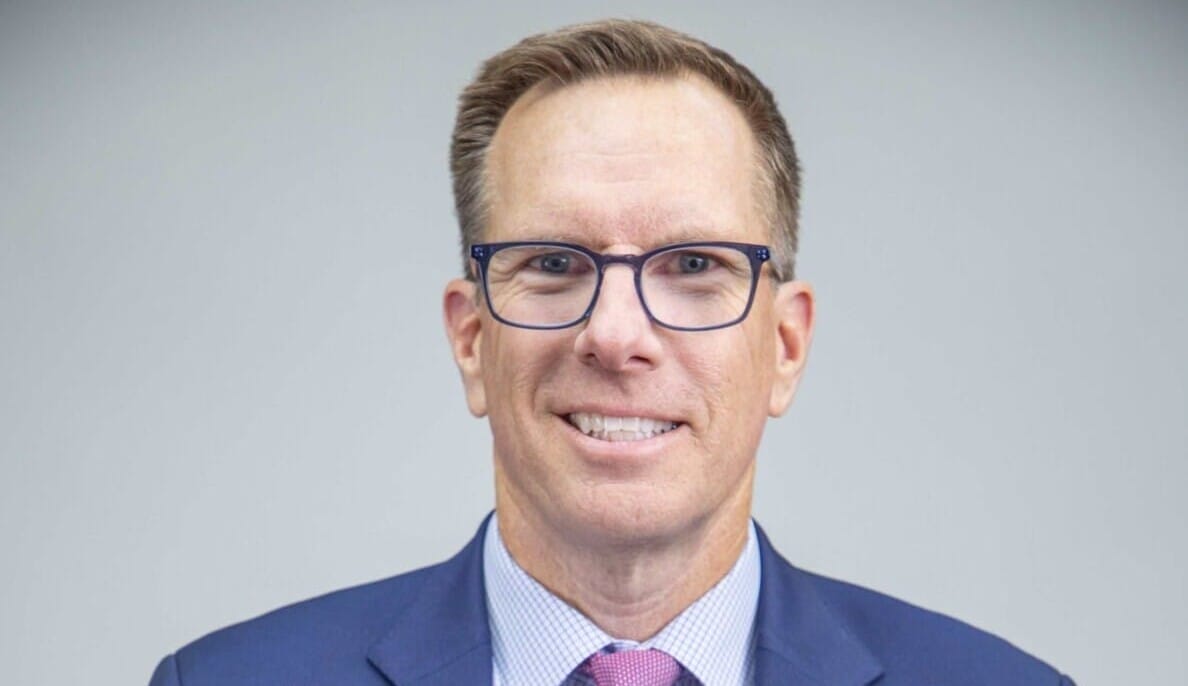
For the last 15 years, the fund has steadily pushed into private markets of which private equity is now central to its long-term growth and diversification. Yet Allen Waldrop, deputy chief investment officer, private markets, tells Top1000funds the current 18 per cent target allocation and annual deployment of $1.5 billion is likely to edge down in the next cycle given the size of APFC’s allocation to private markets.

Still, any significant move will be complicated by the fact that moving in and out of private markets is challenging.

Extracting from legacy GPs

Although APFC only actively invests with around 50 GPs across private equity and venture, the fund still has over 125 managers on the books. That includes GPs APFC has decided it is not going to re-invest with but which still run legacy funds committed to back in 2010 or 2015, explains Waldrop, speaking from Sacramento, where he oversees a team of six based in Anchorage, Juneau and Boston.

“We have managers that we have stopped investing with, but they don’t go away. There is legacy stuff hanging on in the portfolio. It’s hard to get them off the books.”

Old investments made in funds years ago contribute to unrealised gains. Of APFC’s $11 billion in unrealised gains reported in 2023, almost $6.3 billion (57 per cent) was from the private equity portfolio.

Sponsored Content

These funds also have a long life, and are still captured in the manager count, because GPs now extend the life span of funds through continuation vehicles. Managers have become frequent users of CVs given the challenges around traditional exits like IPOs or M&A, and CVs, explains Waldrop, allow managers to create a separate entity that they can sell and bring in third-party investors.

“CVs are not inherently good or bad – they can be useful tools in the right situation. But they can also be abused and used for the wrong reasons which means we have to look closely at what the manager is actually doing,” says Waldrop who brackets CVs with other criteria in fund documents like NAV loans that have also crept into the small print and are now commonplace.

“A fund might have borrowed in the past via subscription lines, but they are now borrowing money against the existing portfolio in a NAV loan with longer terms. Most agreements hadn’t contemplated this ten years ago,” he says.

A way out via the secondaries

APFC is prepared to sell in the secondaries market rather than invest in a continuation vehicle. Although Waldrop says he uses the secondaries market to trim the portfolio or raise cash, it’s not his preferred approach.

“We aren’t active sellers in the secondary market in terms of using it as a tool to manage the portfolio. But when we are presented with an opportunity to roll our interest in a continuation vehicle or take liquidity, we tend to take liquidity. We will only roll or invest after looking at what the transaction is, who the manager is and whether we like the company. We’ve taken opportunities to get liquidity through secondaries, but we are not really active sellers or buyers.”

He is even less enthusiastic about buying in the secondaries.

The abundance of capital in the market, and the presence of investors able to draw on tools APFC doesn’t have, like leverage or the ability to fashion highly structured transactions with deferred payments that ensure a particular return at a higher price, put APFC out of the bidding.

“We have a high return expectation for secondaries, and our cost of capital is different,” he says.

The arrival of interval funds with periodic liquidity, active buyers in the secondaries off the back of retail investors arriving in the space, is another reason to be wary.

“We’ve noticed the advent of interval funds that are aggressively buying secondaries.”

Managing the managers

Stuck with a large stable of managers, APFC evaluates its managers by rating them according to different categories in a focused strategy that Waldrop says prioritises the best.

“Good terms don’t save you from a bad investment. Our approach is to get in with the best managers – and then get the best terms we can.”

It’s an approach that APFC has particularly honed in venture where a wholly opportunistic strategy is shaped around openings with the best managers rather than trying to fill an allocation.

“We have some great managers in the portfolio now. If we can expand it we will, but we will only do it if we can access the best managers. We don’t see a need to just put money into venture.”

He believes writing smaller cheques in private equity also helps drive outperformance in an environment where fund sizes are creeping ever higher. Not so long ago, a $500 million fund was considered large. Now fund sizes stretch to $25-billion plus.

“Once fund sizes go beyond $15 billion it can be more difficult to outperform,” he says.

Writing smaller cheques also keeps investments simpler and more transparent given the many components that now characterise large funds.

“Generally speaking, we don’t need to make really large commitments so we can be more selective and find managers in the lower and mid-market that will outperform and who we can invest with on their third, fourth and fifth fund.”

Even though APFC avoids the competition of mega funds by carving a niche lower down the rung, he says competition to invest with the best managers remains fierce because the best GPs remain over-subscribed.

“There are numerous cases where we are targeting over-subscribed funds and trying to get a reasonable allocation. Those folks can drive terms,” he says, adding that fees haven’t moved in favour of LPs. Sure, there has been a slight decrease in management fees and other things that count as expenses, but only around the edges.

Private equity doesn’t allocate based on what is happening today

Another inherent challenge of the allocation is the fact that commitments are sometimes made long before the money is put to work. It means that the investment landscape has often changed by the time the money is finally drawn down.

It’s encapsulated in the shift in sentiment in the European buyout portfolio, for example. APFC focuses on mid-market and lower mid-market buyout opportunities in European growth equity where private equity funds poured targeting European companies on the basis they would expand into the US or Asia. Only that growth trajectory for these companies has changed because of de-globalisation.

“Tariffs make expanding into the US more complicated for European companies, which can no longer rely on expansion into China and other Asian markets either. It’s also one of the effects of deglobalization. Companies are having to rethink the landscape, and we are seeing more companies expand to be pan-European or regional,” he concludes.

Leave a Comment

The twin forces rewriting the rules of investing

The twin forces rewriting the rules of investing

Portfolios built for the old world will be severely tested as emerging forces rewrite the rules of investing. The Fiduciary Investors Symposium heard that geopolitical and macroeconomic upheaval, together with the disruption wrought by AI, should force asset owners to rethink the structure and composition of portfolios.

Sort content by

FIS 2020: A sustainable recovery?

In our second feature looking ahead to FIS 2020, we highlight how the conference will focus on growing calls for a sustainable recovery and purposeful companies. Nobel prize winner Esther Duflo will talk on solutions to inequality, magnified during the pandemic.

FIS 2020: Deglobalisation and politics

In the first of four articles looking ahead to FIS 2020, we highlight how the event will focus on de-globalisation and geopolitical stress, particularly the deteriorating relationship between China and the US. Elsewhere, FIS delegates will hear how asset owners are positioning their portfolios in today's challenging environment.

Kotkin’s mega trends: Deadends & despair

Political regimes around the world are stuck in a series of dead-ends and despair. Most importantly, the China-US relationship has hit a brick wall as their fundamentally different values and interests clash. Deterrents and robust policy is the only way forward, says Stephen Kotkin, professor in history and international affairs, Princeton University.

Bridgewater: $41 trillion hole in income

Bridgewater Associates, the world’s largest hedge fund, has identified a $27 trillion hole in global corporate income from the outbreak of the pandemic, that will be filled "unevenly".

MMT: unemployment a policy choice

Unemployment is a policy choice, according to Professor Bill Mitchell, the father of Modern Monetary Theory (MMT). He says there is no reason that unemployment should be at the current levels.

Finance industry behind no tobacco

The World Health Organisation's director general, Tedros Adhanom Ghebreyesus has called the Tobacco-Free Finance Pledge the missing piece in the fight against tobacco. Credit Agricole and Amundi Asset Management have become the latest signatories to the pledge, in what is a timely decision ahead of World No Tobacco Day on Sunday.

Previous



