
Impact of a slowing China, rising rates on portfolios: UniSuper CIO

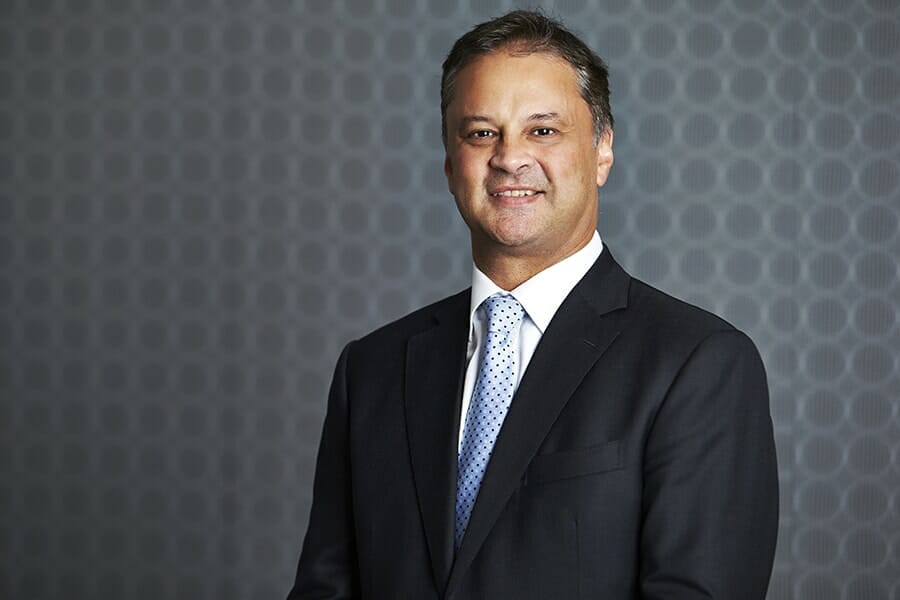
John Pearce, chief investment officer of the A$115 billion UniSuper discusses his long-term view on China, inflation and the impact on the fund’s portfolio.

China’s ability to escape a “middle-income trap” where population decline has pushed up labour costs making exports less competitive is dimming according to UniSuper’s chief investment officer John Pearce.

“In the long term, I’m a bit pessimistic about China. If you look through history, at countries that have managed to escape the middle-income trap that China is in, it’s got nothing to do with geography or resources. it’s got everything to do with the institutional frameworks of those countries,” he said at the Investment Magazine Fiduciary Investors Symposium in Healesville.

“It seems to me that China’s going in the opposite direction and so we’ve got Xi Jinping, looking much more inward than his predecessors.”

But he recognised there may be “some fantastic cyclical opportunities in the short term… but you’re just going to have to accept that you’re probably going to miss it”.

Rising rates

Sponsored Content

Rising inflation around the globe has been driven by massive government spending to support their citizens as economies were shut down and travel restricted to limit the spread of the Covid-19 virus before effective vaccines were rolled out.

“We are paying the price for the Covid policies, we’ve been getting the bill and the bill is called inflation,” Pearce said.

The solution is not hiking interest rates aggressively like the US Federal Reserve but to increase the supply side of the equation like opening borders, he said. “We know that governments have to spend but you can’t spend everywhere. You’ve got to ease back on some stuff because there’s just not enough supply.”

“Governments should just look at the supply side of things, cut spending and get out of the way… let nature take its course.”

He also challenged the orthodoxy of central banks maintaining a two per cent inflation target. “Is the world going to be a terrible place if we actually settle at three and a half percent with bond yields at four or four and a half [per cent] and real rates around 50 to 100 basis points? What’s the drama, we’re going to have a decent cost of capital curve, we can get back to sensible pricing of risk,” he said.

One of the most significant impacts of rising interest rates is on balanced options for members. “There’s going to be a much larger role for credit and fixed interest in typical balanced options,” he said.

“The end of financial repression will have a profound impact on portfolio construction. The bottom line is that investors can hit target returns while taking less risk.  To hit a target return of seven per cent in 2000, an investor could hold 80 per cent cash.  In the middle of Covid, you basically had to hold 100 per cent in risk assets to achieve that target. These days you could hold up to 40 per cent corporate bonds, 60 per cent growth assets and get to an expected seven per cent return,” said Pearce.

Internalisation model

UniSuper manages over 70 per cent of its assets internally with a team of less than 60. The main driver was the need to tailor portfolios to accommodate a significant $30 billion defined benefit scheme, though the massive cost savings was another boon for members.

“We always felt that developing an in-house capability to manage a liability driven investment portfolio was much better than just farming out the money,” Pearce said.

“It was always a case of logical incrementalism, this was working well for the defined benefit and we just started applying it across all the other options. A very positive benefit is a massive reduction in costs.”

Pearce said the operational leverage from having an inhouse management capability has meant there was no need to add any new staff to deal with the enlarged asset base after the merger with the $12 billion Australian Catholic Super.

The asset classes that UniSuper outsources to external managers require specialised skills and labour-intensive due diligence processes such as infrastructure, private equity, US high-yield and Asia small cap.

“The governing principle is that you stick to pretty sensible, generic types of assets that don’t require large teams. That’s the model that I’m comfortable with,” Pearce said.

Asset Owner:UniSuper

Leave a Comment

The twin forces rewriting the rules of investing

The twin forces rewriting the rules of investing

Portfolios built for the old world will be severely tested as emerging forces rewrite the rules of investing. The Fiduciary Investors Symposium heard that geopolitical and macroeconomic upheaval, together with the disruption wrought by AI, should force asset owners to rethink the structure and composition of portfolios.

Sort content by

BpfBOUW: The importance of hedge funds

Hedge funds are getting a bad press again, but for Dutch fund BpfBOUW the latest skirmish simply underscores their importance in a portfolio as Erik Hulshof, trustee and chair of the investment committee explains.

CalSTRS takes on ExxonMobil

The $255 billion Californian pension fund, CalSTRS, has embarked on a new era of “activist stewardship” which will see it take on large companies such as Exxon Mobil which have not responded to shareholder engagement.

Behind OTPP’s net zero 2050 plan

Ontario Teachers' has launched its plan to reach net-zero portfolio emissions by 2050, the culmination of a decade of work by the fund in addressing climate change. Amanda White looks at the fund’s climate journey, which has significant lessons for other funds looking to move to net zero.

How to find manager skill

The crisis has accelerated the industry’s adoption of technology for manager due diligence an area where it has traditionally lagged, according to founder of Inalytics Rick di Mascio who after 30 years in the job knows how to identify manager skill.

CalPERS: Lessons from CIO departure

The CalPERS board is considering whether to require a new CIO to transfer all of their personal stock holdings into a blind trust while they are a CalPERS' employee. The move follows the resignation of Ben Meng as CIO last year after an ethics investigation related to some of his personal investments.

Previ invests abroad as pandemic bites

Brazil's largest pension fund has been planning to invest more overseas for a while. Now economic travails in its home market due to the pandemic have stepped up the pressure to diversify.

Previous



