

Asset allocation is often nominated as the most important element in long-term investment performance. But the Fiduciary Investor s Symposium at Stanford University heard that no investment strategy or process can operate in a vacuum – it can’t happen effectively without operational excellence.
Operational excellence is as fundamental to maximising benefits for members as any other aspect of a pension fund, sovereign wealth fund or endowment’s activities, the Fiduciary Investors Symposium at Stanford University has heard.
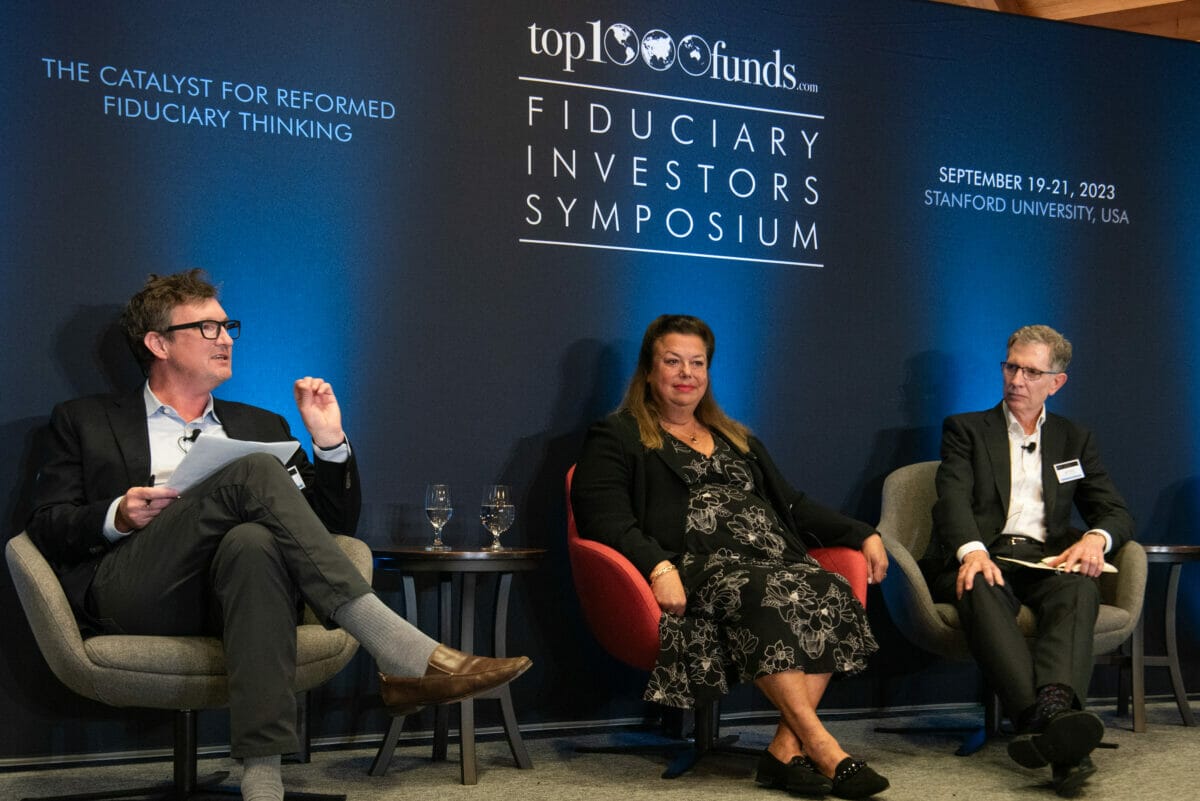
A panel session chaired by Stanford Research Initiative on Long-Term Investing executive and research director Ashby Monk heard that ultimately all fiduciary investors are driven by the desire to maximise long-term returns, within the constraints of their respective organisations.
Monk said that when asked what the most important driver of long-term returns is, “most people would say asset allocation, that’s the foundation of performance”.
“Everybody refers to the lovely seminal paper in 1986 by Brinson where we learned that…93 and a half percent of the variability in quarterly performance is a function of asset allocation,” he said.
“Some people might go another direction and say portfolio implementation. Are we direct? Can we get better alignment of interests? Can we get deep alignment with our managers, some people might say security selection, all of these are often highlighted as components of performance.
“And I think we’re here on this panel to say, none of that happens in a vacuum. All of that is a function of your organizational capabilities.”
Critical ingredients for success
According to Monk the key ingredients of a successful organisation are a production function, people, process, information, and capital. He described these as elements of the organisation’s identity.
“You all have people that are using information in the context of a process to invest your capital,” he said. “It’s very simple, every investor does it. But I would argue that no two investment organizations in the world are the same.”
Australian Retirement Trust chief investment officer Ian Patrick said the merger of Sunsuper and QSuper in February last year was clearly “a bet on scale” and brought two entities together with the aim of improving outcomes for fund members through improved operational efficiencies. He said this included lower investment fees and better services.
“Those are all delivered,” Patrick said. “The ability to invest in capability that comes from scale, before you even get to investments, is very real. On the investment front, [there is] the capability to deploy larger cheques in more meaningful deals; and then [to] invest in the underlying technology, and other tools that will improve the investment process.
“I think those are all benefits from scale. Are there disadvantages? Absolutely. We may never be a meaningful investor in Australian small caps going forward.”
Patrick said the merger had “instant positives in terms of bringing together a collection of capabilities that each entity might have aspired to in its own right but would have been on a path to build”.
“But with that comes the challenge, or the opportunity, of two processes, two cultures, two governance mechanisms, you name it,” Patrick said.
“The important thing for us, I think, in the journey so far and that will carry us into the future is the fact that at the core, the identity is very strong, the identity of super, which is all about the end member. Delivering for the beneficiary binds everybody, and that’s particularly important.”
Franklin Templeton Advisory and Thought Leadership vice president Sandy Kaul said most organisations are slow to fully grasp the potential of new technology and the impact it can have on driving operational excellence.
“Technology is constantly redefining what we are able to do, and how we are able to do it.,” Kaul said.
“And we have seen this over and over in our own careers.
“So, when we say technology is [at] the heart of what is driving this industry, and you think about operational excellence, my biggest learning has been the people are very bad at taking advantage of what the technology can do. They bring in the right technology, and then they do the wrong thing to embed it into their processes, to update their people and to update their governance.”
Kaul said organisations also need to recognise that there is wisdom in crowds, and that they are not the sole repositories of knowledge or insights.
“In everything we’ve heard so far in the conference, I didn’t hear any discussion about the wisdom of crowds, about the ability to tap into community sentiment,” she said.
“These are all factors that are reshaping society. And we completely ignore that any of this is happening, because it doesn’t fit with the prescribed notions of our expertise. But our expertise is being very quickly democratized, through technology and through social media.
“The days of thinking that the crowd is dumb money is not really accurate,” Kaul said.
Kaul said access to information is becoming instantaneous and organisations can glean insights on hope to improve operational efficiency from understanding crowd dynamics. She said technology is allowing organisations to synthesise vast amounts of knowledge from often disparate fields.
“So, we need to rise to the challenge to think about what does this mean for how I think about what my portfolio is actually able to deliver,” she said.
“And I think that that is where we are seeing huge potential come in. Because what are we doing in this room, we are creating a community, this community. A lot of the value that you’re going to take away from this conference isn’t going to be necessarily only from the presentations on the stage, it’s going to be from the conversations you’ve had with other people in this room.
“What you now need to understand is that that community has expanded exponentially and has become virtual, and we need to join in those communities as much as we need to join in the communities physically in this room.”








Leave a Comment
You must be logged in to post a comment.
Login