
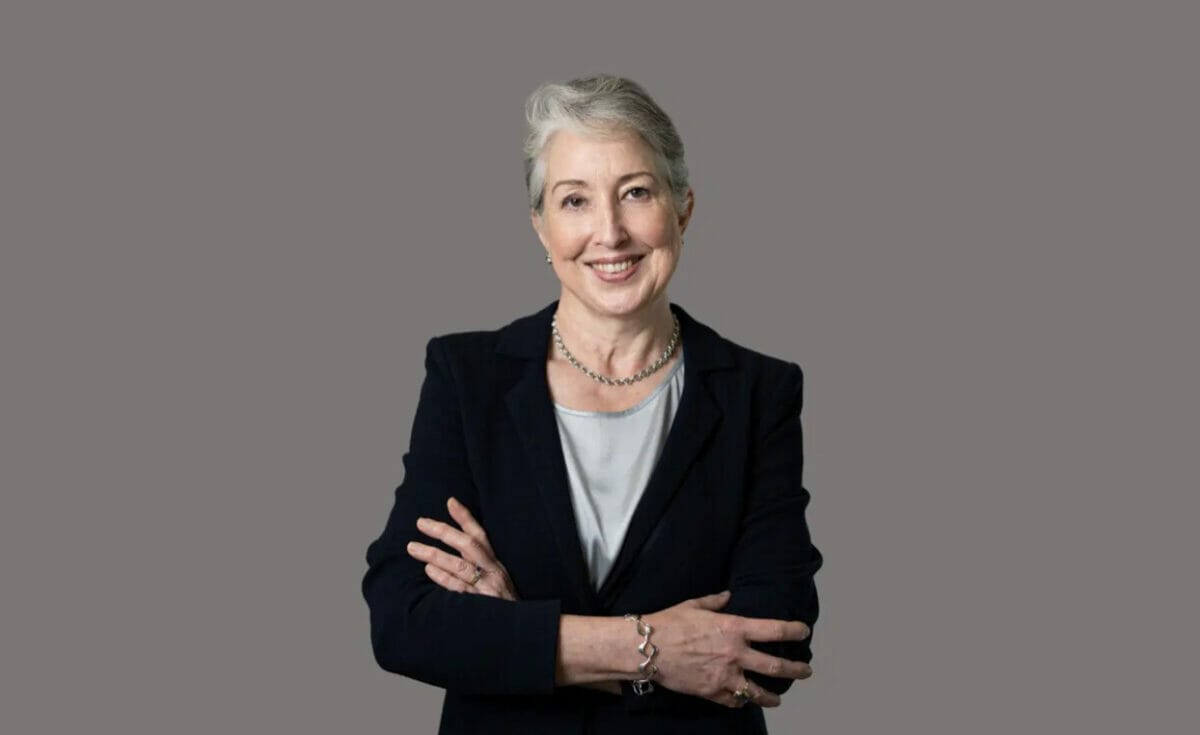

The funds management industry “does not look like the society we serve” despite being an industry concerned about talent, said Sarah Maynard, the global senior head of DEI at the CFA Institute, pointing to the importance of measuring and reporting progress on diversity and inclusion.
As with “green washing,” there is also a major issue with “diversity washing,” Maynard, pictured, said in a panel discussion chaired by Amanda White, director of institutional content at Conexus Financial, which is broadly “this sense of organisations making…a commitment that they’re not following through.”
Speaking at Conexus Financial’s Sustainability in Practice forum held at Harvard University, Maynard said there is a marked under-representation of women when looking at labour participation rates by gender in investment teams. The view becomes more stark when adding in race and ethnicity, and other elements of diversity like gender fluidity, she said.
The CFA Institute has a history of producing codes and standards in response to issues, and so in response to this diversity problem in the industry, CFA worked on “developing a code to give the industry the structure to progress and also to lean on that infrastructure that we already have around codes and standards and indeed around aspects of professional conduct and enforcement,” Maynard said.
Released in February this year, and now with more than 50 signatories, CFA’s Diversity, Equity and Inclusion Code for investment professionals provides principles and implementation guidance on the “what and the how” of diversity and inclusion.
“We are collecting data from all of our signatories and essentially we will be reporting outwards on aggregated data, so that folks can actually see how their organisations look relative to their peer group and understand the need for accelerated change,” Maynard said.
While measurement and data collection is critical, there is also a need for a cultural shift that changes practices and people management to produce better outcomes, she said.
“Because one of the interesting things we’re increasingly seeing and hearing in the evidence from the allocators of capital is actually firms that can demonstrate greater diversity, equity, and inclusion are also producing better investment results,” Maynard said. “So I think that’s a point to really focus minds.”
Signatories welcome the fact that there are sanctions for non-performance, she said, and that they will be held to account on their progress.
Also speaking in the panel discussion was Juliette Menga, chair of ESG committee at Aetos Alternatives Management, who said investment professionals should look at the research of Harvard psychologist Dr Mahzarin Banaji, and her work looking at implicit bias around race, gender and sexual orientation.
DEI work needs to be “extremely intentional and actionable,” Menga said. “It’s not something that you can start with: ‘We are in a meritocratic world, let’s find the best people.’ There is a lot of unintentional biases that play out.”
Investors need to track progress, hire the right people and begin by looking at their own firms, she said.
“If you don’t have a diverse group of people doing that investment diligence work, you would likely not come up with a diverse group of managers.”
Aetos has a DEI committee spanning a wide group of people from senior leaders to junior professionals across different groups to think through issues such as hiring and promotion practices and partnering with different organisations on internships, she said.
Organisations need to question how widely they are opening their talent pipeline when they are filling vacancies, she said, noting Aetos has a system that tracks managers by gender and racial diversity, and allows the firm to “do a self audit to really explore some of the reasons why you passed on some of those managers, especially compared to some of the ones that you pick in their place.”
Kate Murtagh, managing director, sustainable investing and chief compliance officer at Harvard Management Company, said investment professionals sometimes “forget how closeted an industry it is.”
Aside from internship programs, outreach to community colleges and first-generation college students is something large and small investment firms can do, she said.
“Some of the big shops will tell me, ‘oh, well, people know how to get a job here.’ It’s like you go to this school and then you go to that business school and then you go to this investment bank. I grew up in Troy, New York. That was all news to me. I had no idea how this industry worked as a first-generation college student.”
Anne Westreich, managing director and senior consultant at Verus Investments, talked about teaming up with data firm eVestment for diversity disclosure. Verus helped create the Institutional Investing Diversity Cooperative or IIDC, which now has 26 investment consulting members advising on more than $43 trillion in assets.
“Everything in the light of day is much more clear,” Westreich said. “So we can then talk about progress and then we can see what the progress is with each of the managers and the industry as a whole.”








Leave a Comment
You must be logged in to post a comment.
Login