
Bridgewater and PGGM discuss ESG’s need for better communication

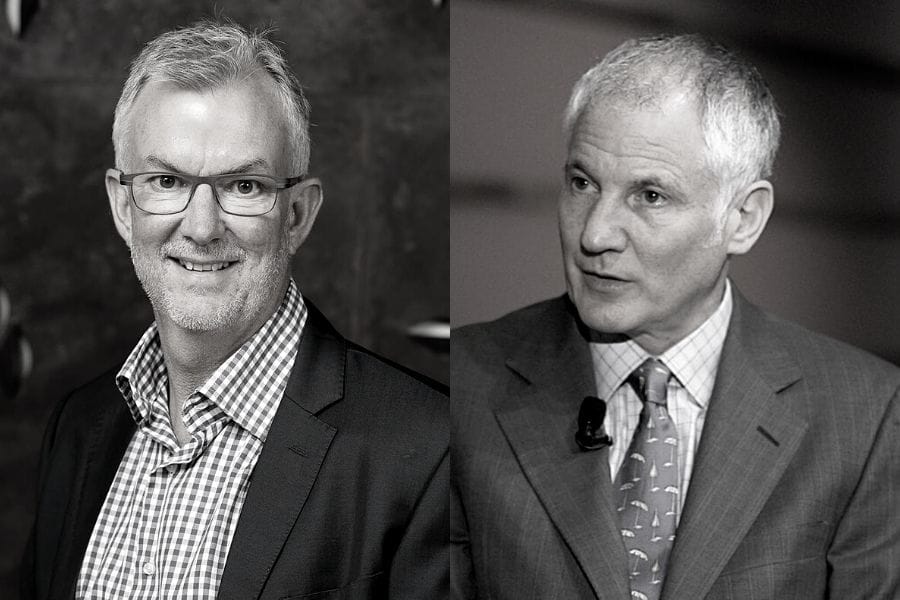
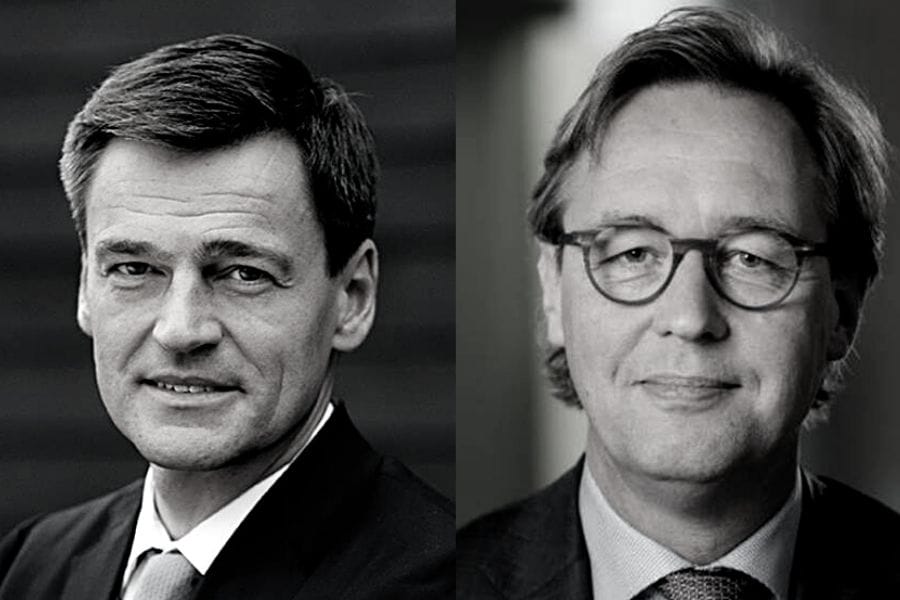
Bridgewater’s Carsten Stendevad and PGGM’s Jaap van Dam discuss the need for more clarity and better communication in sustainability and explore how investing for impact is re-shaping investment strategies.

ESG investment needs to answer two key questions, says Carsten Stendevad, co-CIO for sustainability at Bridgewater, the world’s largest hedge fund.

Speaking at Sustainability in Practice he says those questions are: does ESG investment impact financial performance – and does it have an impact on real world sustainability outcomes?

Only clear communication on these two critical points (and the answers may well be negative) will help counter growing criticism that the financial markets should not be tasked with solving the problem of climate change.

“Critics are right in pointing out that too often ESG puts forward simplistic arguments. We need to strengthen our approach,” he said.

He said ESG investment does not always provide better returns and impacts. In some areas, ESG investment does improve returns and in some cases the impact is important, but in other scenarios the impact is marginal.

Sponsored Content

“It may even be negative and being honest and clear about this is critical for ESG investment,” he told online delegates comprising some 250 registered asset owners representing a collective $13 trillion AUM from 33 different countries.

He said when ESG integration doesn’t boost returns, important questions about investment objectives are imperative. If investors are only integrating ESG for risk and return, they don’t have to get involved in “knotty” arguments about justifying ESG. In contrast, investors with non-financial objectives need to state them clearly.

Fellow panellist Jaap van Dam, director of strategy at Dutch pension asset manager PGGM agreed that ESG investment needed to be clearer about its purpose. He said the concept of purpose often gets a mixed response and ESG meets resistance in jurisdictions where fiduciary duty is a primary concern like the US, and to an extent, the UK.

He also counselled on the importance of highlighting ESG’s “journey to improve,” noting that compared to the past when investment was wholly two dimensional the focus on risk, return and purpose is now taking on more weight in some portfolios.

It led the conversation to so-called three-dimensional portfolios – an area Bridgewater has shifted to now, where impact is considered as deeply and rigorously as risk and return. Stendevad urged investors to build out their investment process – like they have in the past around risk – to capture, manage and measure impact. It involves new processes comprising data collection and portfolio construction, he said.

“At Bridgewater we are committed to this journey to build out a new dimension. Only when you have done this can you answer questions around returns.”

Stendevad said that it was important not to have theoretical arguments around what is possible. Instead, investors should do the work, build the processes and spend time putting together portfolios first.

Van Dam said that for many investors sustainability is not first and foremost when they are designing portfolios but more an afterthought, adding “this is something we have to change.” It is difficult to build sustainable portfolios with historical portfolio construction tools, however.

In three-dimensional portfolios impact sits alongside risk, and all types of capital can be placed on an impact spectrum, said Stendevad.

At one end impact investment can reveal additionality and causality attracting different types of capital like VC and green tech. At the other public, liquid market investors can also invest for impact.

“It is not just high-risk capital that is needed,” he said. Impact is a spectrum and all capital plays a role.

He added that investing in public markets for impact allows investors to support companies that may not be sustainable today but are on a journey. Active owners need to get on a journey with companies to tilt impact where it is most needed, he said.

The conversation touched on the importance of investor engagement and how it should stretch beyond just corporate engagement to reach new parts of the financial system. For example, it is important to support different parts of the data ecosystem to improve data to feed into decision making. Bridgewater uses data from between five and 10 providers, picked from an initial pool of around 40 based on their ability to answer key questions around measuring impact. Panellists concluded that data on modern slavery is particularly poor.

Asset Owner:PGGM / PFZW

One response to “Bridgewater and PGGM discuss ESG’s need for better communication”

  1. Irshaad Ahmad

    excellent discussion on this topic. well worth watching the video.

Leave a Comment

America’s net zero opportunity

America’s net zero opportunity

Research from Princeton University plots a Blueprint for how the US can achieve net zero emissions in the next decade showing the key is overcoming execution challenges including the infrastructure deployment and the mobilisation of capital and labour.

Sort content by

Climate Scenario Analysis: A Rigorous Framework for Managing Climate Financial Risks and Opportunities

Climate change is one of the defining issues of our age. Its physical manifestations are negatively affecting ecosystems, human health, and economic infrastructure. And even if the world is able to keep global temperature increases to 1.5° above pre-industrial levels, much more disruptive outcomes are coming.

The importance of engagement

In this episode Amanda White talks with engagement specialist at Robeco, Peter van der Werf, about the importance of engagement; what good engagement looks like; and what financially material sustainability themes are important right now.

Looking forward with the PRI

In conversation with Fiona Reynolds, chief executive of the PRI, this episode looks specifically at some of the activities of the PRI and its engagement with stakeholders around COVID-19, their ESG priorities and what a sustainable recovery looks like.

NY Common’s sustainability integration

Andrew Siwo is the first director of sustainable investments and climate solutions at the $200 billion New York State Common Retirement Fund (CRF). Here he talks about the fund’s approach to ESG integration.

Overcoming deepening inequality: CalPERS

How can investors work together to combat inequality? In this podcast episode Amanda White speaks to the president of CalPERS, Henry Jones, about his own experience and the fund's journey in tackling diversity and inclusion, in particular issues of racism.

The path to a sustainable economy

This episode explores the key pillars of a sustainable recovery including the three important long term trends that need to be addressed climate change, loss of biodiversity and inequality. It explores the key role for the finance industry which includes building new models that are not only about maximising monetary profits but also transition theory, and the value of ecological and social capital.

Previous