
Sensitive intervention points

Conventional approaches to mitigating climate change are not working. Despite the actions pledged under the 2015 Paris Agreement, actual progress is falling well short. Given limited time and resources, traditional efforts such as the climate stabilization wedge approach are unlikely to be effective on their own. Physical science has shown how complex adaptive systems can cross critical thresholds (“tipping points”), such that a relatively small change can trigger a larger change that becomes irreversible, where nonlinear feedback effects act as amplifiers. We propose to examine how to exploit similar sensitive intervention points (SIPs) and amplification mechanisms in socioeconomic, technological, and political systems to advance climate change mitigation. We focus on research and policies in which an intervention kicks or shifts the system so that the initial change is amplified by feedback effects that deliver outsized impact.

Click here to read the full article

Sponsored Content

Leave a Comment

China ESG risk: the next unknown

China ESG risk: the next unknown

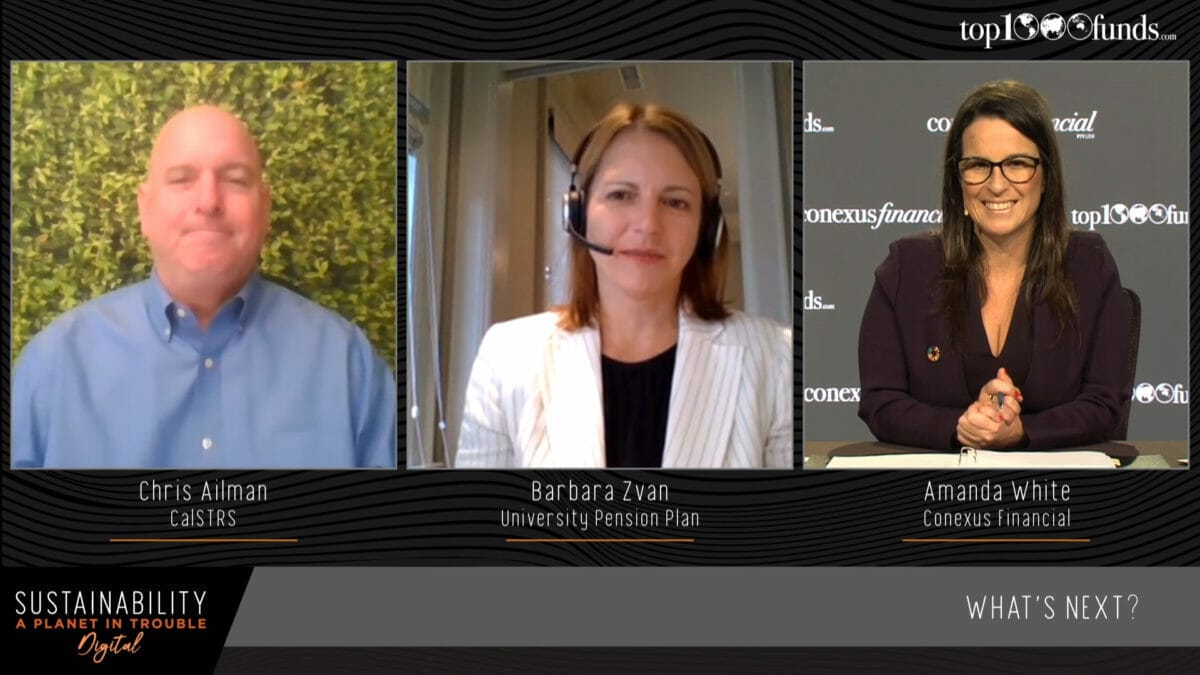
One of the most important, upcoming challenges at CalSTRS is how the fund should evaluate Chinese investments from a human capital and environmental standpoint, says Chris Ailman, chief investment officer at the giant pension fund.

Sort content by

The alpha in impact

How operating with an impact objective can add financial value for investors. 

Investment strategy on climate change

This first report by the California Public Employees’ Retirement System (CalPERS) responds to the recommendations of the Taskforce on Climate-Related Financial Disclosure (TCFD).

From linear to circular

A circular economy is an industrial system that is restorative or regenerative by intention and design. It replaces the end-of-life concept with restoration, shifts towards the use of renewable energy, eliminates the use of toxic chemicals.

Robeco hails the power of stewardship

Global asset manager Robeco has found proactive stewardship triggers important changes in corporate behaviour. Chief executive Gilbert van Hassel urges FIS 2020 Digital delegates to do the same.

Stewardship during and after covid-19

In an open letter by Federated Hermes to companies they explain that their engagement dialogue during and after the pandemic means the focus is on resilience and stakeholders. 

The evolution stewardship urgently needs

Active Ownership 2.0 is a proposed aspirational standard for improved stewardship.

Previous