
Decarbonisation linked to better returns

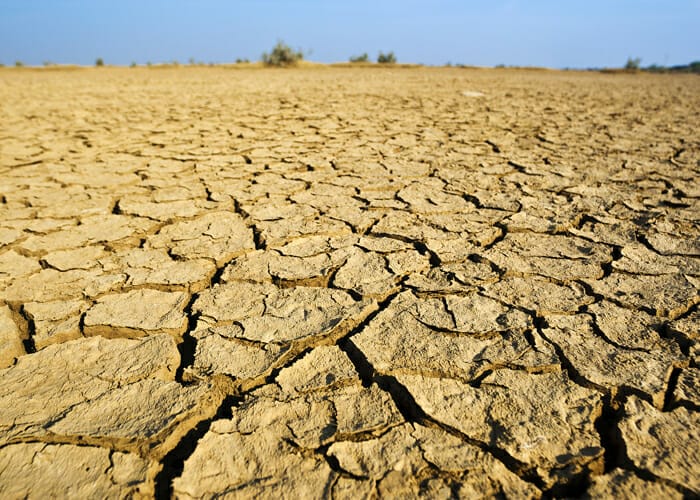
Cracked Ground From The Indian Subcontinent

As concerns about climate change reach fever pitch, Harvard Business School has published a report that shows investment strategies that “aggressively” reduce carbon emissions can significantly boost fund performance.

The university paper, Decarbonization factors, found that returns from investing in so-called decarbonisation factors went hand-in-hand with institutional flows. In other words, buying one one or more of the factors when flows are positive and selling when flows turn negative led to “significantly superior returns.”

There is a “significant contemporaneous positive relationship between decarbonisation flows and decarbonisation returns,” the authors of the report, which include business professor George Serafiem and Alex Cheema-Fox of State Street Associates, wrote. “This suggests that demand for stocks with low carbon intensity has pricing effects. This could be because flows of institutional money carry information about changes in the anticipated fundamentals.”

A record amount of money is already pouring into sustainable investments amid fears about the speed of climate change. Harvard pointed to a mountain of evidence that showed that the rise in carbon emissions to the highest levels in over 800,000 years was a direct result of human economic activity. Citing analysis from Moody’s, it said that if warming gets to 2 degrees Celsius, the economic fallout would reach $69 trillion by 2100.

Last year more than $31 trillion was allocated to sustainable assets across developed markets, according to the Global Sustainable Investment Alliance. Of that, Australian and New Zealand investors accounted for 63 per cent.

The paper also found that investment returns from decarbonisation factors were much stronger in Europe than in the US. This was partly due to a stronger response by European governments to climate change and a pricing system for carbon emissions which incentivised businesses in Europe to reduce emissions.

Sponsored Content

“Buying the factor when flows are positive, while selling the factor when flows are negative, yields even larger and more significant alphas between 1.48 and 4.43 per cent in the US and 2.50 and 8.51 per cent in Europe,” Harvard said.

“Our paper contributes to a growing literature on how climate change impacts investor expectations, capital allocations and thereby pricing and returns,” the report concluded. “Our results provide actionable insights into how to decarbonise portfolios and what are the likely performance and carbon exposure differences across strategies.”

Leave a Comment

China ESG risk: the next unknown

China ESG risk: the next unknown

One of the most important, upcoming challenges at CalSTRS is how the fund should evaluate Chinese investments from a human capital and environmental standpoint, says Chris Ailman, chief investment officer at the giant pension fund.

Sort content by

The alpha in impact

How operating with an impact objective can add financial value for investors. 

Investment strategy on climate change

This first report by the California Public Employees’ Retirement System (CalPERS) responds to the recommendations of the Taskforce on Climate-Related Financial Disclosure (TCFD).

From linear to circular

A circular economy is an industrial system that is restorative or regenerative by intention and design. It replaces the end-of-life concept with restoration, shifts towards the use of renewable energy, eliminates the use of toxic chemicals.

Robeco hails the power of stewardship

Global asset manager Robeco has found proactive stewardship triggers important changes in corporate behaviour. Chief executive Gilbert van Hassel urges FIS 2020 Digital delegates to do the same.

Stewardship during and after covid-19

In an open letter by Federated Hermes to companies they explain that their engagement dialogue during and after the pandemic means the focus is on resilience and stakeholders. 

The evolution stewardship urgently needs

Active Ownership 2.0 is a proposed aspirational standard for improved stewardship.

Previous