
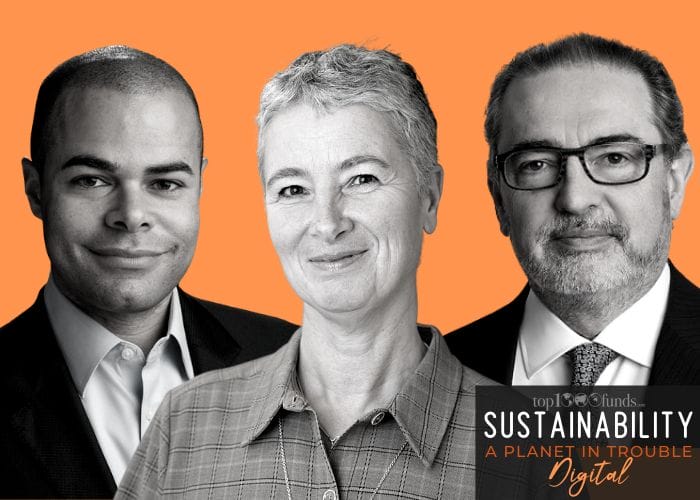

Targets, allocating to diverse managers and acting on calls for change from diverse staffers are just some of the ways asset owners are boosting diversity in their own organisations. Investors at the Kresge Foundation, AP2 and AIMCo talk about their diversity, equity and inclusion action.
The $4 billion Kresge Foundation, which works to expand opportunities in America’s cities through grant making and investment, has pledged to have 25 per cent of its assets managed by diverse investment management firms by 2025.
Speaking at “Sustainability Digital; A Planet in Trouble,” Adrian Ohmer, who joined Kresge as investment director in 2020, said that moving the needle involves much more than “calling up” diverse managers. It also means Kresge must shine a bright light on its own diversity record.
“Diverse firms know if you are just dialling for dollars and diverse GPs are just as annoyed as we would be if we were on the other side. It is also hard to have conversations if it is not a two-way street.”
Ohmer said that researching and allocating to diverse managers has involved breaking out of Kresge’s small network and unconscious bias, to find managers that it would fit into its normal hiring practices but it may never have come across before. It requires more intentionality.
As for internal efforts to boost diversity, Ohmer works with headhunters to identify candidates and hire at a senior level. It involves clear guidance on the number of diverse candidates the firm wants in the final pool. And echoing previous panel sessions, including comments from chief executive of IFM Investors David Neal, he stressed the importance of inclusion.
It means listening to diverse candidates, and not expecting them to change their behaviour to accommodate typical corporate behaviour they may feel uncomfortable with.
“It is incumbent on you as a leader to find something to bring them into the loop. Expecting a diverse person to change their behaviour to accommodate you, exacerbates the problem,” he said.
Diversity is one of four focus areas that sits within sustainability at Sweden’s AP2 and has been a priority since 2001.
The pension fund has focused on increasing the proportion of women on boards and in management positions, said Ulrika Danielson, head of corporate governance at AP2.
“Diversity is much more than gender, age or background,” she said. “Gender diversity is easier to measure, but we need to broaden our work to include all aspects of diversity.”
Danielson added that AP2 still has much work to do improving its own diversity record. Having said that, 34 per cent of the fund’s employees are female, 33 per cent of the executive management team are female and 44 per cent of the board are women. Elsewhere she highlighted internal mentorship programs and diversity training as key policies.
Diversity at Canada’s C$119 billion AIMCo is evolving from “picking low hanging fruit” gifted by Alberta (where 90 per cent of the fund’s employees live) being a frontier and diverse province.
“Hiring a diverse group is not difficult,” said chief executive, Kevin Uebelein. Now the asset owner is striving to do more in a plan driven by human resources and owned by all executives that is shaped around what he calls relentless measurement of diversity within the firm, and among its partners.
Uebelein also noted the particular challenge of building gender diversity given more women than men fall away.
“It’s stopping the fund from moving the needle,” he said.
Strategy to boost diversity includes interaction with investee companies and third-party managers – AIMCo manages over two thirds of its portfolio internally.
And regarding investee companies, Uebelein said AIMCo is turning up the heat on board diversity, demanding 30 per cent women on boards.
Uebelein also argued his preference for engagement and staying invested in both investee companies and with fund managers to best effect change. Importantly AIMCo has set goals for diversity and inclusion at senior management level among its third-party managers.
For example in private equity, conversations with GPs dominated by white males involves tough questioning and targets he said.
“We ask if they believe in the power of diversification and if diversity adds to potential returns. We ask them what they are prepared to do about it,” he said.
Moreover, because AIMCo will invest over a seven-year period it can chart and push for change ahead of re-upping.
“This is a language they speak, but you have to back it up with action,” he said.
Integrating diversity in investments
AP2 integrates diversity in its investments via internally developed indexes with exposure to ESG factors including diversity.
And over the last five years companies with women in senior positions within the index have shown strong returns, said Danielson
“This factor contributes to positive returns, particularly in developed markets,” she said.
Elsewhere AP2 invests in a debt fund that lends to female entrepreneurs and has invested in social bonds issued by the World Bank to fund diversity and projects to support women and girls. AP2 evaluates sustainability in its private equity portfolio using 25 assessment points that includes diversity and inclusion.
Meanwhile panellists noted that investors in different regions think differently about diversity, necessitating a thoughtful approach.
Uebelein said how his priority is to unleash the power of AIMCo’s diverse employees to really find out what they think. It involves setting up resource groups and forming councils to tap their expertise.
“Once you ask for that assistance, they will make demands on the organisation,” he said.
He also flagged the importance of cognitive diversity, warning that institutions often hire diverse candidates that still think and behave the same as all other employees.
“Cognitive diversity is messy and makes decision making harder. But it gets better results and outcomes,” he concluded.








Leave a Comment
You must be logged in to post a comment.
Login