
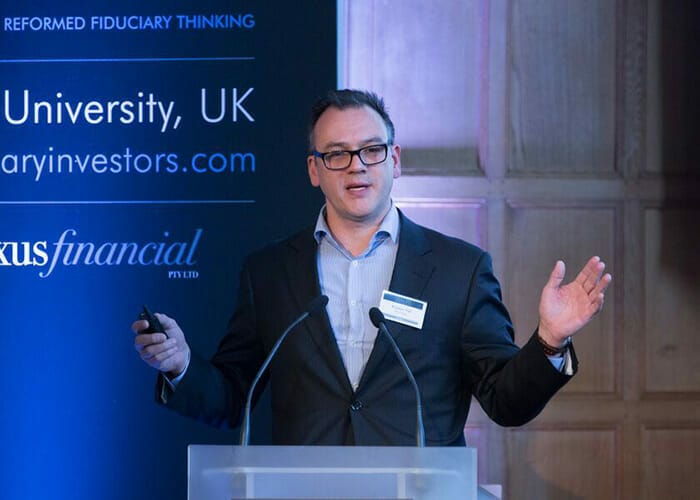

It is possible to invest in infrastructure with a purpose that goes beyond financial return, said Kristian Fok, CIO of Australia’s A$44 billion ($34 billion) Cbus Super, a pension fund for the construction and building industry, speaking at the PRI in Person conference in San Francisco.
Fok said infrastructure investment had an important role in illustrating the practical integration of the UN’s Sustainable Development Goals (SDGs) and ESG, and that pension fund investment in the sector was growing as governments realised they could not fund their infrastructure needs themselves. Long-term ownership makes it easier to create and sustain an impact, and a smaller number of shareholders enables decision-making, he said.
ESG and sustainability in infrastructure investment are often pushed by governments, who remind investors that the infrastructure is for a community purpose. Government involvement can drive ESG integration in areas such as caps on fees or performance requirements that draw penalties when they’re not met.
“As an owner, you meet these minimum standards and think about the asset in a much longer-term way,” Fok said. “It means the asset is run better, and people use it more.”
Infrastructure can leave owners much more exposed to reputational risk than other asset classes.
“When you are a private owner of an asset, your reputation as an owner is on the line,” Fok said. This requires real thought on the appointment of contractors, health and safety, and supply chain risk. “If you don’t think about this, your good intentions will be undone.”
Delilah Rothenberg, operating adviser, ESG and impact, at Pegasus Capital Advisors, told delegates that infrastructure investors should gauge risk in emerging and developed markets in the same way, expressing a preference for the IFC Performance Standards and EHS Guidelines for all markets. Currently, the Equator Principles framework requires these standards only in developing countries.
“In terms of ESG risk, there is little difference between developed and developing markets,” Rothenberg said. Frameworks help investors mitigate the environmental and social risks associated with infrastructure investment.
“You can’t have a net positive impact without mitigating ESG risk,” she said. For instance, banks may not fund if certain standards are not met, or local communities may not support projects, causing such projects to lose their social licence to operate, she said.
Infrastructure investment often allows the integration of multiple ESG elements or SDGs. Cbus investments include the UK’s Manchester Airport, where the pension fund is developing renewable energy use via biomass, creating jobs and reducing pollution. Similarly, its ownership of UK water utility Anglian Water has involved developing recycling initiatives that generate electricity and green bond issuance – the first from a UK utility. At Brisbane Airport, Cbus has installed solar panels, investing to remove volatility in energy prices in a win-win, Fok said.
“It is about doing the right thing and making money – doing more sustainably to reduce costs,” he said.[vc_subscription_cta s_cta_text=”Sign up to our weekly newsletter for regular news flashes and industry insights.” text_color=”#0c0c0c” bg_color=”” button_url=”/subscribe/” button_text=”Subscribe” btn_color=”” btn_bg_color=”#c0091f”]








Leave a Comment
You must be logged in to post a comment.
Login