
SDGs remain the roadmap out of crisis

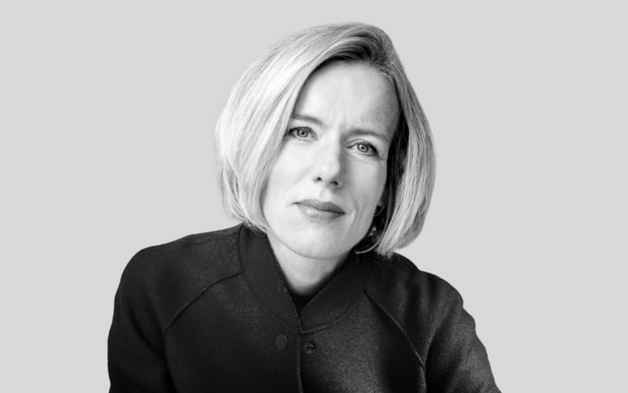
APG’s Claudia Kruse reflects that the climate emergency, COVID and conflict has put SDG delivery at risk. But the SDGs remain the best roadmap out of crisis and the investor’s Asset Owner Platform has become an important tool supporting its quest to invest with impact.

At APG sustainability and digitisation are overarching themes shaping strategy. Recently, the giant Dutch asset manager combined these twin pillars in a Sustainable Development Investment (SDI) Asset Owner Platform, driven by AI technology.

Developed together with PGGM, the platform sifts through reams of structured and unstructured data to gauge the extent to which companies’ products and activities meet the SDGs. “The platform combines the core themes running through APG of sustainability and digitisation,” said Claudia Kruse, managing director, global sustainability and governance, APG, speaking at FIS Maastricht “These are the skills sets for the future.”

SDGs under threat

The UN says the SDGs are the world’s roadmap out of the crisis and remain the most compelling global and all-encompassing blueprint for those seeking to achieve real world sustainable outcomes.  Meanwhile investors are increasingly incorporating risk, return and impact in a three dimensional model. But Kruse countered that the climate emergency, COVID and conflict has put SDG delivery at risk.

APG began integrating the SDGs in 2015 following requests from its major client pension fund ABP whose beneficiaries work in the government and education sectors. The platform, launched in 2020, is designed to deliver on the SDGs and support positive outcomes. It has been created by investors for investors, and is shaped around innovation and cooperation. It has also become a crucial tool in APG’s target to invest 20 per cent of its AUM in the SDGs.

The platform is used for monitoring achievement, risk management and accountability and includes progress reviews and a forward looking lens, she said. SDG analysis on the platform initially began with equities but now covers fixed income.

Sponsored Content

The platform scores companies’ products and services rather than corporate conduct, the traditional ESG lens. Enthusiasts argue that SDG scores are better at integrating impact. For example, research shows that some companies with poor SDG scores can secure good ESG scores and ESG ratings can struggle to reflect positive impacts.

Human judgement

Data is a crucial part of SDG analysis, but so is human judgement. The platform’s AI component uses natural language processing and algorithms modelled to specific topics to score and rank companies. But human judgement is important to assess platform insights on allocations with a negative contribution to the SDGs but important support for the climate transition, like transition minerals.

Analysis is focused on companies making a positive or negative contribution to the SDGs. But she noted every investor looks at the process from their own perspective and asset owners use the platform in different ways. For example, APG’s own internal portfolio managers have integrated the technology but other investors use the platform to monitor their external managers, using it to set them targets. Others use it for risk assessment and reporting.

The platform also provides key insights for investor engagement. She noted that investors have clear exclusion policies. However, the case for divestment is usually the consequence of unsuccessful engagement over time.


Leave a Comment

Impact investing’s case for scale

Impact investing’s case for scale

Impact investing has come a long way in the past two decades, going from a niche strategy to a $1.5 trillion industry, but there are still challenges for it to reach institutional scale due to the lack of products and insufficient evidence of outperformance in some parts of the market.

Sort content by

CPP takes a fundamentally different approach to equities

Access and analysis of unique data is key to CPP Investments’ active equities team creating “one of the most sophisticated fundamental shops in the world” head of the team Frank Ieraci told the Fiduciary Investors Symposium at Stanford.

Managing not just measuring risk is key to long-term returns

Nobel Prize-winning economist Myron Scholes told the Fiduciary Investors Symposium at Stanford University that the focus of asset owners needs to shift from measuring risk to managing it, to avoid the downside while capturing the upside and allowing compounding to do its thing.

Asset owners need organisational prowess to take advantage of distress

The market has already entered the early stages of a multi-year restructuring cycle that will present many opportunities for credit providers. Researchers and investors from GIC, CalPERS and IMCO recommend some organisational changes that will ensure asset owners can make the most of those opportunities.

Operational excellence as critical as asset allocation for success

Asset allocation is often nominated as the most important element in long-term investment performance. But the Fiduciary Investor s Symposium at Stanford University heard that no investment strategy or process can operate in a vacuum – it can’t happen effectively without operational excellence.

Get on board: why the megatrend is your friend

Megatrends are the forces that will shape our planet, our society and our lives decades into the future. The Fiduciary Investors Symposium at Stanford University heard Megatrends provide potentially rich pickings for investors, as long as they know how to use them,.

The future of portfolio construction

Evolving portfolio construction techniques that include more attention to liquidity management, diversification and resilience are needed in a macro environment that has more complexity and volatility delegates at the Fiduciary Investors Symposium at Stanford University heard. Investors from CalSTRS, CPP Investments and MFS share their approach.

Previous



