
SDGs remain the roadmap out of crisis

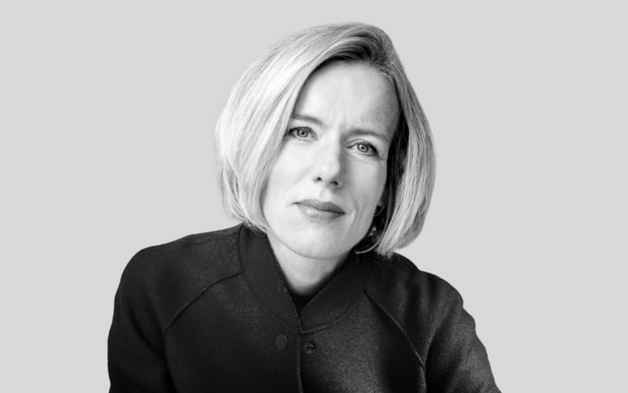
APG’s Claudia Kruse reflects that the climate emergency, COVID and conflict has put SDG delivery at risk. But the SDGs remain the best roadmap out of crisis and the investor’s Asset Owner Platform has become an important tool supporting its quest to invest with impact.

At APG sustainability and digitisation are overarching themes shaping strategy. Recently, the giant Dutch asset manager combined these twin pillars in a Sustainable Development Investment (SDI) Asset Owner Platform, driven by AI technology.

Developed together with PGGM, the platform sifts through reams of structured and unstructured data to gauge the extent to which companies’ products and activities meet the SDGs. “The platform combines the core themes running through APG of sustainability and digitisation,” said Claudia Kruse, managing director, global sustainability and governance, APG, speaking at FIS Maastricht “These are the skills sets for the future.”

SDGs under threat

The UN says the SDGs are the world’s roadmap out of the crisis and remain the most compelling global and all-encompassing blueprint for those seeking to achieve real world sustainable outcomes.  Meanwhile investors are increasingly incorporating risk, return and impact in a three dimensional model. But Kruse countered that the climate emergency, COVID and conflict has put SDG delivery at risk.

APG began integrating the SDGs in 2015 following requests from its major client pension fund ABP whose beneficiaries work in the government and education sectors. The platform, launched in 2020, is designed to deliver on the SDGs and support positive outcomes. It has been created by investors for investors, and is shaped around innovation and cooperation. It has also become a crucial tool in APG’s target to invest 20 per cent of its AUM in the SDGs.

The platform is used for monitoring achievement, risk management and accountability and includes progress reviews and a forward looking lens, she said. SDG analysis on the platform initially began with equities but now covers fixed income.

Sponsored Content

The platform scores companies’ products and services rather than corporate conduct, the traditional ESG lens. Enthusiasts argue that SDG scores are better at integrating impact. For example, research shows that some companies with poor SDG scores can secure good ESG scores and ESG ratings can struggle to reflect positive impacts.

Human judgement

Data is a crucial part of SDG analysis, but so is human judgement. The platform’s AI component uses natural language processing and algorithms modelled to specific topics to score and rank companies. But human judgement is important to assess platform insights on allocations with a negative contribution to the SDGs but important support for the climate transition, like transition minerals.

Analysis is focused on companies making a positive or negative contribution to the SDGs. But she noted every investor looks at the process from their own perspective and asset owners use the platform in different ways. For example, APG’s own internal portfolio managers have integrated the technology but other investors use the platform to monitor their external managers, using it to set them targets. Others use it for risk assessment and reporting.

The platform also provides key insights for investor engagement. She noted that investors have clear exclusion policies. However, the case for divestment is usually the consequence of unsuccessful engagement over time.


Leave a Comment

The twin forces rewriting the rules of investing

The twin forces rewriting the rules of investing

Portfolios built for the old world will be severely tested as emerging forces rewrite the rules of investing. The Fiduciary Investors Symposium heard that geopolitical and macroeconomic upheaval, together with the disruption wrought by AI, should force asset owners to rethink the structure and composition of portfolios.

Sort content by

Looking backwards a poor way to assess Asia’s future

The specific drivers of growth of Asian economies means a traditional view of asset allocation is not necessarily the best way to approach investing in the region, the 2024 Top100funds.com Fiduciary Investors Symposium in Singapore has heard.

Investors warm towards India despite ‘nosebleed valuations’

Investors have been warned not to compare apples to apples between China and India just because the two have similar market sizes and populations. And despite India’s sky-high valuations, Top1000funds.com Fiduciary Investors Symposium has heard that the country’s solid market structure and culture will make it worth investors’ while.

Further Chinese equity market declines ‘unlikely’: Pictet chief economist

Despite China’s recent equity woes, Pictet’s Geneva-based chief economist Patrick Zweifel remains bullish on the outlook for the country, telling the Top1000funds.com Fiduciary Investors Symposium in Singapore that stabilization of macro factors and “promising cyclical developments” will breathe life into the market of world’s second-largest economy.

Korea Investment Corporation focuses on alternatives push

KIC is looking to boost its alternatives allocation - particularly private credit - both directly and through managers. Influenced by what it sees as an unfolding AI-led industrial revolution it is looking for opportunities in fast-developing sectors including AI, semiconductors and healthcare, and has opened an office in Mumbai.

Investors trying to change the world: Why climate investing is so difficult

Asset owners are preparing their portfolios for the climate transition, reducing holdings in companies with high emissions and pledging billions to climate investments. But climate proofing portfolios is proving one of the most arduous and complex challenges investors have ever faced. Top1000funds.com takes a close look at the progress.

NBIM’s RI report showcases benefits of transparency

Risk-based divestments increased returns on Norges Bank Investment Management's equity portfolio by 0.07 per cent in 2023. Measuring the impact of its investment decisions, reported in NBIM's latest RI Report, is part of a concerted drive for greater transparency by the manager of Norway's Government Pension Fund Global.

Previous



