
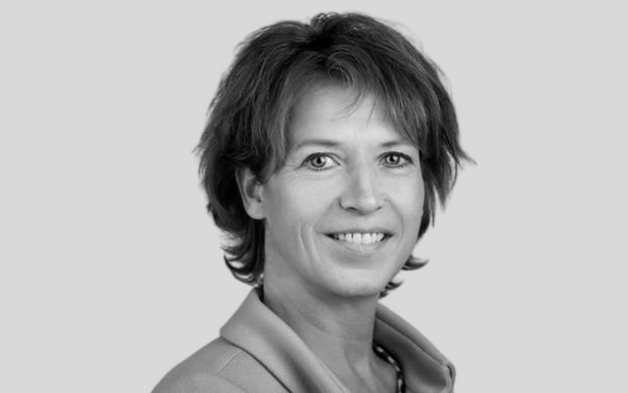

The world is changing so rapidly, traditional five-year investment plans are increasingly difficult to implement. Asset owners, head-down and concentrating on just the next five-years, risk “opening the curtains” to find the world around them has moved on much faster than they realised, said Geraldine Leegwater, CIO, PGGM speaking at FIS in Maastricht.
Leegwater, who took the helm in 2020, cited new European ESG legislation as an example of the fast-changing investment landscape. Elsewhere, NGOs are putting more pressure on investors and pension fund participants are demanding action. “You cannot work with a five-year plan because the world is changing. There needs to be a better solution,” she said.
Leegwater urged delegates to come up with a vision that extends into the future. “Let’s go to 2030 and look at what the world will be like and what this means for pension funds and goals in the investment portfolio,” she said, adding that five-year plans accentuate the gap between the financial world and the real world.
PGGM’s current five-year plan dates from 2019. It is focused on sustainability and ESG integration, including an allocation to SDG compliant investments. Strategy at PPGM, founded in 2007 as the asset manager for the healthcare scheme PFZW, is shaped around a large allocation to long dated fixed income. Risk assets comprise real estate and listed and non-listed equities in a long-term strategy that avoids tactical allocations and is increasingly focused on providing inflation protection, she said.
Knowing what you own
Sustainable investment involves many active decisions – even if investors are tracking a benchmark ESG integration involves taking out pieces of that investment universe. Given the scale of the transition ahead and the implications for risk premiums, investors will increasingly move from traditional benchmarks to “knowing what they own.” This more active approach around portfolio construction will also be driven by the need to invest for impact, she said.
Insight and knowledge of the assets held in a portfolio requires data, also key to measuring impact. It is challenging building portfolios with return targets and impact targets, demanding correlation analysis, a strategic asset allocation and a robust framework amongst other things, she said.
Mapping and measuring a portfolio for impact is also easier in some asset classes. For example, investment in infrastructure is easier to measure. While in real estate, it’s possible to measure net zero improvements in properties but these are often only a small part of the portfolio. Measuring impact in listed, passively managed mandates is more challenging. “We have thousands of holdings and measuring what you have in there and all the types of SDG indicators is very difficult.”
She said investing for impact still comes with more questions than answers – and not everything can be measured. Digging into SDG themes is complicated: a euro invested in emerging markets has more of an impact that the equivalent investment in developed markets. Yet governance unknows complicate emerging market investment. It involves investors questioning themselves when they can’t realise impact goals – and realising “you can’t do everything.” Affordable housing for healthcare workers is a good place to start, she said.
Cultural change
PGGM is characterised by a long stakeholder chain comprising participants, advisors, board members and executive officers amongst others, complicating the ability of the asset manager to integrate real world issues and change allocations. However, shortening the chain is also difficult, especially given PGGM’s responsibilities to its beneficiaries and the importance of beneficiary participation. For example, PGGM’s seven SDG goals are based on the issues its participants care most about.
PGGM’s strong culture has been shaped by these multiple layers, ensuring issues are thoroughly debated and analysed. Now Leegwater’s priority is to try and foster a culture that also contributes to a bigger goal and avoids silos. She espoused the importance of looking at people’s potential rather than at what they have done in the past, and said PPGM, with one main client, was able to do something different to a typical commercial asset manager.
One way to achieve this kind of change is via incentives aligned to team goals. “It is about finding people around you with the same language and drive,” she said.
Leegwater concluded that it will be difficult to fulfil PGGM’s impact goals and the Netherland’s new pension contract if the asset manager continues to stick to the way it has worked in the past. “Sometimes you need to change the tools to achieve your goals,” she said.








Leave a Comment
You must be logged in to post a comment.
Login