
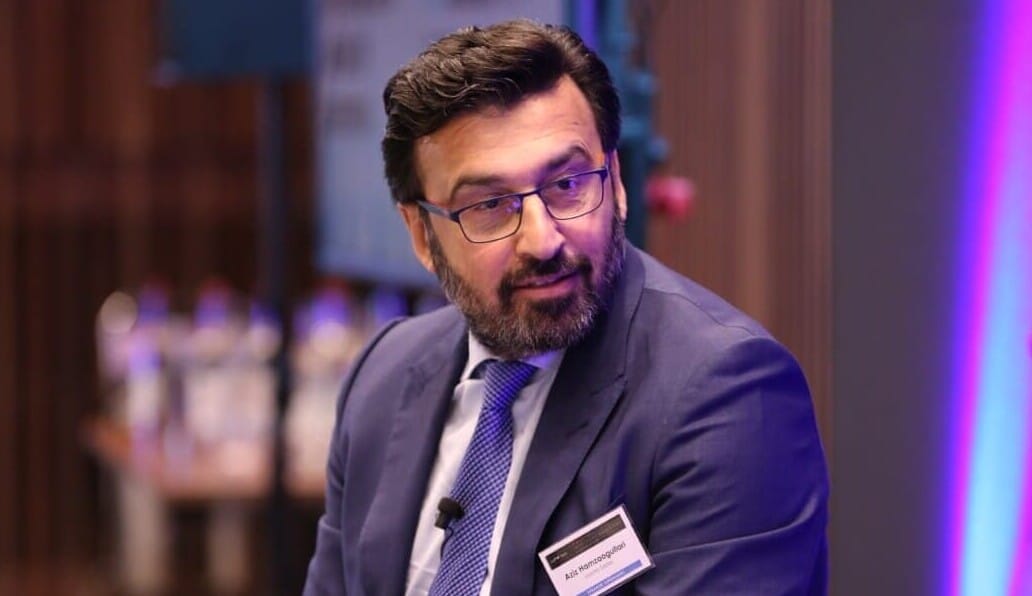

Aziz Hamzaogullari, chief investment officer of growth equity strategies at Loomis Sayles, has urged active investors to focus on long-term consumer and enterprise demands, warning that chasing short-term market moods and toggling between “risk-on” and “risk-off” positions is ultimately a “loser’s game”.
With a declining active share in fund managers’ portfolios and trading costs, the odds are against those whose main approach to adding value is frequent trading and not taking active bets, he told the Top1000funds.com Fiduciary Investors Symposium.
“If you look at, for example, the large cap space, the best of the best managers may have a 0.3 or 0.4 information ratio, which is the excess return over the risk that you generate,” he told the symposium, held at Oxford University. “Just simple math tells you… that you have to have a minimum active share to beat the benchmark.”
“We believe that active doesn’t mean necessarily just trading but rather making very selective long-term decisions.”
These decisions include, for example, tapping into the structural demand behind aviation companies driven by consumers’ desire for luxury and travel as income rises, with consistent increases to miles flown per traveller every year and very rare disruptions like COVID-19.
“[If you follow that principle], you will do better than a portfolio with an approach based on ‘oh today is risk-on, let me just go and load up on these companies that will be higher beta’, and the next morning I’ll get more defensive – I think that’s a loser’s game,” he said.
“At least when I look empirically, I don’t see anyone who can time these things perfectly.”
A more structural view of risk also protects the portfolio in all weather, Hamzaogullari said. He noted that the Loomis Sayles research examining the performance of 281 US large cap growth equity managers found that most of its peer group tend to do well in either bull or bear markets, but never both.
This could be caused by managers implementing front-end screens that filter out assets that do not meet their bespoke criteria and therefore narrow down the investment universe, Hamzaogullari suggested, but it also causes portfolios to “be biased either to the up market and down market”.
“I think the reason is those front-end screens and not having an approach to risk that’s permanent and structural,” he said.
“As human beings, we have this hindsight bias, and we always talk about risk as if we knew it was going to happen… but in reality, most of the time people are reacting to what just happened.
“I think that mindset means that from our perspective, we want to invest in a portfolio of products and services that are not highly correlated with each other.”
Following this philosophy, Hamzaogullari said the manager does not approach an investment based on a country or regional framework but on whether it has robust business qualities – China is one such example.
“Everyone is like ‘China is investable’ or ‘China is non investable’ – even through an approach like that, I think China is a big market with a big population, and there are some excellent businesses out there that we will benefit from in the long run,” he said.
“We look at growth as being secular in nature, and we define it as cash flow growth, and we want to buy these [good companies] at a significant discount to intrinsic value.
“We make very few decisions in a given year, and that’s our selective approach to [active] investing rather than geographies.”







Leave a Comment
You must be logged in to post a comment.
Login