

Allocating capital to net zero opportunities doesn’t mean investors are prepared to give to charity. While many fiduciary investors are interested in tapping into the energy-transition mega-theme, or are simply trying to meet their ESG mandates, ultimately the investments have to generate returns for their beneficiaries.
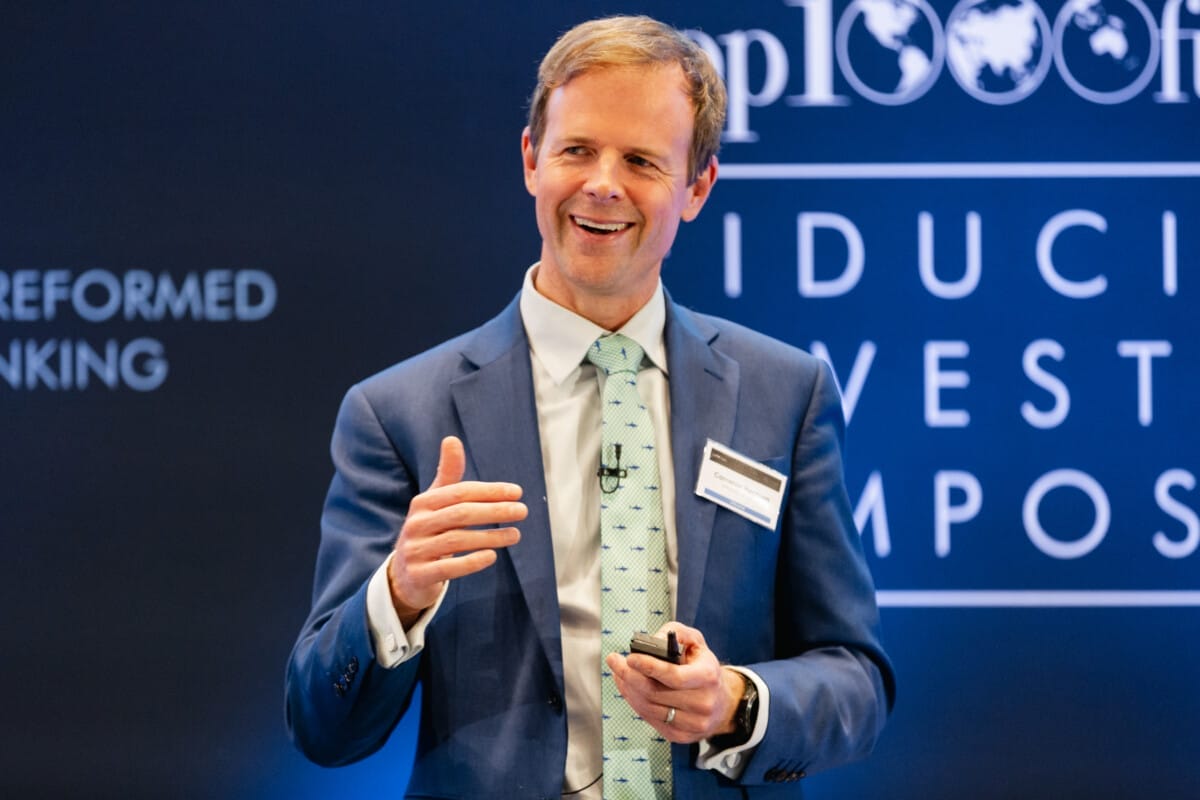
At the Fiduciary Investors Symposium, Cameron Hepburn, Battcock Professor of Environmental Economics at the Smith School of Enterprise and the Environment, University of Oxford, said when people say there is a massive investment opportunity in transitioning to net zero, what they mean is “there is a massive need for investment to get to net zero”.
“Some of it is an opportunity…but quite a lot of [it] is an opportunity to lose a lot of money,” he told the symposium at Oxford.
In a universe of potential transition solutions, Hepburn said investors should at least look at them with these filters: is the investment technologically sensible; is it economically viable and attractive; is it acceptable to the public; and does it offer sustainable investment returns?
Hydrogen fuel cell cars are an example of a technology that doesn’t make sense, Hepburn said, as they only convert approximately 30 per cent of the incoming electricity to propulsion at the wheels, whereas an EV has close to an 80 per cent conversion. The same applies to hydrogen boilers, which use six times as much electricity as heat pumps to deliver the UK’s heating demand (70 gigawatts).
Another part of the story is understanding the economic progress of technologies. One common argument against deploying clean energy on a mass scale is that it’s too expensive, Hepburn said, but data suggests its unit of cost has been on a steady decline over the past decade.
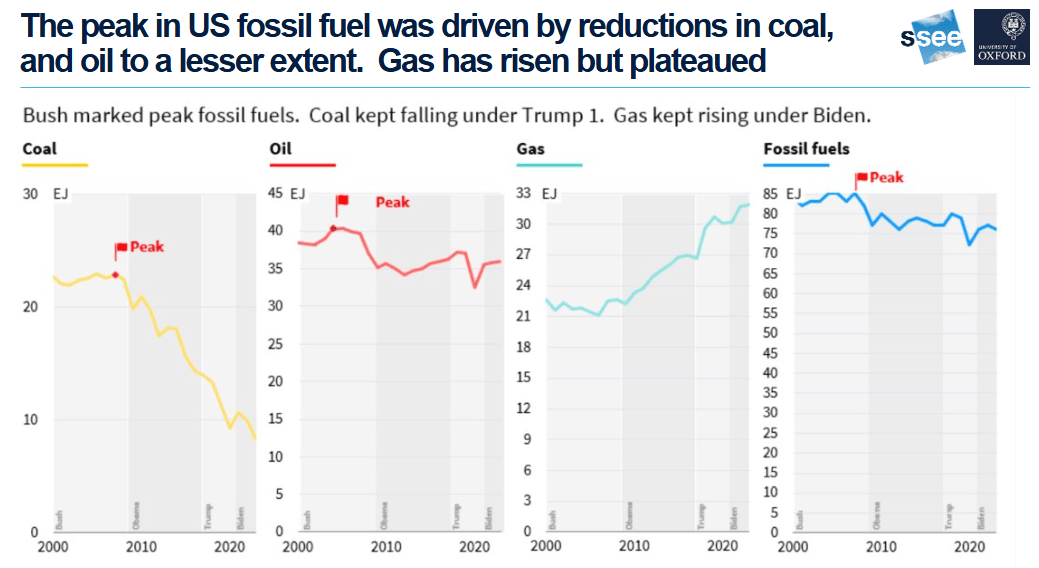
Meanwhile, costs of oil, coal and gas are highly volatile and lack long-term trends.
“This is not to say there aren’t lots of smart people in these spaces doing clever things…but what they’re achieving, in a sense, is they are counteracting yield declines, as we have to dig up difficult sources of oil and gas in harder places,” Hepburn said, adding that these actions do not result in secular cost declines.
“As of 2023, wind and solar have now added more energy – not just electricity, but energy – than oil.
“Don’t get excited. We’re still like 70 to 80 per cent fossil fueled, and we’re talking about incremental change, but we’re on the beginning of that exponential curve.”
However, Hepburn stressed that the combination of good technology, economics and public options does not always amount to investments with good returns. Solar is a good example where it is hard for investors to make money despite having all three advantages, he said, because the market is fiercely competitive and must deal with “distortionary tariffs” from certain countries.
There are some questions for investors to consider if they are seeking “rent” in parts of the transition value chain, Hepburn said. These are things like: will my technology be outcompeted by the next iteration; can I invest in the infrastructure of transition technologies; how concerned am I about supply chain risks; does the political environment view climate change as a serious problem; and how much pushback will I receive from incumbent providers?
“As an example, [for] those who get very excited that the cost of renewables is now cheaper than the cost of fossils, forget that,” Hepburn said.
“To win in total, you are going to have to go all the way down the supply stack.
“You can dig out oil and gas between 5 and 10 bucks a barrel from Saudi Arabia, so the fact that you’re competitive at 60 [dollars] doesn’t mean that’s the immediate end of oil.”







Leave a Comment
You must be logged in to post a comment.
Login