[vc_empty_space height=”10px”]
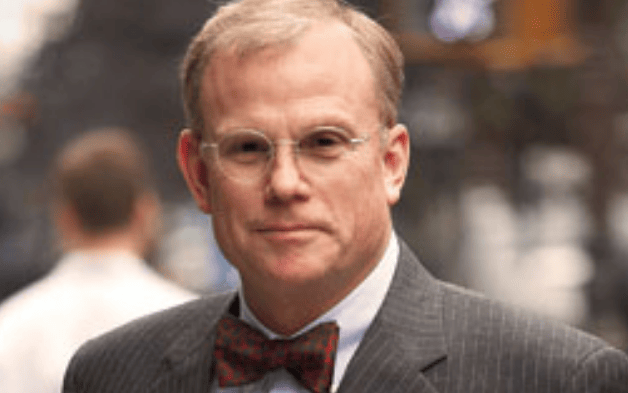
In conversation with the current recipient of the Nobel Prize in Economics, Esther Duflo, this session will look at the phenomenon of inequality and the way in which economics and finance can help meet the challenge for a better, more equal, world.[vc_quotes layout=”accordion” quotes=”%5B%7B%22name%22%3A%22Esther%20Duflo%22%2C%22job_role%22%3A%22Professor%20of%20Poverty%20Alleviation%20and%20Development%20Economics%2C%20MIT%3B%20current%20winner%20Nobel%20Prize%20in%20Economics%20(United%20States)%22%2C%22content%22%3A%22Esther%20Duflo%20is%20the%20Abdul%20Latif%20Jameel%20Professor%20of%20Poverty%20Alleviation%20and%20Development%20Economics%20in%20the%20Department%20of%20Economics%20at%20the%20Massachusetts%20Institute%20of%20Technology%20and%20a%20co-founder%20and%20co-director%20of%20the%20Abdul%20Latif%20Jameel%20Poverty%20Action%20Lab%20(J-PAL).%20In%20her%20research%2C%20she%20seeks%20to%20understand%20the%20economic%20lives%20of%20the%20poor%2C%20with%20the%20aim%20to%20help%20design%20and%20evaluate%20social%20policies.%20She%20has%20worked%20on%20health%2C%20education%2C%20financial%20inclusion%2C%20environment%20and%20governance.%5CnProfessor%20Esther%20Duflo%E2%80%99s%20first%20degrees%20were%20in%20history%20and%20economics%20from%20Ecole%20Normale%20Superieure%2C%20Paris.%20She%20subsequently%20received%20a%20Ph.D.%20in%20Economics%20from%20MIT%20in%201999.%20%5CnDuflo%20has%20received%20numerous%20academic%20honours%20and%20prizes%20including%202019%20Sveriges%20Riksbank%20Prize%20in%20Economic%20Sciences%20in%20Memory%20of%20Alfred%20Nobel%20(with%20co-Laureates%20Abhijit%20Banerjee%20and%20Michael%20Kremer)%2C%20the%20Princess%20of%20Asturias%20Award%20for%20Social%20Sciences%20(2015)%2C%20the%20A.SK%20Social%20Science%20Award%20(2015)%2C%20Infosys%20Prize%20(2014)%2C%20the%20David%20N.%20Kershaw%20Award%20(2011)%2C%20a%20John%20Bates%20Clark%20Medal%20(2010)%2C%20and%20a%20MacArthur%20%E2%80%9CGenius%20Grant%E2%80%9D%20Fellowship%20(2009).%20%20With%20Abhijit%20Banerjee%2C%20she%20wrote%20Poor%20Economics%3A%20A%20Radical%20Rethinking%20of%20the%20Way%20to%20Fight%20Global%20Poverty%2C%20which%20won%20the%20Financial%20Times%20and%20Goldman%20Sachs%20Business%20Book%20of%20the%20Year%20Award%20in%202011%20and%20has%20been%20translated%20into%20more%20than%2017%20languages%2C%20and%20the%20recently%20released%20Good%20Economics%20for%20Hard%20Times.%5CnDuflo%20is%20the%20editor%20of%20the%20American%20Economic%20Review%2C%20a%20member%20of%20the%20National%20Academy%20of%20Sciences%20and%20a%20Corresponding%20Fellow%20of%20the%20British%20Academy.%5Cn%22%2C%22image%22%3A%2231867%22%2C%22linkedin%22%3A%22%22%7D%5D” title=”Speaker” el_class=””][vc_quotes layout=”accordion” quotes=”%5B%7B%22name%22%3A%22Amanda%20White%22%2C%22job_role%22%3A%22Director%20of%20institutional%20content%2C%20Conexus%20Financial%20(Australia)%22%2C%22content%22%3A%22Amanda%20White%20is%20responsible%20for%20the%20content%20across%20all%20Conexus%20Financial%E2%80%99s%20institutional%20media%20and%20events.%20In%20addition%20to%20being%20the%20editor%20of%20Top1000funds.com%2C%20she%20is%20responsible%20for%20directing%20the%20global%20bi-annual%20Fiduciary%20Investors%20Symposium%20which%20challenges%20global%20investors%20on%20investment%20best%20practice%20and%20aims%20to%20place%20the%20responsibilities%20of%20investors%20in%20wider%20societal%2C%20and%20political%20contexts.%20She%20holds%20a%20Bachelor%20of%20Economics%20and%20a%20Masters%20of%20Art%20in%20Journalism%20and%20has%20been%20an%20investment%20journalist%20for%20more%20than%2025%20years.%20She%20is%20currently%20a%20fellow%20in%20the%20Finance%20Leaders%20Fellowship%20at%20the%20Aspen%20Institute.%20The%20two-year%20program%20seeks%20to%20develop%20the%20next%20generation%20of%20responsible%2C%20community-spirited%20leaders%20in%20the%20global%20finance%20industry.%22%2C%22image%22%3A%2231870%22%2C%22linkedin%22%3A%22https%3A%2F%2Fwww.linkedin.com%2Fin%2Famanda-white-101a7515%2F%22%7D%5D” title=”Moderator” el_class=””][vc_empty_space height=”10px”]
Key takeaways
COVID-19 is not the great leveller – there are huge differences between how the virus is impacting the rich and the poor within the US for example.
Developing countries are less well equipped to weather uncertainties in these times. However, even within the US inequality has been growing for decades and is now clearly unsustainable.
We need to trust developing countries enough to help them drag themselves out of poverty.
We need to spread out global supply chains to reduce geographic concentration risk and simultaneously provide income across the world. This will require collaboration and the deprioritisation of commercial self-interest.
We need to create wealth for the poor, not just take wealth from the rich. To reduce poverty incrementally, we need to focus on the simple things that work, for example providing cash incentives for sending children to school.
Let’s not forget, we have made huge progress in alleviating poverty, but that is not full credit to the World Bank, it is credit to the people of the developing nations.
If you invest responsibly as an institutional investor, you are by default helping to alleviate poverty.
‘Impact washing’ is the new greenwashing and it’s very concerning. How do you really select the investments that truly drive social impact? We should apply the same rigour to impact assessment as investment assessment.
The Florida State Board of Administration has made some strategic moves to take advantage of opportunities in the dislocation, including in private equity, distressed debt and active listed equities.. But CIO, Ash Williams, is concerned about the underlying real economy.
This research studies the interaction between economic decisions and epidemics. The model implies that people’s decision to cut back on consumption and work reduces the severity of the epidemic, as measured by total deaths. These decisions exacerbate the size of the recession caused by the epidemic.
The global economic shutdown triggered by COVID-19 has put the North American private debt industry to its first major test. What lessons can be learned from the global financial crisis that are relevant today? What lessons are emerging as a result of COVID-19? And how might the industry evolve?
The global economy is projected to contract sharply by –3 per cent in 2020, much worse than during the 2008–09 financial crisis. In a baseline scenario--which assumes that the pandemic fades in the second half of 2020 and containment efforts can be gradually unwound—the global economy is projected to grow by 5.8 percent in 2021 as economic activity normalises, helped by policy support. The risks for even more severe outcomes, however, are substantial.
The PRI is working with signatories to further develop thinking on what the COVID-19 crisis means for investors. It is establishing two signatory participation groups to coordinate and develop investor responses, focusing on short term responses, and a future economic recovery phase.
This OECD note provides illustrative estimates of the initial direct impact of shutdowns, based on an analysis of sectoral output and consumption patterns across countries and an assumption of common effects within each sector and spending category in all countries.
Leave a Comment
You must be logged in to post a comment.
Login