Pricing geopolitical risk

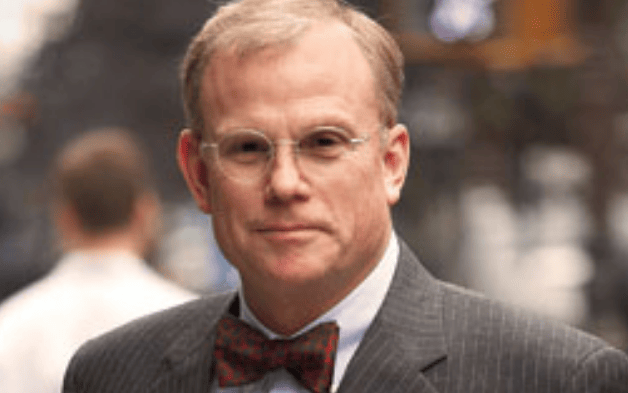
In an entertaining and informative session at the Fiduciary Investors Symposium at Chicago Booth School of Business, the John P. Birkelund ’52 Professor in History and International Affairs at Princeton University, Stephen Kotkin, said geopolitical risk is largely priced in to markets.

“Geopolitical risk is about incompetence of decision makers, which is mostly an unknown and unpriceable. This remans the key variable,” he says.

“With game theory you try to guess what the others will do. We can’t predict China and can’t predict US actions. It’s unknowable.”

“We know nothing about Chinese decision making, the inner circle is very narrow and there are no spies,” he says.

“It is hard to imagine investors could change anything.”

Guiding investors through the geographical, military and political histories of Russia and China, Kotkin pointed out that China “has no California”, or west coast, which prohibits its activities.

Sponsored Content

[jwplayer CakjVQkU]

Leave a Comment

Florida: Opportunities in a crisis

Florida: Opportunities in a crisis

The Florida State Board of Administration has made some strategic moves to take advantage of opportunities in the dislocation, including in private equity, distressed debt and active listed equities.. But CIO, Ash Williams, is concerned about the underlying real economy.

Sort content by

Overcoming deepening inequality: CalPERS

How can investors work together to combat inequality? In this podcast episode Amanda White speaks to the president of CalPERS, Henry Jones, about his own experience and the fund's journey in tackling diversity and inclusion, in particular issues of racism.

The path to a sustainable economy

This episode explores the key pillars of a sustainable recovery including the three important long term trends that need to be addressed climate change, loss of biodiversity and inequality. It explores the key role for the finance industry which includes building new models that are not only about maximising monetary profits but also transition theory, and the value of ecological and social capital.

Pandemic, recession, economic crisis

COVID-19 has delivered an enormous global shock, leading to steep recessions in many countries. The baseline forecast by the World Bank envisions a 5.2 per cent contraction in global GDP in 2020—the deepest global recession in decades.

The need for urgent action on climate

Nigel Topping who was appointed by the UK Government as the High Level Climate Action Champion for United Nations climate talks, COP26 joins Fiona Reynolds, chief executive of the PRI, in conversation with Amanda White, editor of Top1000funds.com This episode focuses on climate change and how, amongst and despite, the short-term focus of this COVID-19 crisis, we can mobilise government, business and investors into action around this important issue of climate change.

Building better retirement systems

The global COVID-19 pandemic has highlighted the need for better risk management tools to handle longevity and ageing. This paper by Wharton's Olivia Mitchell, offers an assessment of the status quo prior the coronavirus; evaluates how retirement systems are faring in the wake of the shock; examines insurance and financial market products that may render retirement systems more resilient for the world’s ageing population; and looks at the potential role for policymakers.

Building back better

For the economic recovery from the COVID-19 crisis to be durable and resilient, a return to ‘business as usual’ and environmentally destructive investment patterns and activities must be avoided. To avoid this, economic recovery packages should be designed to “build back better”.

Previous