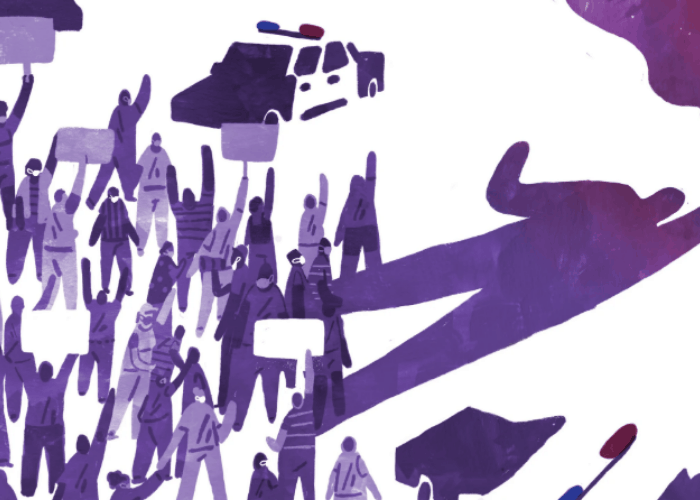
How do we change America?

[vc_empty_space height=”10px”][vc_media_type_category]The quest to transform this country cannot be limited to challenging its brutal police.

The national uprising in response to the brutal murder of George Floyd, a forty-six-year-old black man, by four Minneapolis police officers, has been met with shock, elation, concern, fear, and gestures of solidarity. Its sheer scale has been surprising.

Across the United States, in cities large and small, streets have filled with young, multiracial crowds who have had enough. In the largest uprisings since the Los Angeles rebellion of 1992, anger and bitterness at racist and unrestrained police violence, abuse, and even murder have finally spilled over in every corner of the United States.

Read How do we change America?, published in The New Yorker on June 8, 2020
Sponsored Content

Leave a Comment

Florida: Opportunities in a crisis

Florida: Opportunities in a crisis

The Florida State Board of Administration has made some strategic moves to take advantage of opportunities in the dislocation, including in private equity, distressed debt and active listed equities.. But CIO, Ash Williams, is concerned about the underlying real economy.

Sort content by

COVID-19: Implications for business

In this note McKinsey & Company offers its latest insights on the COVID-19 pandemic, starting with a survey of the current epidemiology and the five dynamics leaders need to watch.

Impact of COVID-19 on globalisation

This paper argues that the COVID-19 pandemic is an inevitable result of globalisation and that the pandemic, in turn, has seriously threatened the world’s globalisation, but adverse effects on globalisation will be temporary.

The moment when America fell behind

Although governments everywhere are scrambling to contain the economic fallout from COVID-19, some are approaching the task more strategically than others. The European Union and China, in particular, are focusing on long-term investments in clean energy, whereas America is doubling down on the past.

Less globalisation, more multilateralism

While some degree of deglobalisation may be desirable today, this process also carries grave risks, from skyrocketing production costs to geopolitical conflict. The only way to mitigate those risks is through enhanced multilateral cooperation.

The shape of Asia’s new cold war

China's decision to demolish the "one country, two systems" arrangement in Hong Kong appears to be a fait accompli, and in fact seems to have been preordained. Viewed in a broader context, the move represents a major salvo in a new cold war that is already playing out across three critical dimensions.

Enormity of climate crisis misunderstood

There is a lack of understanding in investment decision-making about how big the climate crisis is which could lead to investments and risks being mis-directed, according to Professor Cameron Hepburn, Professor of Environmental Economics at Oxford University.

Previous




