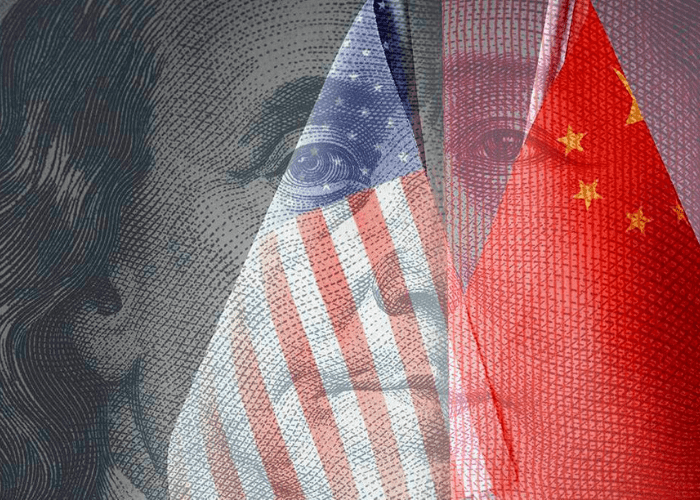

The shape of Asia’s new cold war

China’s decision to demolish the “one country, two systems” arrangement in Hong Kong appears to be a fait accompli, and in fact seems to have been preordained. Viewed in a broader context, the move represents a major salvo in a new cold war that is already playing out across three critical dimensions.

SEOUL – In retrospect, the decision by the Communist Party of China (CPC) to impose a new security law on Hong Kong seems to have been preordained. Historically, rising powers always try to expand their spheres of geopolitical influence once they pass a certain stage of economic development. It was only a matter of time before China would do away with the “one country, two systems” arrangement and impose its laws and norms on Hong Kong – a territory that it considers integral to the motherland.

Read The shape of Asia’s new cold war, published in Project Syndicate on June 10, 2020.

Sponsored Content

Leave a Comment

Florida: Opportunities in a crisis

Florida: Opportunities in a crisis

The Florida State Board of Administration has made some strategic moves to take advantage of opportunities in the dislocation, including in private equity, distressed debt and active listed equities.. But CIO, Ash Williams, is concerned about the underlying real economy.

Sort content by

Asset owners adapt and respond to COVID

The Responsible Asset Allocator Initiative finds that 25 leading public pension and sovereign wealth funds, with assets of $6 trillion, are investing tens of billions of dollars in COVID-19 solutions and in funds to support stricken companies. Here they look at what the leading asset allocators around the world are doing to respond to the pandemic.

Investors outline actions for resilience

Global economic activities will not be back to pre-COVID levels until 2022 according to CPP Investments’ outlook, with the giant Canadian investor expecting the situation to get worse before it gets better.

Five lessons from the COVID-19 crisis

The coronavirus pandemic sparked a surge of volatility across global financial markets. In this paper, MSCI looks at five key lessons for investors from the crisis, including that managing factors was more critical than picking stocks.

COVID-19 impact far from over

New research looking at the impact of COVID-19 under different scenarios – from opening of economies to no vaccine – suggests the economic consequences of COVID-19 under all scenarios is substantial and the ongoing economic adjustment is far from over.

IMCO uses nimbleness to advantage

Meticulous planning for the next market crash, and an eye on liquidity, meant IMCO was well positioned to invest, particularly in credit, when the opportunity arose. The fund continues to use its agility to its advantage and is now looking for opportunities in private markets.

Alternative data as a market predictor

It is critical to analyse how much COVID-19 could impact the US economy and stock markets but most of the traditional factors or economic indicators will lag the market movement. Therefore, alternative datasets other than the financial data show their explanation power to provide insights into the pandemic. This article, by academics at Tsinghua University, University of Illinois and Carnegie Mellon University, looks at the pattern of the market fluctuation from the perspective of alternative data.