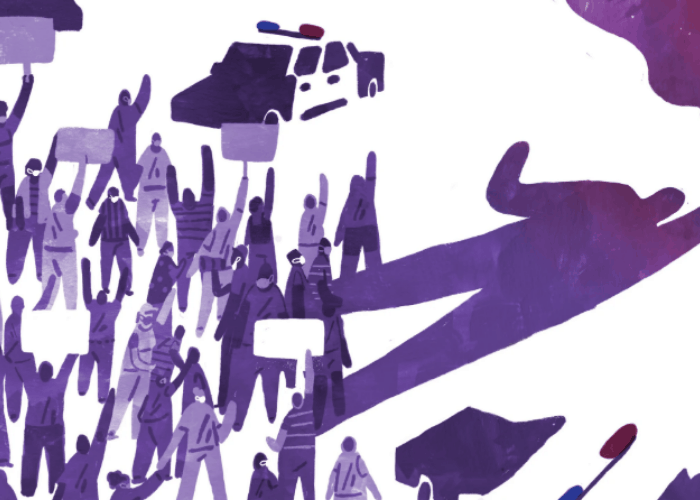
How do we change America?

[vc_empty_space height=”10px”][vc_media_type_category]The quest to transform this country cannot be limited to challenging its brutal police.

The national uprising in response to the brutal murder of George Floyd, a forty-six-year-old black man, by four Minneapolis police officers, has been met with shock, elation, concern, fear, and gestures of solidarity. Its sheer scale has been surprising.

Across the United States, in cities large and small, streets have filled with young, multiracial crowds who have had enough. In the largest uprisings since the Los Angeles rebellion of 1992, anger and bitterness at racist and unrestrained police violence, abuse, and even murder have finally spilled over in every corner of the United States.

Read How do we change America?, published in The New Yorker on June 8, 2020
Sponsored Content

Leave a Comment

Florida: Opportunities in a crisis

Florida: Opportunities in a crisis

The Florida State Board of Administration has made some strategic moves to take advantage of opportunities in the dislocation, including in private equity, distressed debt and active listed equities.. But CIO, Ash Williams, is concerned about the underlying real economy.

Sort content by

Deglobalisation will hurt growth

Even if the United States turns a blind eye to deglobalization’s effects on the rest of the world, it should remember that the current abundant demand for dollar assets depends heavily on the vast trade and financial system that some American politicians aim to shrink. If deglobalization goes too far, no country will be spared.

COVID-19: Managing supply chain risk

Could COVID-19 be the event that finally forces many companies, and entire industries, to rethink and transform their global supply chain model?

Three pillars to the economic response

Academics at Chicago Booth looks at three important pillars of the economic policy response to the COVID-19 crisis.

Global macroeconomic impacts of COVID-19

The scenarios in this paper demonstrate that even a contained outbreak could significantly impact the global economy in the short run.

A decade needs a purpose

The decade ahead promises to be one in which purpose gets to be much more widely entrenched and influential. And asset owners have a role to play in the path to purposeful capitalism.

Inequality risk equal to climate change

Rebecca Henderson, the John and Natty McArthur University Professor at Harvard University who co-teaches Reimagining Capitalism at HBS, says inequality is equal to climate risk in its potential impact. She told delegates at the Fiduciary Investors Symposium at Harvard University when a system no longer generates freedom and prosperity it must be changed. Change is possible because we have the resources and technology to do it. A first move is decent jobs for people at the “bottom”.

Previous




