
COVID-19 vaccination by year-end: Oxford

[vc_empty_space height=”10px”][vc_media_type_category]The only solution to the problem of COVID-19 is a vaccination. Oxford University’s Jenner Institute is one of the organization’s racing to provide a vaccine, and it’s director Adrian Hill believes the Institute could have cracked it by year-end.

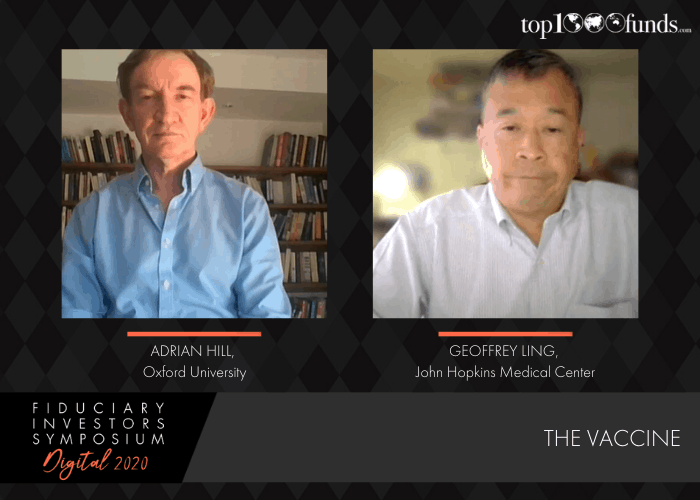
Sometime later this year a vaccine for COVID-19 should work, predicted Adrian Hill, a vaccinologist and director of Oxford University’s Jenner Institute. Speaking at FIS 2020 Digital, Hill said that the development of a COVID-19 vaccine by the Jenner Institute, one of the organisation’s racing to develop a vaccine, swung into rapid development in January. Since then it has been tested on animals and is now in its second human trial in the UK where 6000 people have been given the Covid-19 vaccine and 6000 an irrelevant vaccine.

“It’s moving along well,” he said, telling delegates there have been no safety issues in the people vaccinated, and the trials haven’t been stopped.

The Jenner Institute is not alone in developing a vaccine. Hill said around 150 other groups are also developing a vaccine, 12 of which are in clinical stages.

“If ours works, several other will as well,” he said adding that the process isn’t competitive. The number of people to vaccinate means no one company has ever made a vaccine on this scale before. It would be surprising if by the end of the year there wasn’t good evidence that one or more vaccines was working, he said.

“This looks like a do-able vaccine.”

Sponsored Content

However, he cautioned that the vaccine might not be successful first time, and that success might involve a combination of vaccines or multiple doses. As well as UK and US participants in the trial, the drug is now being tested in Brazil, where infection rates are rising.

Hill also noted the willingness of funders, governments and companies to invest money at risk. Drug maker AstraZeneca, which will manufacture the Jenner vaccine in multiple countries, has already started making billions of doses even though it is still unproven.

Lots of money has been spent at risk because building up manufacturing and distribution capacity now will save money via the economic benefit of having a vaccine, he explained.

Although Hill noted the philanthropic drive of the drugs companies, saying “no one is seeking to make a profit,” he said finding a cure is an important showcase of vaccine technology.

COVID-19 has not caught the medical community unaware, said Geoffrey Ling, MD, founding director of the Biological Technologies Office of DARPA and a professor at John Hopkins Medical Center.

He told delegates that it comes from the same family of coronaviruses that causes SARS (severe acute respiratory syndrome) and MERS (Middle East respiratory syndrome) and said that new viruses will appear in the coming years too.

COVID-19 has been around for years, harboured in the animal kingdom.

“A biological event is not one and done,” he said.

He added that investment opportunities span PPE manufacturing to diagnostic tests, as well as investment opportunities in business that can work through a pandemic. In defence of President Trump’s response, the former veteran said it was a difficult time to be a leader, and that everyone was learning through the experience.

Leave a Comment

Florida: Opportunities in a crisis

Florida: Opportunities in a crisis

The Florida State Board of Administration has made some strategic moves to take advantage of opportunities in the dislocation, including in private equity, distressed debt and active listed equities.. But CIO, Ash Williams, is concerned about the underlying real economy.

Sort content by

The future of funds management

Given the extreme volatility in markets, the changing global economic risks and policy responses, what is the future of the funds management industry?

Policy responses: investment effects

The crisis has seen unprecedented fiscal and monetary policy responses around the world. So what are the implications for investments?

Global policy responses

How have different governments around the world responded to the health and economic crisis and what are some of the innovative responses that will stimulate the economy and ensure a sustainable recovery?

Global risk outlook

This session examines the rapidly changing risks to the global economy and the need for new ways of behaving, making decisions and even reversing decisions.

FIS 2020: A sustainable recovery?

In our second feature looking ahead to FIS 2020, we highlight how the conference will focus on growing calls for a sustainable recovery and purposeful companies. Nobel prize winner Esther Duflo will talk on solutions to inequality, magnified during the pandemic.

CPP Investment’s COVID journey

In this Fiduciary Investors Series podcast Amanda White talks with Geoffrey Rubin, chief investment strategist at CPP Investments, which manages the investments of Canada’s largest pension fund with about C$410 billion of assets.

Previous